Choo Mi-ae: "Gyeonggi Province Is Like a Patient in the Emergency Room... We Are Doing Everything We Can to Save It"
Gyeonggi Province Governor Choo Mi-ae compared the current situation in Gyeonggi to that of a patient brought to the emergency room, emphasizing, "The 9th Popularly Elected Gyeonggi Provincial Government is not cutting or eliminating well-functioning projects, but doing everything it can to revive projects that were already destined to stop."
On September 21, at the Gyeonggi Province-Democratic Party Supreme Council Meeting held at the Northern Gyeonggi Provincial Government Building, Governor Choo stated, "The very first challenge I faced after taking office was the nine-month provisional budget—quite literally a terminal budget issue."
She explained, "There are many essential projects for residents that are meant to run for an entire year, but a considerable portion of these core welfare items were only budgeted through September. If no additional funding could be secured, services like children's meal support, senior care, and assistance for vulnerable groups and people with disabilities would have had to stop one by one." She continued, "What the 9th Gyeonggi Provincial Government is doing is by no means cutting or scrapping well-functioning projects. We are desperately trying to keep alive those projects that were already set to stop."
"A patient has been brought into the emergency room. Doctors are doing everything they can: stopping the bleeding, treating wounds, and performing surgery," Choo said. "But is it right to question the operating doctor, 'Why did you let the patient get hurt like this?' at this critical moment?"
She particularly stressed, "With a deep sense of responsibility, we are prioritizing the use of the savings—gained through painful cuts—in projects directly linked to residents' lives. Some people say we should just cover up the problems, take out more debt, and leave it for others to deal with later. But I can't do that. We must scrutinize the roots of the problem until the end and fix the fundamentals to prevent the same problems from repeating."
She added, "Right now, Gyeonggi Province is doing two things at the same time. First, we are rescuing resident-centered projects that are on the verge of stopping. Second, we are reforming Gyeonggi’s fiscal structure itself so that such a fiscal crisis never happens again." She proposed, "I hope this will be an opportunity to thoroughly examine the structural problems of local finance, and to pave the way for fiscal innovation that establishes a new and responsible financial foundation for local governments."
Governor Choo first called for gradually raising the local consumption tax rate from the current 25.3% to 40.3%, in order to expand the stable revenue base of local governments.
She also appealed for a plan to allocate 5% of the national portion of corporate taxes to metropolitan local governments, explaining this would fund infrastructure such as industrial complexes, roads, transportation, and housing—key elements needed for corporate growth.
Additionally, she proposed that the local education tax currently imposed on tobacco consumption should be converted to a local resources and facilities tax for fire services, and used for firefighter personnel expenses.

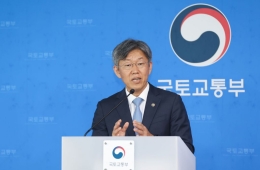
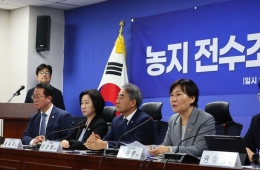
Gyeonggi Province Governor Choo Mi-ae is speaking at the 'Gyeonggi Province-Democratic Party Supreme Council Meeting' held on the 21st at the Northern Gyeonggi Provincial Government Building. Photo by Gyeonggi Province
View original imageMinseok Kim, Leader of the Democratic Party, responded, "The party will thoroughly ensure timely support for the construction of semiconductor fabs in Yongin and Pyeongtaek, as well as investments in power, water, and transportation infrastructure. In particular, we will address the challenges facing northern Gyeonggi Province. On top of the regulatory burden and reforms previously endured for the sake of national security, we will help create a new growth base. We will also strive to address the weak fiscal base in Gyeonggi, which remains insufficient compared to its contributions and burdens in industry and infrastructure."
During the subsequent Gyeonggi Province-Democratic Party Fiscal Policy Council, Governor Choo requested, alongside tax system reforms, a swift amendment of the ‘Special Act on the Support of Returned US Military Bases’ to create new long-term lease benefits and expand the national budget support for road and park land purchases within returned US bases. She also called for the exemption of various fees in population-declining border areas, the transfer of authority for the creation of public housing districts (smaller than 3.3 million square meters) to local governments, and the inclusion of the Seoul metropolitan area in expanded rights to lift greenbelt designations.
In the semiconductor sector, she called for securing overwhelming competitiveness by expanding essential infrastructure such as power supply and water, implementing local partnership projects, designating a Gyeonggi semiconductor cluster as a national strategic project, and expanding the central government’s financial support.
Furthermore, she requested that the GTX B and C lines open on schedule, the A, B, and C lines be extended with national funding, and that the new projects proposed by Gyeonggi—including the Southern Metropolitan Railway—be reflected as much as possible in the 5th National Rail Network Construction Plan, with the total size of new projects expanded to over 100 trillion won.
Hot Picks Today
 "I Went for the Cheap Coffee, but Now I Feel Uneasy"... Major Coffee Franchises Cited for Violations One After Another
- In Korea, Studying Medicine Is in High Demand, but in China, It's Shunned: "Why Become a Doctor When You Can’t Make Money?"
- "Surprisingly Real, Perfect Like AI" -- Global Media Praise Korean Fencer's Beauty
- "50 Million Won for Weekly Encounters"... Man in His 60s Sentenced for Deceiving Woman in Her 20s with Forged 1.4 Billion Won Account
- "I've Already Booked My Trip to Japan, But This Is Serious"...Highest Number of Measles Cases in Japan in a Decade Spurs Emergency Alert
Additionally, Gyeonggi Province requested national financial support for ten key projects with a combined budget of 648.4 billion won, including the following: support for labor inspector personnel expenses; support for local tax and non-tax revenue collection activities; construction of the Northern Gyeonggi Metropolitan Railway (Dobongsan-Okjeong); the Indeokwon-Dongtan double-track railway; the Wolgot-Pangyo double-track railway; projects to improve natural disaster risk zones; support for national (para) athletic competitions; semi-public operation for intercity bus projects under the Metropolitan Transport Authority; subsidy for Nuri curriculum childcare coverage gaps; and integrated medical and nursing care support programs.
© The Asia Business Daily. All rights reserved. Unauthorized AI training and use prohibited.