Special Crackdown on Disguising Old Rice as New... "Report Suspected Illegal Distribution to the Reporting Center"
DNA Analysis for Suspected Violations
Criminal Penalties for False Labeling of Production Year
Administrative Fines for Missing Information such as Production Year
The government is launching a special crackdown on illegal rice distribution ahead of the shipment of newly harvested rice from the 2026 crop, targeting practices such as disguising old rice as new or mixing old and new rice for sale.
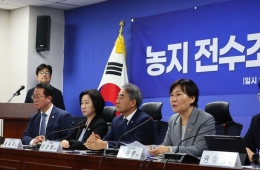
On September 21, the National Agricultural Products Quality Management Service announced that it will conduct a special 64-day crackdown on rice labeling, from September 28 to November 30, to prevent illegal rice distribution practices.

An official from the National Agricultural Products Quality Management Service is conducting a special crackdown on the labeling of new rice grains. Photo by National Agricultural Products Quality Management Service
View original imageThe targets of this special crackdown include rice processing complexes (RPCs), private rice milling factories, rice processing companies, rice sales companies, online distribution companies, and import companies handling rice for table consumption.
The main inspection points will be whether the labels properly indicate the rice production year, milling date, country of origin, and variety, as well as whether there is any mixing of newly harvested and old rice or domestic and foreign rice. The National Agricultural Products Quality Management Service also plans to monitor companies that sell rice at prices significantly lower than the market average and will utilize scientific enforcement methods, such as DNA analysis, on rice suspected of violations.
Companies found in violation will be subject to criminal penalties in accordance with the Grain Management Act: for false labeling, imprisonment of up to three years or a fine of up to five times the market value of the illegally used or distributed rice; for lack of labeling, an administrative fine of up to 2 million won will be imposed.
Hot Picks Today
![[Exclusive] "Nvidia Researchers to Work in Yangjae"... LG Electronics to Establish 'Joint Robotics Development Base'](https://cwcontent.asiae.co.kr/asiaresize/93/2026092110452736212_1789955126.jpg) [Exclusive] "Nvidia Researchers to Work in Yangjae"... LG Electronics to Establish 'Joint Robotics Development Base'
[Exclusive] "Nvidia Researchers to Work in Yangjae"... LG Electronics to Establish 'Joint Robotics Development Base'
- "I’ll Take This, Please"... Buying the Last Lottery Ticket Brings a Jackpot
- "I Can't Believe There Are Such Kids These Days"... Middle School Students Help Elderly Man Collecting Scrap Paper All the Way to Junk Dealer
- "Contributing 9 Million Won Annually…430,000 Won per Month Steadily from Age 65" …The Power of the “Three-Tier Pension”
- "They Might Start Pitching Tents and Grilling Meat"... The 'Hammock Villain' Appears at Cheonggyecheon
Director Kim Cheol of the National Agricultural Products Quality Management Service stated, "During the season when newly harvested rice is shipped, the likelihood of illegal rice labeling increases," and urged, "If you suspect fraudulent rice labeling, please report it to the Illegal Distribution Reporting Center or through the National Agricultural Products Quality Management Service website."
© The Asia Business Daily. All rights reserved. Unauthorized AI training and use prohibited.