[Exclusive] Agricultural Cooperatives Sanctioned for Their Own Misconduct: Local Residents and Elderly Bear the Inconvenience
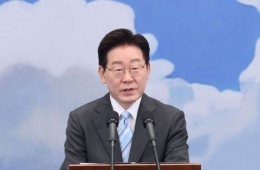
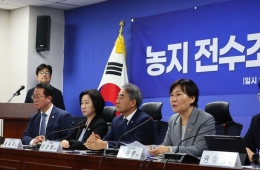
Moon Dae-rim of the National Assembly Agriculture Committee
"Supplementary Measures Needed to Prevent Harm to Farmers"
It has been revealed that, over the past three years, 25 agricultural and livestock cooperatives have been subject to the "support restriction" measures by the National Agricultural Cooperative Federation (NongHyup), due to election disputes or legal violations. The total number of members in these cooperatives exceeded 59,000. There are growing concerns that such sanctions against cooperatives may adversely affect local residents’ access to financial services and the economic activities of farmers.

According to documents submitted by Moon Daelim, member of the National Assembly’s Agriculture, Food, Rural Affairs, Oceans and Fisheries Committee and a representative of the Democratic Party of Korea, to the National Agricultural Cooperative Federation, a total of 25 agricultural and livestock cooperatives have been classified as support-restricted organizations from 2024 to this year. As of the end of last year, these cooperatives had a combined membership of 59,071. The reasons for support restrictions included damage to public credibility, election-related disputes, accounting fraud, violations of the Agricultural Cooperatives Act, and failure to comply with directives from the federation.
When under support restriction, cooperatives face limitations on new funding as well as work support, and may also be barred from opening new credit business branches. In fact, 17 out of the 25 cooperatives subject to sanctions faced restrictions on establishing new credit business branches. In rural areas, agricultural and livestock cooperatives act as key channels for banking operations such as deposits and loans, as well as for the purchase of agricultural products.
For example, one agricultural and livestock cooperative in Icheon, Gyeonggi Province, was subject to support restrictions this past April for failing to implement the mandatory introduction of an unpaid cooperative president, as required by the Agricultural Cooperatives Act. Afterward, the cooperative received two types of support, totaling 1.2 billion won, related to the agricultural machinery bank and special purpose funding for heat wave and drought disasters. However, when it inquired about additional support for the purchase of dried red peppers, the cooperative reportedly received a response indicating that such support would be difficult. In another case, a cooperative in Seoul was subject to support restrictions in November last year due to election-related disputes, resulting in restrictions on new funding, work support, and new credit branch openings. In addition, 1.5 billion won in previously provided funding was retrieved.
However, support restrictions do not result in the suspension of all funding. In the past three years, even restricted cooperatives received special purpose funds through a total of 41 cases—including disaster relief, purchases of raw grains for rice processing centers (RPCs), agricultural machinery banks, and policy matching projects—amounting to a total of 40.542 billion won.
Hot Picks Today
![[Exclusive] "Nvidia Researchers to Work in Yangjae"... LG Electronics to Establish 'Joint Robotics Development Base'](https://cwcontent.asiae.co.kr/asiaresize/93/2026092110452736212_1789955126.jpg) [Exclusive] "Nvidia Researchers to Work in Yangjae"... LG Electronics to Establish 'Joint Robotics Development Base'
[Exclusive] "Nvidia Researchers to Work in Yangjae"... LG Electronics to Establish 'Joint Robotics Development Base'
- "I’ll Take This, Please"... Buying the Last Lottery Ticket Brings a Jackpot
- "Can't Afford a House Anyway"... Gen Z Cuts Dining and Salon Costs to Splurge on Airfare
- "Contributing 9 Million Won Annually…430,000 Won per Month Steadily from Age 65" …The Power of the “Three-Tier Pension”
- "They Might Start Pitching Tents and Grilling Meat"... The 'Hammock Villain' Appears at Cheonggyecheon
Moon Daelim stated, "The burden of misconduct by agricultural and livestock cooperatives should not be unfairly passed on to the members and local farmers," and added, "There is a need to review institutional improvements that can hold cooperatives accountable, while not undermining farmers’ financial access or economic activity."
© The Asia Business Daily. All rights reserved. Unauthorized AI training and use prohibited.