[Reporter’s Notebook] Political Blame Game Revived Over the 2022 Housing Supply Cliff
![[Reporter’s Notebook] Political Blame Game Revived Over the 2022 Housing Supply Cliff](http://www.asiae.co.kr/news/img_view.htm?img=2026092110484936222_1789955328.png)
"Looking at the short-term causes of the sharp increase in housing prices, the number of permits and housing starts was cut in half starting in 2022, the year when President Yoon Suk Yeol took office and Mayor Oh Se-hoon was elected. Under these circumstances, the easing of real estate land transaction restrictions led to housing prices soaring in certain areas."
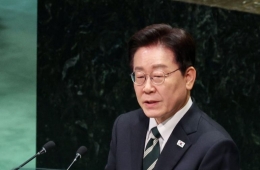
President Lee Jaemyung, in a recent press conference, attributed the sharp rise in housing prices to the policies of the previous government and the current Seoul mayor from the opposition party when asked about the background behind the increases. He emphasized that decisions made four years ago are having an impact today. Seoul apartment prices have risen for 84 consecutive weeks, now on the verge of surpassing the all-time record of 85 weeks. At this rate, they are expected to reach the record this week.
The statistics presented by the president are accurate. Nationwide housing starts surpassed 580,000 units in 2021 but dropped to around 240,000 units in 2023. Housing permits in Seoul also plummeted sharply, from over 80,000 units in 2021 to around 30,000 units in 2023.
However, is this 'fact' merely the result of choices made by the government and local authorities at the time? Considering the interest rate environment, funding conditions, and construction costs back then, the circumstances did not make it easy for construction firms to launch new projects.
The key interest rate jumped from 0.5% in August 2021 to 3.5% in January 2023. In 2022, the Legoland crisis shut off project financing (PF) channels. Construction costs increased by nearly 30% in just three years.
Even after securing land and permits, many projects were unable to break ground. Regardless of which government was in power, a decline in volume would have been difficult to avoid. At the "National Grand Debate on Real Estate Policy" held in July, an expert commented on the situation surrounding housing starts in 2022, noting that "deteriorating domestic and international conditions, such as rising material and construction costs, played a greater role than policy factors."
The release of over 390 redevelopment zones during the previous mayor's tenure is also cited as a factor causing today's supply shortage. Redevelopment projects typically take 10 to 15 years from district designation to move-in. Therefore, it is not reasonable to attribute the supply shortage solely to the previous administration and the mayor from the opposition party.
After President Lee raised these points, Seoul Mayor Oh Se-hoon responded by publishing the number of redevelopment project approvals given during the previous administration, leading to a political back-and-forth.
If solutions are based solely on political decisions that ignore macroeconomic conditions, proper measures cannot be devised. The recently announced extension of the suspension of the mandatory residence requirement in the land transaction permit zones is a prime example. When regulations are hastily implemented without accounting for supply time lags, and then deferred quietly when side effects emerge, temporary fixes continue to repeat.
Hot Picks Today
!["Just by Parking Money at the Bank? Unusually High Parking Account Rates Lately [Practical Asset Management]"](https://cwcontent.asiae.co.kr/asiaresize/93/2026092308565839400_1790121417.png) "Just by Parking Money at the Bank? Unusually High Parking Account Rates Lately [Practical Asset Management]"
"Just by Parking Money at the Bank? Unusually High Parking Account Rates Lately [Practical Asset Management]"
- "I Worked Hard Throughout Chuseok"...Why Office Workers Are Quitting in Droves Right After the Holidays
- "Shock at the Gym"... 'Ultimate Villain' Applies Strong Adhesive to Apartment Community Equipment
- "Quit Job to Start Life in Canada, Now Forced to Return Home"… Language School Closure Leaves Korean Students Stranded
- Crowds Flock to See Shark... Convenience Store Sales Soar 800% Amid Surging Demand
What is needed now is not a political blame game over whose administration saw reductions but an effort to identify and resolve the true obstacles preventing housing construction. This is not the time to debate political responsibility while facing a supply cliff crisis.
© The Asia Business Daily. All rights reserved. Unauthorized AI training and use prohibited.