"Back Then I Wasn't Allowed On"... Bus Driver Who Let Middle Schoolers Board Late-Night Last Bus Reported by Passenger
Reporting passenger: "Previously refused boarding, had to take a taxi"
Driver: "I admit my mistake, but I'm upset"
Exceeding bus capacity banned on highways
A heated debate has erupted online after it was revealed that a metropolitan bus driver was sanctioned following a passenger complaint for allowing standing passengers because she could not turn away middle school students who were at risk of missing the last bus late at night. Some netizens argued that the driver's intentions should be taken into account, while others insisted that there can be no exceptions to highway safety regulations.

A story has emerged about a metropolitan bus driver who allowed standing passengers because they could not ignore middle school students who were at risk of missing the last train late at night, only to be sanctioned after a complaint from a passenger, sparking a heated debate online. The photo is unrelated to the specific content of the article. Photo by Huh Younghan
View original imageOn September 17, JTBC's “Incident Chief” introduced the story of Ms. A, a female bus driver in her 60s with 20 years of driving experience, who recently received a fine after a passenger reported her. On the day of a fireworks festival, she was operating the last metropolitan bus when she allowed some students, who appeared to be middle schoolers, to board. However, at that time the bus was already at full capacity. Metropolitan buses running on highways are prohibited from carrying standing passengers, so Ms. A was not allowed to exceed the seating capacity. As it was late at night and the students repeatedly pleaded with her to let them on, she decided she could not leave them behind and exceptionally allowed them to board.
Ms. A explained that she was aware of the ban on standing passengers for buses operating on highways, but she felt uneasy about leaving young students alone at a bus stop so late at night. She said she cautioned the students to be careful not to fall. Amidst this, a male passenger on the bus protested, saying, "Isn't standing prohibited on metropolitan buses?" Ms. A asked for understanding, explaining it was the last bus after a festival and the students were so young, but the man rebutted, essentially asking, "Does it matter whether it's a child or an adult?"

The current Road Traffic Act stipulates that drivers must not drive carrying passengers beyond the safety standards for the number of occupants. While the enforcement decree allows an exception permitting up to 110% of the seating capacity on some vehicles on regular roads, driving beyond the seating capacity is prohibited on highways. The Asia Business Daily
View original imageThe man also brought up his own past experience of being denied boarding a full bus and having to pay for a taxi. He said, "When I tried to get on before, I was refused," and he reported the standing passengers to the police, asking them to come to the next bus stop. After the police arrived, Ms. A admitted to violating the regulations and reportedly paid the fine. She also received notification that an additional report had been filed through the National Civil Complaints Center.
While acknowledging her wrongdoing, Ms. A confessed that she allowed the students to board out of compassion, making sure not to inconvenience other passengers, and she was moved to tears by the situation escalating to a formal complaint. The current Road Traffic Act prohibits drivers from operating a vehicle with passengers exceeding the safety standards for number of occupants. While the enforcement decree allows for exceptions up to 110% of seating capacity on certain vehicles on regular roads, exceeding the bus capacity on highways is strictly prohibited. This is because, in the event of sudden stops or collisions, standing passengers who are not wearing seatbelts are at significant risk of injury.
Public reaction to the incident was divided. Some netizens who defended the driver argued, "Rather than out of concern for safety, it looks like the complaint was made out of revenge for being denied boarding in the past," "Society is heartless for blaming a driver who couldn't leave students behind at night," and "If situations like this keep happening, drivers will have no choice but to ignore passengers in need." On the other hand, others said, "Even if it was out of good intentions, if an accident happens, both the driver and the passengers could suffer much greater harm," "Allowing an exception once makes it difficult to refuse the same request from the next passengers," and "She should have looked for other options like calling a taxi or contacting the students' guardians." They agreed the complaint and penalty were unavoidable.
Experts featured on the broadcast also leaned toward the view that "good intentions are understandable, but safety regulations must be followed." Psychiatrist Lee Kwangmin said that he, too, would feel compelled to take the students on board, but emphasized that rules exist for a reason and it is important to make clear when something cannot be done. Attorney Lee Jihun also explained that the ban on standing passengers on highways is for safety reasons, and that good intentions do not justify violating the rules.
Hot Picks Today
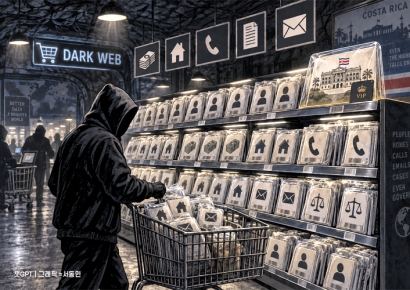 "President's Salary and Home Address Also Leaked"...Costa Rica in Uproar Over Dark Web Exposure of '400 Million' Personal Records
- Godongjin: "Honam Semiconductor Is for Election Purposes... The Market Could Shift by Completion" [AI Rulemakers] ⑨
- "Contributing 9 Million Won Annually…430,000 Won per Month Steadily from Age 65" …The Power of the “Three-Tier Pension”
- "I’ll Take This, Please"... Buying the Last Lottery Ticket Brings a Jackpot
- [Exclusive] LG Electronics to Establish Joint Robotics Development Base with NVIDIA
Some have pointed out that the issue should not be viewed solely as a conflict between the driver and the reporting passenger. They argue that in situations where there is a surge of passengers, such as during large-scale festivals or late-night hours, countermeasures such as temporary additional buses, standby vehicles, or support for teenagers returning home are necessary.
© The Asia Business Daily. All rights reserved. Unauthorized AI training and use prohibited.