KCCI Calls for Tailored Support for Medium-Sized Enterprises Accounting for 18% of Exports
About 20 Executives and Representatives from Medium-Sized Enterprises Attend
Shin Dongyeol, Secretary-General of the Fair Trade Commission, Invited as Guest Speaker
Fair Trade Commission Promises Enhanced Security in Subcontracted Payments a
There has been a call to develop tailored support policies for medium-sized enterprises that act as a bridge between large corporations and small businesses, rather than imposing uniform regulations.
On September 21, the Korea Chamber of Commerce and Industry announced that it held the 32nd meeting of the KCCI Middle Market Enterprise Committee at its headquarters in Jung-gu, Seoul, inviting Dongyeol Shin, Secretary General of the Korea Fair Trade Commission, as the guest speaker.
The discussion was attended by about 20 people, including Yuseok Jeong, Chair of the KCCI Middle Market Enterprise Committee (Vice President of Shinho Precision), Wonseok Oh, President of Korea FT, Seongyeol Kim, Vice President of Superior, Junhwan Lee, Vice President of KCTC, as well as other leaders and executives of middle market enterprises. Jeongil Kim, Standing Vice President of the Korea Chamber of Commerce and Industry, was also present.
This meeting was organized to review recent trends in fair trade policy and to share key changes and response strategies that middle market enterprises should be mindful of in their business transactions, at a time when business management uncertainties are rising due to changes in the trade environment, cost burdens, and industrial restructuring.

Exterior view of the Korea Chamber of Commerce and Industry. Korea Chamber of Commerce and Industry.
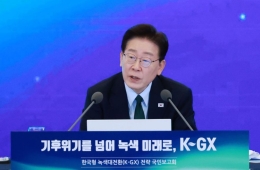
View original imageDuring his presentation on “Direction of Fair Trade Policy,” Secretary General Dongyeol Shin stated, “The goal of fair trade policy is not regulation itself, but to support companies’ autonomous and creative economic activities through fair market rules.” He added, “We will work to create a market environment that fosters growth and innovation.”
Shin identified the following as core tasks for the latter half of this year: establishing fair competition in daily life sectors, easing the power imbalance among economic agents, creating an ecosystem for digital market innovation, and alleviating the concentration of economic power among business groups. He further explained, “We will strengthen stability in payments for subcontracting and distribution sectors and intensify monitoring of unfair practices such as technology theft and cost shifting.”
The Fair Trade Commission plans to expand payment guarantees in subcontracting, enhance the effectiveness of direct payment by clients, and promote the activation of electronic payment systems. The commission also aims to ensure fairness in transactions between platforms and sellers, and to revise competition policies and consumer protection systems to align with changes in digital markets, including artificial intelligence (AI) and platform environments.
In his opening remarks, Chairman Yuseok Jeong stated, “As trade order is being reorganized and cost pressures persist, it is becoming increasingly difficult for businesses to anticipate the future. In particular, middle market enterprises occupy a dual position as both ‘clients’ of small businesses and ‘partners’ of large corporations, so they need both the responsibility to uphold fair trade order and institutional protection.”
He continued, “Uniform policies that fail to take into account the unique position of middle market enterprises between large corporations and small businesses have limitations when it comes to resolving on-the-ground challenges. Policies customized to the characteristics and roles of these firms are necessary.”
Hot Picks Today
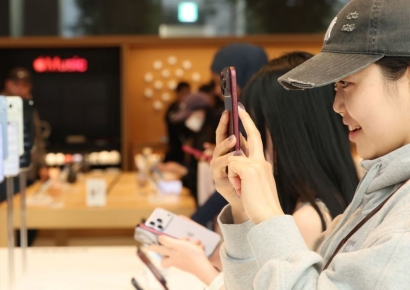 "It Shut Down Just From Showing My Face"... 1,500 iPhone 18 Pros Exchanged; "Cause Is Confidential"
- Condoms Out of Stock... "Please Stop Having Kids": Country to Deliver Contraceptive Pills Door to Door
- Is "Human Replacement" Imminent? Robot-Training Gigs Surge [Tech Talk]
- JYP Bought a 75.5 Billion Won Site, Only to Face an 18-Story Building Right in Front? ... SH's "Surprise Rezoning" Makes JYP Pull Out
- "I Want to Look Like Glowing Koreans" ... The Trend Is Taking the World by Storm, but Experts Warn Against It
Standing Vice President Jeongil Kim added, “While middle market enterprises make up only about 1.5% of all companies, they account for around 18% of exports and about 14% of employment, highlighting their significant economic contribution. To help these backbone enterprises leap forward, we must remove regulatory barriers and strengthen support measures that provide incentives for growth.”
© The Asia Business Daily. All rights reserved. Unauthorized AI training and use prohibited.