Traffic Expected to Increase During Shorter Holiday... Government Designates September 23–27 as Special Countermeasure Period
Ministry to Operate Joint Special Transportation Countermeasure Headquarters for Five Days
The Ministry of Land, Infrastructure and Transport announced that it has designated the five-day period from September 23 to 27 as a special transportation countermeasure period for the Chuseok holiday. During this period, a joint special transportation countermeasure headquarters will be operated in coordination with relevant agencies.
According to the Korea Transport Institute and Korea Expressway Corporation, the total number of travelers for this year’s Chuseok is expected to reach about 20.93 million, a decrease of approximately 3.5% compared to last year, as the holiday period is shorter. It is anticipated that about 88% of people will use private cars. The average daily traffic volume on expressways is projected to be 6.05 million vehicles, which is about a 12% increase from last year.
The Ministry of Land, Infrastructure and Transport has set strengthening traffic flow, expanding mobility services, and increasing public transportation as key tasks this holiday, given that the shorter holiday period is expected to cause heavier congestion. In particular, 299 sections of expressways and general national highways have been selected as potentially congested areas, and vehicles will be guided to detour routes as necessary. Additionally, shoulder lanes will be operated on 64 expressway sections. The exclusive bus lane for the Yangjae–Sintanjin section on the Gyeongbu Line will be extended by 4 hours longer than usual, operating until 1 a.m. the following day.

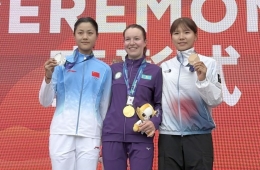
Traffic congestion near the Jamwon Interchange on the Gyeongbu Expressway in Seoul on October 3, the first day of last year’s Chuseok holiday. Yonhap News Agency
View original imageExpressway tolls will be exempted for four days around Chuseok, and fuel prices at highway service stations will be reduced by 100 KRW per liter. Information on rest area congestion will be provided prior to entry. KTX fares will be reduced by an average of 10%, with discounts of up to 50% on KTX return-from-hometown tickets. To ease congestion at airports, Incheon’s departure halls will open up to 30 minutes earlier, and real-time waiting status will be released on major web portals. Self-check-in and bag drop services will be expanded, and temporary parking lots will be secured. Operation information for coastal passenger ferries will be linked to portal navigation services, and parking fees at government-managed coastal passenger terminals will be waived.
Pre-holiday safety inspections for transportation infrastructure and vehicles will be strengthened. The number of high-risk accident-prone areas identified through AI-based analysis will be increased by 10 to a total of 50 locations. Systems to detect seatbelt use on expressways and wrong-way driving at interchanges will also be operated. The number of bus or rail services and available seats will be increased by more than 11% compared to normal periods. Vulnerable structures such as road slopes will be monitored in real time as a precaution against heavy rainfall, and emergency repair equipment and materials will be secured in advance.
Hot Picks Today
!["Is the YouTuber Telling the Truth?" 300,000 Views in One Day... The Real Story Behind Shin Ramyun's Flavor, According to Nongshim [Tastelovers X-File]](https://cwcontent.asiae.co.kr/asiaresize/93/2025032015504476691_1742453444.jpg) "Is the YouTuber Telling the Truth?" 300,000 Views in One Day... The Real Story Behind Shin Ramyun's Flavor, According to Nongshim [Tastelovers X-File]
"Is the YouTuber Telling the Truth?" 300,000 Views in One Day... The Real Story Behind Shin Ramyun's Flavor, According to Nongshim [Tastelovers X-File]
- Foreign Tourists Sweep Up Olive Young Bags... 3,000-Won Tarpaulin Bags Now Resold at a Premium [K-Holic]
- "Why Not?" Chugging from Monday Morning... Rapid Growth of the Non-Alcoholic Market [The Way We Buy Now]
- "KOSPI Surpassed 9,000, but May Fall Below 5,200 Next Year"...Expert Explains the Forecast
- With Two Extra Days Added to Chuseok Holiday: "Pack Up, Let's Go Anywhere"... Domestic Travel Demand Surges
Park Jaesoon, Director General for Transportation Logistics at the Ministry of Land, Infrastructure and Transport, urged, "Since heavier traffic congestion is expected due to the shorter holiday, please check traffic information before departure, fasten your seatbelt in all seats, and take breaks to avoid drowsy driving."
© The Asia Business Daily. All rights reserved. Unauthorized AI training and use prohibited.



!["Rates Are Rising, but Stocks Are Better?"... AI Reshapes Existing Investment Formula [Weekend Money]](https://cwcontent.asiae.co.kr/asiaresize/307/2026091800551633374_1789660516.png)