President Lee Considers Dedicated Youth Policy Organization... "We Will Seek Solutions on the Ground"
First Attendance at ‘Youth Day’ Ceremony Since Taking Office
"Youth Issues Are Fundamental to Korea’s Sustainable Growth"
Emphasizing Structural Support in Education, Asset Building, Housing, and Employment
"Empowering Youth Is an Industrial Policy"
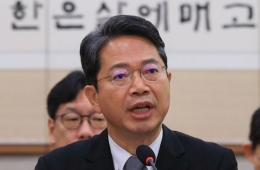
President Lee Jae-myung announced on September 19, 2026, that he is considering establishing a separate organization dedicated to addressing youth issues. He explained that individual support measures alone are insufficient to resolve problems such as youth unemployment, wealth disparity, and housing insecurity. As such, he envisions an overhaul of the overall framework for youth policy and a more direct reflection of youth and field voices in the policymaking process.

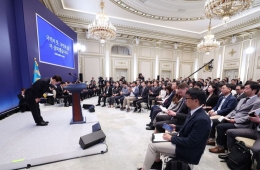
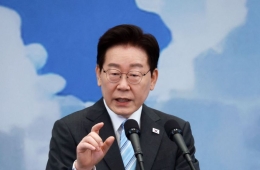
President Lee Jae-myung is delivering a commemorative speech at the Youth Day ceremony held at the Blue House on the 19th. September 19, 2026. Photo by Yonhap News
View original imageAt the ‘2026 Youth Day’ ceremony held in the State Guest House of the Blue House that afternoon, President Lee stated, “Youth issues are not just the problems of a specific group or class. They are fundamental to whether the Republic of Korea can continue to grow and prosper. Therefore, I am considering the need for an organization specializing in and overseeing all youth policies.” This is President Lee’s first attendance at a Youth Day ceremony since taking office.
President Lee diagnosed the current situation faced by the younger generation as a structural problem that cannot be overcome by personal effort alone. He remarked, “Despite being the generation that studied the longest, they wait the longest to find employment; despite being the best prepared, they own the least; and, despite being the most fiercely competitive, their future is the most uncertain.” He further added, “Nowadays, even living an ordinary life is difficult without being exceptional.”
President Lee pointed to deepening polarization and industry restructuring driven by artificial intelligence (AI) as the underlying causes of youth issues. He noted that while there used to be ample opportunity for a second chance after failure, the total amount of ‘opportunity’ available to youth has shrunk due to changes in industry and employment structures. He particularly highlighted changes in corporate hiring practices. “In the past, companies would hire new employees, train them for specific roles, and then provide full employment. Recently, however, there is a preference for experienced hires who can be put to work immediately,” he stated, “and there are few opportunities even to gain that experience in the first place.”
Accordingly, President Lee announced plans to prepare youth policies that encompass all stages of the youth lifecycle, ranging from developing practical skills required at worksites through education and vocational training, to supporting the accumulation of initial assets, housing, and reducing the burdens of marriage, childbirth, and childrearing. On the current education system, he stated, “It remains focused on selecting and memorizing individuals for the era of mass production,” emphasizing that the state must foster the capabilities needed for the advanced industrial era.
He also stressed that youth policy cannot be viewed separately from industrial policy. “Enhancing the capacities of the youth generation enhances the capacities of society as a whole,” Lee said, highlighting that nurturing talents required for the transition to advanced future industries is also a fundamental industrial policy. With economic conditions gradually improving, he mentioned there is now greater fiscal space to pursue such policies. Thus far, the administration has been reviewing initiatives such as the ‘Youth New Deal’ to respond to future industrial changes, an ‘Employment Recovery Plan’ to mitigate employment shocks for the youth, and a ‘Future Response Fund’ to support lifecycle-based youth policies.
Changes in the way policies are developed were also foretold. President Lee cited limitations in accurately assessing the realities faced by youth using only the existing policy-making bodies. He stated, “Although high-ranking policymakers wield the greatest authority, they are the furthest removed from real problems and the field. That is why I am proposing we seek solutions led by those on the ground.” He continued, “The world seen by those in their 50s and 60s is different from that seen by people in their 30s,” stressing the need to expand opportunities for young people to participate in policy.
Hot Picks Today
 In the Same Neighborhood, One Apartment Costs 2 Billion Won, Another 450 Million... What's Happening in Gangnam?
- "Will the Semiconductor Industry Be in Trouble?" Stock Prices Have Fallen, but Investments May Increase [Weekend Money]
- "Had Prepared So Much... Then Suddenly Told Not to Appear" Jomin Notified of Cancellation 90 Minutes Before Broadcast
- "Why Don't They Disclose Salaries?"... Half of Job Seekers Give Up Applying
- "Fighter Jet Lost in Blizzard During Korean War Discovered Off Yangyang After 74 Years"
Approximately 150 participants—including youth organizations, government youth aides, members of the Youth Policy Coordination Committee, and individuals recognized for outstanding work in youth policy—attended the event. The first session included awards for those who have contributed to youth policy, while the second session, titled “From the Youth,” was conducted in an open-mic format. President Lee encouraged the young attendees by saying, “I hope your stories will generate many great ideas to create new hope for your generation,” and pledged, “Let us work together to ensure that you all receive your fair share and place in society.”
© The Asia Business Daily. All rights reserved. Unauthorized AI training and use prohibited.