"Enhancing SME Negotiating Power"...Korea Federation of SMEs Presents 10 Key Legislative Tasks to National Assembly
Announcement of "Legislative Tasks for Small and Medium Enterprises Desired in the Second Half of the 22nd National Assembly"
The Korea Federation of SMEs announced on September 20 that it has released "Legislative Tasks for Small and Medium Enterprises Desired in the Second Half of the 22nd National Assembly," which outlines legislative issues for the SME sector that should be prioritized during the second half of the 22nd National Assembly.
This legislative proposal consists of 32 tasks related to 28 laws under the jurisdiction of six standing committees: the Industry, Trade, Resources, SMEs and Startups Committee; the Legislation and Judiciary Committee; the Political Affairs Committee; the Strategy and Finance Committee; the Health and Welfare Committee; and the Climate, Energy, Environment, and Labor Committee. Of these, the Korea Federation of SMEs has selected 10 as key priorities.
First, to ensure a sustainable foundation for the growth of small and medium-sized enterprises, the Korea Federation of SMEs presented improvement of transaction environments as a core priority. It identified the negotiation power gap between large and small businesses as one of the factors contributing to economic polarization, and proposed the introduction of a consultation request right for SME cooperatives, easing raw material requirements for the supply price linkage system, and improvements to the non-linkage system, among others.

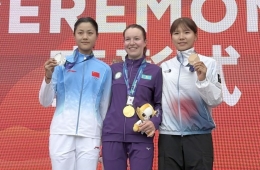
Image related to 'Legislative Tasks for Small and Medium Enterprises Desired in the Second Half of the 22nd National Assembly.' Korea Federation of Small and Medium Business
View original imageThe organization also suggested shortening the payment deadlines for supplied goods to enhance the liquidity of SMEs. Specifically, it requested that the payment period mandated by the Win-Win Cooperation Act and the Subcontracting Act be reduced from the current 60 days to 30 days, and under the Distribution Industry Development Act, that the deadline for direct purchases be cut from 60 days to 30 days, and for special contract purchases from 40 days to 20 days.
Tasks to respond to rapidly changing industrial environments were also included. These include: enacting the Online Platform Fair Transaction Act, legislating a Special Act to administer regulatory exceptions and legal revisions for new industries and new technologies, and establishing a support structure for SME carbon neutrality and decarbonization, all identified as key priorities.
In addition, in the areas of employment, labor, and the management stability of small businesses and micro-enterprises, the core proposals included: making the Serious Accident Punishment Act more practical for on-site SME environments, ensuring autonomy and expanding incentives for continued employment of older workers, and excluding double imposition of health insurance premiums on lump-sum payments from the Yellow Umbrella mutual aid program.
Brian Heeseong Kim, Head of Economic Policy at the Korea Federation of SMEs, stated, "Recently, K-shaped polarization has been intensifying. In order to overcome polarization and lay the groundwork for a great leap in the Korean economy with the joint growth of SMEs, we hope that the 22nd National Assembly in its second half will carefully deliberate the legislative agenda for SMEs."
Hot Picks Today
!["Is the YouTuber Telling the Truth?" 300,000 Views in One Day... The Real Story Behind Shin Ramyun's Flavor, According to Nongshim [Tastelovers X-File]](https://cwcontent.asiae.co.kr/asiaresize/93/2025032015504476691_1742453444.jpg) "Is the YouTuber Telling the Truth?" 300,000 Views in One Day... The Real Story Behind Shin Ramyun's Flavor, According to Nongshim [Tastelovers X-File]
"Is the YouTuber Telling the Truth?" 300,000 Views in One Day... The Real Story Behind Shin Ramyun's Flavor, According to Nongshim [Tastelovers X-File]
- Foreign Tourists Sweep Up Olive Young Bags... 3,000-Won Tarpaulin Bags Now Resold at a Premium [K-Holic]
- "Why Not?" Chugging from Monday Morning... Rapid Growth of the Non-Alcoholic Market [The Way We Buy Now]
- "KOSPI Surpassed 9,000, but May Fall Below 5,200 Next Year"...Expert Explains the Forecast
- With Two Extra Days Added to Chuseok Holiday: "Pack Up, Let's Go Anywhere"... Domestic Travel Demand Surges
The Korea Federation of SMEs delivered the legislative agenda to National Assembly Speaker Cho Jeong-sik on September 16 and plans to present related content to both ruling and opposition parties, as well as standing committees, and to recommend legislation through policy consultations.
© The Asia Business Daily. All rights reserved. Unauthorized AI training and use prohibited.


!["Rates Are Rising, but Stocks Are Better?"... AI Reshapes Existing Investment Formula [Weekend Money]](https://cwcontent.asiae.co.kr/asiaresize/307/2026091800551633374_1789660516.png)