"Fighter Jet Lost in Blizzard During Korean War Discovered Off Yangyang After 74 Years"
U.S. F-4U Corsair Positively Identified
U.S. Expected to Begin Search for Pilot’s Remains
Wreckage believed to be from a U.S. military fighter jet that crashed off the coast of Yangyang during the Korean War has been discovered.

On the 18th (local time), U.S. broadcaster CNN provided an in-depth report on the history of the F-4U Corsair, a fighter jet that played a key role in the Korean War, and the recent discovery of its wreckage on the sea floor off the coast of Korea.
The wreckage was first discovered in May of last year. Korean scuba diver Kim Kyungsoo ventured deeper than usual due to strong currents, and at a depth of 45 meters, he found a cylindrical object resembling a submarine. He subsequently returned to the site more than ten times, taking photos and videos of the object each time. Kim, who previously worked with the Korean government on search and documentation operations at the Josei coal mine in Yamaguchi Prefecture, Japan, understood well the importance of preserving and recording such discoveries.
Kim sent the data he collected to the Ministry of National Defense’s Agency for KIA Recovery & Identification, which then shared it with the U.S. Defense POW/MIA Accounting Agency (DPAA). The DPAA dispatched two underwater drones to survey the seabed. DPAA team leader Spencer Jefferson stated, "Based on the shape and the engine, it's likely what we've been looking for." Although the tail fin was torn off and the airframe was rusted, traces unique to the Corsair’s distinctively bent wings remained.
CNN reported that the wreckage is likely that of the Corsair which disappeared on February 21, 1952, after taking off from an Essex-class aircraft carrier. At the time, the 5th Air Group was conducting operations off Korea’s east coast. During one mission, an AD-4 was damaged in combat, and a Corsair was dispatched from the carrier to assist it. However, it was not enemy forces but the weather that became their adversary. The Corsair, while escorting the AD-4, was overtaken by a blizzard and reportedly crashed into the sea.
The aircraft carrier captain’s report noted, "It is presumed that the pilot became disoriented while flying in the blizzard. The body was not recovered, and the incident has been classified as killed in action." As a result, it is expected that the U.S. military will launch another search operation in Yangyang to locate the remains. The DPAA stated, "There may still be evidence deep on the ocean floor of soldiers whose lives ended prematurely because of war. Bringing home every single person to the families who have waited for so long is both a promise and a duty of the nation."
Hot Picks Today
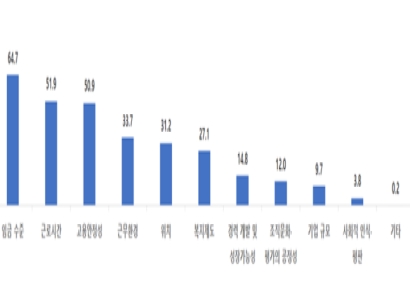 "Please Pay Me at Least 3 Million Won a Month": More Than Half of Young People Today Prioritize "Working Conditions" Over Company Size
- Selling Like Crazy Every Year... 30-Year-Old Hetbahn Takes on a New Challenge: Tastes Better Than "Mom's Home Cooking" [On-Site Report]
- He Left It in the Car and Forgot... "I Nearly Collapsed with Joy": Man Wins $1.48 Million Lottery
- Ran 18 km With 9-Year-Old Tied to Him at the Waist... "Man Banned From Competing for 3 Years"
- Beachgoer Finds 'Plastic' That Turns Out to Be Perfume Ingredient Worth More Than Twice as Much as Gold
Meanwhile, the Corsair was nicknamed "Saeksaeki" in Korea due to its distinctive sharp sound that pierced the sky. During the Korean War, "Saeksaeki" originally referred to U.S. Air Force F-86 Sabres and other jet aircraft, but the term later came to refer broadly to any American fighter jets known for their thunderous noise. During the Pacific War, Japanese forces nicknamed the Corsair the "Whistling Death" because the aircraft played a pivotal role in shooting down more than 2,100 Japanese aircraft during World War II. However, because the Corsair was difficult to fly and suffered frequent crashes, U.S. troops sometimes referred to it as the "Widow Maker."
© The Asia Business Daily. All rights reserved. Unauthorized AI training and use prohibited.