"Crackdown on Speculation, Expansion of Supply" Reiterated... Lee Administration's Real Estate Policy Likely to Remain Unchanged
President Lee Outlines Real Estate Views at June 18 Press Conference
"Cites Capital Region Concentration, Supply Shortage, and 'Invincible Market Myth' as Key Causes
...Expects Market Stabilization Through Financial Support, Supply Expansion, an
President Lee Jae-myung’s perspective on real estate, as shown at the press conference on the 18th, is largely unchanged from what he has consistently expressed since taking office. He assessed that the recent instability in housing prices—centering on non-Gangnam areas in Seoul—is the result of a complex combination of factors: concentration in the Seoul metropolitan area, insufficient supply, the persistent “invincibility myth” surrounding real estate, and policy missteps by previous administrations.
He has repeatedly described the country as a "republic of real estate speculation" since taking office. However, apart from announcing plans to expand housing supply, he did not provide any specific solutions to resolve the current issues. This suggests that no significant changes are expected in the administration’s real estate policy direction.
This sense of public discontent over real estate has been cited as a major factor driving down President Lee’s approval ratings. Despite multiple measures announced since last year to address the increasing concerns over housing supply shortages—especially in Seoul—the sense of unease has not subsided. With public sentiment turning negative toward supply-side policies, there has been strong pushback, particularly from residents and local governments, regarding the regions and locations proposed as sites for new supply.

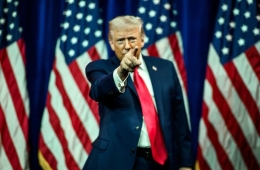
President Lee Jae-myung is answering reporters' questions at a press conference held on the 18th at the Blue House's Guesthouse. Photo by Yonhap News Agency
View original imageEven considering that it will take considerable time for housing supply measures to deliver tangible results, there are few signs of improvement in key indicators such as construction starts. President Lee, seemingly aware of this, emphasized at the press conference, “We are maximizing financial support in all areas that can increase housing supply,” and stated, “As a result, there will be a substantial increase in supply.”
The current administration’s approach to demand management—encouraging owner-occupation and increasing tax burdens on non-occupants—has also drawn negative evaluations, such as further stimulating the rental market. Yet, the possibility of a policy shift appears slim. President Lee remarked, “We are monitoring all aspects and will take every possible action in terms of regulations, supply, and taxation so the real estate market will stabilize gradually. However, we are also preparing and implementing detailed measures to address the difficulties faced by tenants in the jeonse and monthly rental markets.” These comments indicate a likely continuation of existing policies rather than announcing new measures or changing the overall policy direction.
Experts responded cautiously in their assessments, since President Lee only addressed the issue of real estate policy in general terms at the press conference and offered few concrete proposals. A real estate specialist who requested anonymity stated, “There are certain errors in his analysis of recent developments. It appears he is falling into self-justification and not listening to a range of opinions.” On the other hand, some pointed out that “amending the tax system or repeatedly extending the live-in exemption for land transaction permits in response to public opinion has undermined confidence in the overall policy direction.”

There were also remarks that could be seen as attributing the current supply shortage to the previous administration. President Lee said, “In 2022, after Yoon Suk-yeol’s administration took office and Oh Se-hoon was elected mayor, the number of real estate permits and construction starts halved from that year,” and pointed out, “In this situation, relaxing land transaction permit zones led to a surge in housing prices in specific areas.” At the time, it was generally agreed that the supply shortage was due to market conditions such as the rise in raw material costs caused by war, a rapid spike in interest rates over a short period, and increased funding uncertainty due to the contraction of the project financing (PF) market.
While President Lee specifically identified factors that could further destabilize the real estate market, some pointed out that the solutions he proposed were rather abstract. Choi Byung-chun, director of the New Growth Economy Research Institute, said, “He offered concrete explanations for factors driving up housing prices, such as rapid economic growth and increased liquidity as well as under-supply. However, although he emphasized the need to move away from being a ‘real estate speculation republic,’ he failed to elaborate on the measures or methods to achieve this, such as whether this would mean maintaining or lowering housing prices, and did not offer any specific direction.”
Hot Picks Today
 "Two Spend 500,000 Won in a Flash, Yet Wait Two Hours?" ... 'Dreamland' Shunned by Kids and Foreign Tourists
- The Era of Getting 200 Million Won After 30 Years Is Over... A Japanese Bank's "Perpetual Department Head" Who Just Clocked In Cries Out
- Spain Hit by Its Worst Tragedy... Lee Kangin, Moreno and Real Madrid Join Soccer World in Mourning
- They Said, “Make It Your Home for Life” - Then Suddenly Kicked 200 Passengers Off... What Happened to the Around-the-World Cruise?
- "130 Rice Bowls Sold Out in a Day"... 'Unfiltered Face' Adds 8 Million Won to Night Market Sales: China's Bungeunwoo
Cho Jeong-heun, chair of the Land and Housing Committee at the Citizens’ Coalition for Economic Justice, said, “While President Lee pledged to maximize supply through reconstruction, redevelopment, and urban renewal, it is concerning that he is pushing these initiatives so strongly despite their potential side effects.”
© The Asia Business Daily. All rights reserved. Unauthorized AI training and use prohibited.