Anthropic Advocates for AI Deceleration... Likelihood of Chinese Participation [Weekend Money]
Shinhan Investment Corp.: “Low Likelihood of China, the Pursuing Nation, Joining In”
As Anthropic has advocated for decelerating the pace of artificial intelligence (AI) development, a securities firm's analysis has concluded that China—which is engaged in a technology race with the United States—is unlikely to join such efforts.

On September 18, Seungwoong Shin, a researcher at Shinhan Investment Corp., stated in his report, "AI Deceleration: A Chinese Perspective," that "the U.S. argument for slowing AI progress presumes both a slowdown at home and the suppression of China’s pursuit, but the likelihood of China participating is low."
Previously, on September 12 (local time), Dario Amodei, CEO of Anthropic, emphasized the necessity of AI safety management in his blog and argued that development of AI models should proceed with greater caution and a slower pace.
The central premise of this argument is that the United States must maintain its technological superiority. If only the U.S. slows down, it simply gives China more time to catch up. Researcher Shin commented, "This is why CEO Amodei stressed not only the control of advanced AI semiconductors but also the need to block China’s indirect technological access, such as through model distillation and weight leakage." He further explained, "Ultimately, the U.S. deceleration logic rests on both slowing down domestically and suppressing China’s pursuit, which is why China is unlikely to participate."
China has also acknowledged the importance of AI safety, for example, by emphasizing risk identification and response and strengthening safety governance in its "AI Safety Governance Framework 3.0," released on September 14. However, the report notes that China does not link this to restrictions on the speed of AI development. Instead, China’s AI policy has consistently aimed for advancing model sophistication and efficient learning and inference, as well as the development of AI agents and artificial general intelligence (AGI).
The difference in strategic positions between the two countries is cited as another reason why China will likely not join in decelerating development. Shin noted, "If China, as a pursuing nation, slows down first, the technological lead of the United States will be cemented." He also emphasized that, "Given the restrictions on access to cutting-edge semiconductors and computing resources, there is even less incentive for China to voluntarily slow its frontier competition."
Hot Picks Today
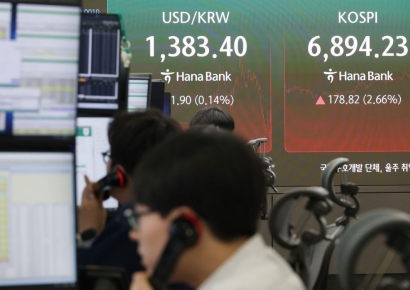 "KOSPI Surpassed 9,000, but May Fall Below 5,200 Next Year"...Expert Explains the Forecast
- In the Same Neighborhood, One Apartment Costs 2 Billion Won, Another 450 Million... What's Happening in Gangnam?
- "Fighter Jet Lost in Blizzard During Korean War Discovered Off Yangyang After 74 Years"
- "Will the Semiconductor Industry Be in Trouble?" Stock Prices Have Fallen, but Investments May Increase [Weekend Money]
- "Trusting the Elder Who Said 'I Already Paid': 'Fake Guests' Target Wedding Halls for Return Gifts"
Ultimately, Shin concluded that, due to the operation of the 'prisoner's dilemma,' where each party must act with consideration of the other's likely response, it would be difficult for either country to unilaterally reduce the pace of development. "We expect limited cooperation on safety and the coexistence of frontier competition," he wrote. "As long as U.S.-China competition continues, there is little structural likelihood that AI capital expenditures (CAPEX) will be reduced, and China, in particular, stands out for its clear goals of closing the technology gap and achieving semiconductor self-sufficiency. China’s investment in AI and U.S.-China frontier competition are thus expected to continue in the mid to long term," he added.
© The Asia Business Daily. All rights reserved. Unauthorized AI training and use prohibited.