Jeonnam Gwangju Integrated Metropolitan City’s First Organizational Restructuring Plan Barely Passes... Democratic Party “Welcomes”
Passed with 46 votes in favor... Cleared the majority threshold by just one vote
Some promotions before Chuseok... All appointments finalized by October 7
The first organizational restructuring plan since the launch of the Jeonnam Gwangju Integrated Metropolitan City narrowly passed the plenary session of the city council after considerable friction. The Jeonnam Gwangju Integrated Metropolitan City branch of the Democratic Party of Korea welcomed the city council's decision and stated that it would cooperate with the special city and the city council to ensure the rapid stabilization of the subsequent administrative system.
On September 18, the Jeonnam Gwangju Integrated Metropolitan City Council held the 3rd plenary session of the 3rd regular session and passed the “Ordinance Bill to Amend the Entire Ordinance on the Establishment of Administrative Organizations of the Jeonnam Gwangju Integrated Metropolitan City,” with 46 votes in favor, 35 against, and 8 abstentions out of 89 council members present.

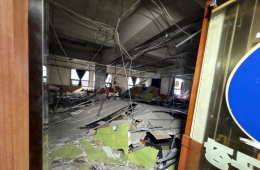
Exterior view of the Muan Office Building of the Jeonnam Gwangju Metropolitan Council
View original imageWith only one more vote in favor than the majority threshold of 45 members present, the restructuring plan barely cleared the hurdle of the plenary session.
The “Partial Amendment to the Ordinance on the Number of Public Officials,” which deals with personnel redeployment following the organizational restructuring, also passed with 62 votes in favor, 15 against, and 7 abstentions out of 84 council members present.
Before the vote on the restructuring plan, 11 council members requested to speak against it, but after only Jin Ho-geon and Lee Haeng-do made statements, the debate was concluded. No council members spoke in favor.
Jin Ho-geon, a Democratic Party council member, insisted that “the organizational restructuring should be slowed down, maintaining the existing organizational and budget structures of Jeonnam and Gwangju separately for two years until at least 2028, while gradually integrating them.”
Lee Haeng-do, another Democratic Party council member, argued that “the status and functions of the agriculture and fisheries sector were not properly reflected in the restructuring plan.” He also voiced his opposition to the conditional proposal of passing the restructuring plan first, then revising it again based on approval from the Ministry of the Interior and Safety.
The first restructuring after the integration faced difficulties from the planning stage due to the allocation of functions by government building, placement of public officials, and different local interests.
Within the city council, debates continued over the allocation of functions among the three government buildings—Gwangju, Muan, and Dongbu—as well as the placement of vice mayors appointed by the central government. Although the Planning and Finance Committee’s review was postponed once on September 9, the executive branch submitted an amended plan, which passed the standing committee on September 15.
With the restructuring plan now approved by the city council, the executive branch plans to accelerate subsequent personnel procedures. Some promotions for senior officials will be carried out before Chuseok, followed by the remaining promotions and transfers after the holiday, with the aim of finalizing all appointments by the restructuring implementation date of October 7.
The Jeonnam Gwangju Integrated Metropolitan City branch of the Democratic Party immediately welcomed the confirmation of the restructuring plan.
City branch chair An Dogeol issued a statement, saying, “The city council’s decision to pass the restructuring plan through dialogue and compromise, transcending regional interests, is highly significant.” He added, “The city branch will also grow into a united political party that breaks down past regional boundaries and unites the hearts of Jeonnam and Gwangju residents.”
Prior to the plenary session on this day, chair An met with Mayor Min Hyeong-bae and city council chairman Song Hyeong-gon to call for mutual prosperity and cooperation. Taking the passage of this restructuring plan as an opportunity, he also outlined a vision to develop the party into an ‘integrated, policy-oriented, and future-oriented political party.’
He said, “Now that the framework of the organization has been established, it’s essential to fill it with substantive content. We will transform into a policy-oriented party that proposes solutions to improve residents’ quality of life and a future-oriented party that leads a new era for local governments.”
The city branch plans to cooperate with the special city and the city council to ensure the rapid stabilization of the administrative system, timed with the implementation of the restructuring on October 7.
At the closing of the regular session, city council chairman Song Hyeong-gon also stressed that “it is crucial to ensure the rational allocation of functions and regional balance so that core authority and policy capacity are not concentrated in a specific district or building,” urging the executive branch to implement concrete follow-up measures.
Meanwhile, at the plenary session on this day, a total of 16 agenda items were resolved, including two ordinances related to the restructuring.
The supplementary budget proposal also passed in a revised form, reducing a total of 41.5 billion won, including 40 billion won for the legally mandated transfer to the provincial education office. The proposal for issuing an additional 27.1 billion won in local bonds—exceeding the legal limit—was rejected by the council.
In addition, resolutions were passed to establish a youth special committee and appoint its members to reorganize youth policy standards and project systems after the integration, as well as to review the effectiveness of the youth special law.
Hot Picks Today
![[Exclusive] "We warned you four times"... 'This' Found in an LH Happy Housing Bathroom](https://cwcontent.asiae.co.kr/asiaresize/93/2023073107570824314_1690757828.png) [Exclusive] "We warned you four times"... 'This' Found in an LH Happy Housing Bathroom
[Exclusive] "We warned you four times"... 'This' Found in an LH Happy Housing Bathroom
- "Eerily Similar to the COVID-19 Crisis"... Mysterious Death at Russian Research Institute Revives 'Pandemic Nightmare' [Current Affairs Show]
- "Busan Is in Big Trouble"... One Cockroach Can Produce 350 Nymphs; Establishment Confirmed, Causing Alarm
- 50,000-Won Bills Printed on A4 Paper... Convenience Stores Staffed by Middle-Aged and Older Workers Were the Target
- "I Hate Dog Meat and Skate, Love Pizza" ... "Let's Meet" Frenzy Over Beautiful 41-Year-Old Nurse, But There's a Twist
Other resolutions adopted included the approval of the 2025 fiscal year settlements and reserve fund expenditures for the former Jeonnam Province, Gwangju City, and the two education offices; enactment of the Local Council Act within the year; revision of the Agricultural and Fisheries Safety Insurance Act; measures for heat wave and drought damage; establishment of the Korea Island Transportation Corporation; stabilization of barley supply and demand; legalizing activity expenses for village fisheries heads; and safeguarding farm household income during the rice harvest season—a total of seven proposals.
© The Asia Business Daily. All rights reserved. Unauthorized AI training and use prohibited.




![AI Investment and Inflation Pressures... U.S. Rates to Rise Again? [Weekend Money]](https://cwcontent.asiae.co.kr/asiaresize/307/2026071504434646114_1784058227.jpg)