Average Drug Prices of 80 High-Usage Pharmaceuticals Cut by 4.6%, Saving KRW 33.9 Billion in Health Insurance Budget
NHIS Completes Price Linkage Negotiations for 81 Pharmaceutical Products
One Infertility Treatment Maintains Price with One-Time Reimbursement
The prices of 80 pharmaceutical products, which saw a significant increase in health insurance claims, have been reduced by an average of 4.6%.

On September 18, 2026, the National Health Insurance Service announced the completion of negotiations with pharmaceutical companies regarding 81 products subject to the "Type Da" usage-volume to drug price linkage negotiation for 2026.
The usage-volume to drug price linkage system is a policy in which the price of drugs registered under health insurance is adjusted through negotiations with pharmaceutical companies when their usage increases above a certain level compared to the previous year, thereby placing a financial burden on the health insurance budget. "Type Da" covers products whose claims amount increased by 60% or more year-on-year, or increased by more than 10% with the amount of increase exceeding KRW 5 billion.
As a result of these negotiations, the prices of 80 out of 81 products were reduced starting from September 1. The average reduction rate is 4.6%, resulting in approximately KRW 3.39 billion in savings for the health insurance budget. The number of negotiated products decreased by 36 compared to last year’s 117, but the savings are similar to last year’s KRW 3.37 billion. The average saving per product increased by 50% from KRW 280 million last year to KRW 420 million this year.
Among the products with reduced prices, treatments for hypertension and hyperlipidemia accounted for the largest proportion at 43.2%. The Service expects that with the aging population and the increasing number of patients with chronic diseases, the drug cost burden for patients on long-term medication will also be reduced.
By product, DongA ST’s growth hormone ‘Grotropin,’ Celltrion’s ‘Remsima IV’ and ‘Remsima SC,’ Chong Kun Dang’s ‘Renaloma,’ Yuhan Corporation’s ‘Rosuvamibe’ and ‘Atovamibe,’ Boryung’s ‘Ducarb,’ and Myung In Pharm’s ‘Medikinet Retard’ are among those included in the price reduction.
However, for one infertility treatment that saw increased usage due to the government's policies to address the declining birth rate, the price was maintained and a one-time reimbursement approach was adopted.
Hot Picks Today
 "KOSPI Surpassed 9,000, but May Fall Below 5,200 Next Year"...Expert Explains the Forecast
- In the Same Neighborhood, One Apartment Costs 2 Billion Won, Another 450 Million... What's Happening in Gangnam?
- "New Infections Sixteen Times Higher Than in 2019"... National Emergency Declared Over Spread of This Virus
- "I Thought I Lacked Willpower, But It Turns Out 'This Hormone' Is to Blame? [Experiment Note]"
- With Two Extra Days Added to Chuseok Holiday: "Pack Up, Let's Go Anywhere"... Domestic Travel Demand Surges
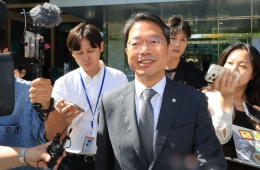
The Service plans to continue holding quarterly meetings with the Pharmaceutical Association to exchange opinions on drug price negotiation and post-management systems and to continually discuss ways to improve the system. Namhoon Kim, Executive Director of Benefits at the National Health Insurance Service, stated, “We will continue to strengthen the management of drugs with a significant impact on insurance finances through the linkage negotiation system and strive to ease the drug cost burden for the public.”
© The Asia Business Daily. All rights reserved. Unauthorized AI training and use prohibited.