[Editorial] The Presidential Press Conference: Not the End, but the Beginning
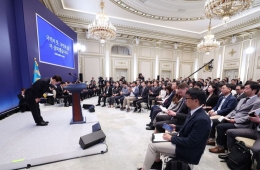
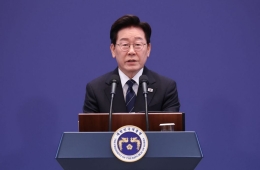
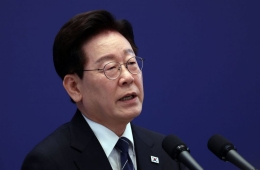
President Lee Jae-myung has reached a critical turning point in his second year in office. The President himself appears to recognize the gravity of the situation. Evidence of this is seen in his decision to delay the press conference by 30 minutes as he refined his opening remarks, as well as his humility in stating, "All of this is a result of my shortcomings. I will restore my sense of accountability to the people."
The trajectory of the political landscape will vary greatly depending on how today's press conference is received by public opinion. If the response is favorable, it could provide an opportunity for President Lee to regain public support and revive the momentum of his administration. On the other hand, if the reaction is negative, he is likely to continue facing difficulties in governance, beset by both internal and external pressures. President Lee is already confronted with two major fronts: the opposition party and dissenters within his own party.
The crisis emerged swiftly. The first reason is failed policies. Notable examples include the leverage exchange-traded fund (ETF) issue, investigations into real estate and farmland holdings. Communication and planning were inadequate, while forecasting and crisis management failed to function. Personnel failures have also been significant. Figures such as Lee Seok-yeon, Lee Hye-hoon, Lee Byung-tae, and John Linton, who were appointed under the banner of 'integration,' either faltered or faced strong opposition. Controversies surrounding appointments of lawmakers Yong Hyein and Kim Seungwon greatly unsettled the political sphere. These adverse developments have had a compounding effect, resulting in President Lee’s approval ratings falling for nine consecutive weeks. The rifts are widening not only among those in their twenties and thirties, but also among those in their forties and fifties, who were once considered his core base of support.
The deepening divisions within the ruling bloc are becoming ever more apparent. Gyeonggi Province Governor Choo Mi-ae directly criticized the President, saying, "He cowers in fear, carried by forces of insurrection," while Kim Minseok, leader of the Democratic Party of Korea, even referenced 'impeachment,' claiming, "This feels like a prelude to former President Roh Moo-hyun’s impeachment." The power struggle between mainstream and non-mainstream factions is an unseemly spectacle. Such scenes, usually reserved for a government’s waning days, are appearing in only the second year of the administration, leading ordinary citizens—already struggling with economic hardship—to look away in disappointment. All of this has unfolded as the President’s approval rating has hit record lows.
Hot Picks Today
!["How Little Do Koreans Read? Who Will Acquire Munhakdongne Now on the Market [Weekend Money]"](https://cwcontent.asiae.co.kr/asiaresize/93/2026091716280432990_1789630084.jpg) "How Little Do Koreans Read? Who Will Acquire Munhakdongne Now on the Market [Weekend Money]"
"How Little Do Koreans Read? Who Will Acquire Munhakdongne Now on the Market [Weekend Money]"
- "Bank Offers 3.5%, but... Which ETF Hit a 21% Dividend Yield? [Weekend Money]"
- "Holiday Liquor Price Hits 1.8 Billion Won"... The Identity of the Whisky That Sold Out Instantly After Launch
- "Please Be Quiet"... China to Fine Up to 210,000 Won for Disruptive Passengers Using Speakerphones
- "Raised a Stray Kitten, but..." Scientific Community Stunned: First New Wild Cat Species Discovered in 100 Years
There is no retreat for President Lee. The press conference marks not an end, but a new beginning. A bold decision is needed to reverse the current situation. Above all, it is essential to establish governance that is firmly anchored in the well-being of the populace and in public sentiment. It is imperative to move away from micromanagement and delegate greater authority and responsibility to the Cabinet. A sweeping overhaul of the presidential secretariat, as well as the personnel and civil affairs teams, is urgently required, and the President’s messaging must be meticulously managed. Extraordinary measures for power management within the ruling party are also necessary. Time is running out.
© The Asia Business Daily. All rights reserved. Unauthorized AI training and use prohibited.