Samil PwC and Seoul National University: "Climate Risks Must Be Reflected in Management and Investment Decisions, Beyond Disclosure"
Climate risks are emerging as a key management challenge, affecting asset values, operating costs, insurance premiums, supply chain stability, financing, and long-term returns.
On September 18, Samil PricewaterhouseCoopers (PwC) shared this awareness of the issue at the '2026 Climate Industry International Expo' held the previous day at BEXCO in Haeundae-gu, Busan. The company co-hosted the forum “Climate Risk: From Disclosure to Decision-Making” together with the Climate Tech Center at Seoul National University.
The forum was organized to discuss the data, analytical methodologies, and strategies for financial integration that companies and financial institutions need to utilize climate risk not merely as a disclosure item, but as an essential factor in real business and investment decisions. More than 100 representatives from government and public institutions, businesses, the financial sector, and research institutes attended the event.
For the first presentation, Jang Minhee, Team Leader at the Seoul National University Climate Tech Center, pointed out, “To use climate risk for real decision-making, analysis must reflect the location of business sites and assets, operating characteristics, and vulnerabilities. If outcomes are consolidated without evaluating each asset unit, physical risks could be underestimated.”
Kang Minji, Senior Researcher at the Samsung Fire & Marine Corporate Safety Research Institute, introduced how to assess a company’s risk exposure using the concept of the 'protection gap', which refers to the difference between potential economic losses from natural disasters and the actual insurance payouts.
Kwon Miyeop, Partner at the Samil PwC Sustainability Platform, analyzed, “The financial impacts of suspended supplies of overseas raw materials or key components, rising costs for raw materials and transportation, and the tightening of low-carbon requirements from client companies on profitability and investment recovery possibility must be thoroughly reviewed.” Kwon emphasized, “Connecting a company’s data on business sites, supply chains, contracts, and finances with climate information—and reflecting these results in budgeting, investment reviews, and contract negotiations—is key to the financial integration of climate risks.”
Hot Picks Today
 "Inside, It's a Shock... A Daughter Born in the 1990s Ages Faster Than Her Mother Born in 1965"
- "Salty and Perfect for Beer, But Shocking"...The Unexpected Snack That Can Raise Cancer Risk Without You Knowing
- "Just Two Glasses Led to Blindness"... The True Nature of the Alcohol that Claimed 48 Lives
- "Let's Play, Mister Burglar": Golden Retriever Offers Toys to Intruder
- "If You Become a Teacher, No Need to Repay Student Loans"... Japan Considers Reviving System After 30 Years
The subsequent panel discussion was moderated by Professor Jung Susong from Seoul National University, who joined representatives from GS Energy, SK hynix, Mirae Asset Securities, and Korea Investment Corporation to discuss the challenges of utilizing climate risk information in industrial sites and the capital market.

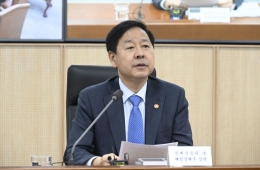
Kwon Myeop, Partner of the Sustainability Platform at Samil PricewaterhouseCoopers, is speaking. Samil PricewaterhouseCoopers
View original imageProfessor Jung concluded by emphasizing, “Climate risk should not remain merely as information for disclosure; it must become the language of decision-making, linking corporate operations, investment, and capital market analysis.”
© The Asia Business Daily. All rights reserved. Unauthorized AI training and use prohibited.


![From 17-Year-Old Princess to 54-Year-Old Queen: Why Royal Women Joined the Military [World Photo]](https://cwcontent.asiae.co.kr/asiaresize/307/2026091710422132223_1789609340.png)