[Editorial] South Korea-US Investment Talks: The Key Is Balancing Practical Gains and Trust
Negotiations between South Korea and the United States over the first project for US-bound investment are facing last-minute difficulties. With the National Assembly briefing, originally scheduled for the 17th, postponed, the signing of the memorandum of understanding (MOU) initially planned for the 18th has also been delayed. The two sides have failed to bridge differences over the terms governing the US$200 billion investment out of the total US$350 billion agreement.
The most likely first project is a gas combined-cycle power plant in Texas, while nuclear power plant construction within the US and liquefied natural gas (LNG) development in Alaska are also under discussion. Key issues include commercial feasibility, profit distribution, and the scope of Korean company participation. In the nuclear sector, talks reportedly include involvement of the Korean APR1400 reactors and acquiring Westinghouse equity and board representation.
Given that this is a long-term investment involving public funds, the government is responsible for scrutinizing both profitability and risks. It is also imperative to maximize opportunities for domestic companies to win contracts and engage in technological cooperation. However, it would be inappropriate to assess the overall value based solely on the profitability of individual projects. Strategic effects—such as entering the US market, supply chain collaboration, and stabilizing trade relations—as well as the costs associated with negotiation delays, must also be weighed.
Japan has announced two business plans worth up to US$109 billion and has already signed a loan agreement of approximately US$2.2 billion for its initial portfolio. South Korea launched the Korea-US Strategic Investment Corporation in June, but has yet to reach a final agreement on its first project. Differences in investment structures and terms make a direct comparison difficult, but dragging out negotiations for an extended period is undesirable.
Hot Picks Today
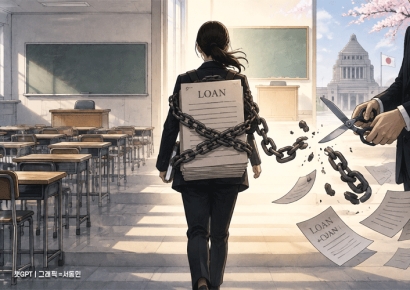 "If You Become a Teacher, You Don't Have to Repay Student Loans"... Japan Pulls Out 'Repayment Exemption' After 30 Years
- President Lee on Leveraged ETF Criticism: "No One Can Predict Investment Profits"
- "I'll Pay Cash for This Home"... Cash Purchases Rise and Loan Share Falls as Sub-1 Billion Won Listings Increase in China
- Average Daily Simple Payment and Remittance Surpass 2.4 Trillion Won in First Half, Setting New Record
- "Culture Shock After Experiencing Motels": North Korean Defector Women Reveal the Reality of Sexual Culture in the North
Some have pointed out that concerns over who would bear responsibility for potential losses in the future are making authorities overly cautious in their decision-making. Considering the pressure from U.S. President Donald Trump and the importance of trust in the South Korea-U.S. alliance, South Korea should actively pursue investments in the direction desired by the United States, provided that decisions go through National Assembly briefings and independent reviews, with appropriate policy immunity assured. The returns on US-focused investments are collected not merely by project-by-project profit and loss statements, but are ultimately dependent on the trust underpinning the South Korea-US alliance.
© The Asia Business Daily. All rights reserved. Unauthorized AI training and use prohibited.