Fed's "Delayed Tightening" Puts AI Rally to the Test [Weekend Money]
Tightening Should Align with Economic Conditions in a High-Inflation Era
Watch Out for Simultaneous Rises in Rates and Inflation
Fed Faces Growing Fiscal Burdens Amid Oil Price Volatility

As the U.S. Federal Reserve (Fed) raises interest rates, the artificial intelligence (AI)-driven stock market faces a new test. While tightening policy is necessary to stabilize the real economy and prevent overheating, it can also put downward pressure on corporate valuations in the stock market. Analysts point out that, in addition to the rate hikes themselves, attention should be paid to how long higher oil prices and inflation keep monetary tightening in place.
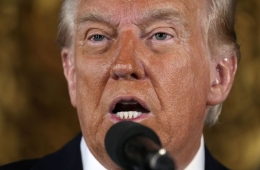
On September 16 (local time), the Federal Open Market Committee (FOMC) of the Fed raised the target range for the federal funds rate by 0.25 percentage points to 3.75–4.00%. The Fed cited robust economic expansion, active capital investment, and persistently high inflation as reasons for the increase. At a press conference, Fed Chair Kevin Wash explained that recent inflation indicators have not shown fundamental improvement.
Eun-Taek Lee, a researcher at KB Securities, described this decision as a "highly lagging rate hike." He argued that, considering economic conditions, the Fed should have started raising rates early this year, and last year's rate cuts were unnecessary. According to him, this rate increase can be viewed as the starting point for normalizing a monetary policy that had fallen behind the pace of the economy.
Lee began his analysis by noting that the way the economy and inflation interact differs between low- and high-inflation eras. During low inflation periods, the U.S. Consumer Price Index (CPI) and the Organization for Economic Cooperation and Development's (OECD) G20 leading economic index tended to move together. However, from the late 1960s to the early 1980s, when inflation was high, the patterns diverged.
![Fed's "Delayed Tightening" Puts AI Rally to the Test [Weekend Money]](http://www.asiae.co.kr/news/img_view.htm?img=2026091808554233650_1789689343.png)
In such an environment, setting rates solely by following inflation numbers can cause policy to become misaligned with economic trends. Lee explained, "If the Fed cuts rates during economic expansion just because inflation has slowed, it can fuel overheating. Conversely, if economic growth has already peaked but the Fed tightens policy late due to belated inflation readings, it may worsen economic contraction." He emphasized that policymakers should control demand with tightening during expansion phases, and support the economy with easing during periods of contraction.
Nevertheless, this latest rate hike is unlikely to be seen as a positive for the stock market. When market interest rates rise, the discount rate used for calculating the present value of future corporate profits also increases. Even if the expected profits remain the same, the value recognized for firms today becomes lower. AI-related stocks, whose prices have already reflected expectations of growth far into the future, can be particularly sensitive to this change.
Lee pointed out that the combination of a trend of rising interest rates and persistent inflationary pressure are key factors that could shake the overheated AI-related stock sector. He stressed that there should be a clear distinction between what is needed for economic stability and the impact on share prices. Even if corporate earnings improve, if investors apply a lower price-to-earnings multiple to those earnings, stock price gains can be limited.
Hot Picks Today
 "KOSPI Surpassed 9,000, but May Fall Below 5,200 Next Year"...Expert Explains the Forecast
- "I Could Buy It for 3,000 Won in Korea, But I'll Pay a Premium"... Olive Young Bag Becomes Frenzy in China [K-Holic]
- In the Same Neighborhood, One Apartment Costs 2 Billion Won, Another 450 Million... What's Happening in Gangnam?
- 300,000 Views in a Day: "Is the YouTuber Right?"... Fact-Checking the Truth Behind 'Shin Ramyun Flavor' With Nongshim [Matjalar X-File]
- With Two Extra Days Added to Chuseok Holiday: "Pack Up, Let's Go Anywhere"... Domestic Travel Demand Surges
He also highlighted oil prices as a sensitive market variable. Due to heightened uncertainties surrounding a potential war between the U.S. and Iran, he assessed that movements in stocks and bonds are now more closely tied to oil prices than to the interest rate path. If oil prices continue to rise, companies will face heavier cost burdens and consumers will experience greater pressure on spending, making it more difficult for the Fed to bring down inflation. Lee concluded, "The Fed must raise rates to fight inflation, but the higher the rates, the greater the fiscal burden—leaving the Fed in a more complicated and challenging environment than in the past."
© The Asia Business Daily. All rights reserved. Unauthorized AI training and use prohibited.




!["Rates Are Rising, but Stocks Are Better?"... AI Reshapes Existing Investment Formula [Weekend Money]](https://cwcontent.asiae.co.kr/asiaresize/307/2026091800551633374_1789660516.png)