[THE VIEW]Questions on Leadership
Separating Our Views of 'Person' and 'Policy' Is Essential
A 'Good Person' Is Not Always a 'Good Leader'
Attention on Lee’s Choices as He Steers Through Headwinds in Approval Ratings
![[THE VIEW]Questions on Leadership](http://www.asiae.co.kr/news/img_view.htm?img=2026091810362434007_1789695384.png)
I was never a supporter of former President Yoon Suk-yeol. And to be clear, any shred of sympathy I may have had for him completely disappeared on the night of December 3, 2024. But I want to pose an uncomfortable question here: does that mean that everything he did as president was wrong?
We often struggle to distinguish a person from their policies. When someone makes a major mistake, we tend to condemn everything they've ever done as wrong. In such cases, I like to mention Germany’s animal protection laws. In 1933, the Nazi regime established a remarkably progressive, strict, and comprehensive animal protection law.
But just because this law was created by the Nazis, does that mean animal protection is a bad thing? Of course not. Just because a horrific regime implemented one correct policy does not legitimize that regime, and conversely, the fact that the regime was horrendous does not automatically invalidate that policy.
This is what I also find interesting about former President Yoon. At the very least, he did not appear to be overly swayed by street sentiment. An unpopular policy is not necessarily a bad policy. Sometimes, a leader needs the courage to step ahead in a direction people may not want to go.
Of course, that path could be wrong. Even in Korea, there are daunting challenges such as extremely low birth rates, inequality, real estate issues, overconcentration in Seoul, and a decline in economic dynamism in everything except semiconductors. No one has all the answers to these problems. That is why we elect leaders—not those with all the answers, but those who set a direction, make decisions, and take responsibility for them.
This is precisely what I found lacking in the Moon Jae-in administration. Former President Moon may have been the 'nicest person' we have seen as president. But being a good person and being a good leader are not necessarily the same thing. If, in the midst of a battle, the general keeps asking the soldiers, "Which way do you want to go?" the army cannot move. Sometimes, one must take the risk of being wrong and set a direction.
In the West, there is a saying: “Too many cooks in the kitchen.” In Korea, there is a proverb, “If there are too many boatmen, the boat will go up the mountain.” Whether it is a kitchen, a boat, or a nation, at a certain point someone needs to set the direction.
This topic is a sensitive one in Korea. The country has experienced military dictatorship and fought for democracy for a long time. So, it is only natural for citizens to demand, “Listen to our voices.” But listening and following are not the same. Every voice should be heard, but in the end, someone must make the decision. That is the authority and responsibility entrusted to a leader through elections.
Gerhard Schröder, Chancellor of Germany, pushed forward with “Agenda 2010,” braving fierce backlash. This does not mean that public opinion should be ignored. Rather, I am saying that backlash from public opinion in itself does not determine whether a policy is right or wrong.

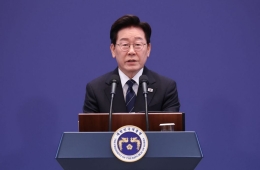
President Lee Jae-myung is attending the Cabinet meeting held at the Government Complex Sejong on August 11. Photo by Yonhap News Agency
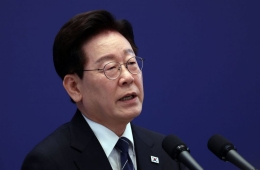
View original imageI believe President Lee Jae-myung demonstrated clear momentum in his early days in office. This does not mean that I agree with all of his policies. What I paid attention to was that he showed a sense of direction—where he intended to lead the country. But now, the “honeymoon” seems to be over. His approval rating has fallen and controversies around policy reversals and appointments continue. This raises an important question: how is correcting a mistake different from losing direction?
A leader must listen to the voices of the people, and be able to turn back if a mistake is made. However, if the captain changes course every time headwinds blow, people will eventually lose trust in the captain. I am curious to see what choices President Lee will make going forward. The problems facing Korea are formidable. There will be times when one must press on in the direction they believe is right, even at the risk of facing criticism and opposition.
I hope indecisiveness does not create a political vacuum—one that allows another populist, who sees democracy only as a tool for power, to take over. Democracy is not a system that gives everyone their own key to the ship. It is a system in which citizens decide who will hold the key. And what the person holding the key needs most is not to constantly look back, but to take full responsibility for the chosen course to the very end.
Hot Picks Today
!["How Little Do Koreans Read? Who Will Acquire Munhakdongne Now on the Market [Weekend Money]"](https://cwcontent.asiae.co.kr/asiaresize/93/2026091716280432990_1789630084.jpg) "How Little Do Koreans Read? Who Will Acquire Munhakdongne Now on the Market [Weekend Money]"
"How Little Do Koreans Read? Who Will Acquire Munhakdongne Now on the Market [Weekend Money]"
- "Bank Offers 3.5%, but... Which ETF Hit a 21% Dividend Yield? [Weekend Money]"
- "Why Would You Boast About That?" Blocked From Departure Over Endangered Turtle Hunting Allegation After Social Media Video
- "Please Be Quiet"... China to Fine Up to 210,000 Won for Disruptive Passengers Using Speakerphones
- "People Actually Pay to Sleep Here?"... 1.8 Million Won per Night at Chinese Hotel Offering Views of Hundreds of Pigs
Anton Schulz, Freelance Journalist from Germany
© The Asia Business Daily. All rights reserved. Unauthorized AI training and use prohibited.