KCTU to Join Mega Special Economic Zone Social Dialogue… Still Undecided on ESLC Return
First Participation in Six Years Since COVID-19 Talks in 2020
The Korean Confederation of Trade Unions (KCTU) has decided to participate in a "one-point social dialogue" to discuss labor exemptions in the government-proposed Mega Special Economic Zone Special Act. This marks the first time in six years that the KCTU is participating in a tripartite social dialogue with labor, management, and government since discussions to overcome COVID-19 in 2020.

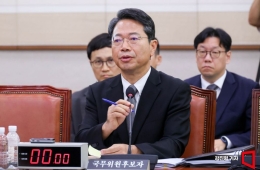
Yang Kyungsoo, Chairman of the Korean Confederation of Trade Unions, is delivering a greeting at the joint social dialogue declaration ceremony held last October at Sarangjae, the National Assembly in Yeouido, Seoul. Photo by Yonhap News Agency
View original imageOn September 17, the KCTU announced that its Central Executive Committee had decided to participate in the one-point social dialogue regarding the Mega Special Economic Zone Special Act.
The KCTU explained, "Until now, we have called for zero-based discussions that are not premised on labor exemptions. However, we have determined it is necessary to participate in the dialogue and express our opposition directly, in order to prevent the expansion of labor exemptions and the retreat of labor rights."
On September 15, Minister of Employment and Labor Kim Young-hoon proposed a one-point social dialogue, inviting both labor and business sectors, with the goal of discussing labor exemptions that would relax labor regulations exclusively in mega special economic zones. Since the KCTU is not participating in the Economic, Social and Labor Council (ESLC), a presidential tripartite dialogue body, the minister requested the creation of a separate discussion forum.
The main issues include the "white-collar exemption," which would remove the 52-hour weekly work cap and exempt high-earning managers and R&D personnel from overtime, night, and holiday pay, and the "fixed-term 2+2" policy, which would allow the extension of the employment period for fixed-term workers by two additional years upon agreement, increasing it from the current two-year limit.
The business sector argues that labor exemptions are necessary to ensure the competitiveness of the mega special zones, while labor groups strongly oppose such exemptions, claiming they risk triggering a general dismantling of labor regulations.
Hot Picks Today
 "Inside, It's a Shock... A Daughter Born in the 1990s Ages Faster Than Her Mother Born in 1965"
- "No Chuseok Rice Cake Money This Year"...Disappointed Office Workers as Bonus Hopes Fade
- "Salty and Perfect for Beer, But Shocking"...The Unexpected Snack That Can Raise Cancer Risk Without You Knowing
- "Is It Really a Healthy Oil?"... The Surprising Risks of Frying Eggs with Coconut Oil
- "20-Somethings Form Long Lines at 60-Year-Old Neighborhood Rice Cake Shop"...How Long-Running Companies Are Winning Over MZ Generation Wallets with Transformation
The KCTU also discussed the possibility of returning to the ESLC. The KCTU has not resumed tripartite social dialogue since withdrawing from the ESLC’s predecessor, the Tripartite Commission, in February 1999. The KCTU stated, "The Central Executive Committee continued discussions on the direction of social negotiations but was unable to reach a conclusion." The committee also considered whether to refer the matter to the general assembly of delegates, but no decision was made.
© The Asia Business Daily. All rights reserved. Unauthorized AI training and use prohibited.


![From 17-Year-Old Princess to 54-Year-Old Queen: Why Royal Women Joined the Military [World Photo]](https://cwcontent.asiae.co.kr/asiaresize/307/2026091710422132223_1789609340.png)