"Supply Payment Deadline Should Be Shortened from 60 to 30 Days"
Average Payment Period Over Past 3 Years: 27.4 Days
"Phased Application by Company Size and Incentives Needed"
There is a growing call to improve small and medium-sized enterprises (SMEs) liquidity by shortening the statutory payment deadline for supply costs from the current 60 days to 30 days, in order to better reflect actual business conditions. Experts point out the need for complementary measures such as a phased application based on company size and providing incentives to businesses that make early payments.

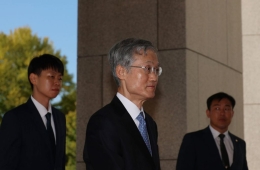
The Korea Federation of SMEs held a 'Discussion on Measures to Shorten Payment Deadlines for Supply Prices' on the 17th at the Win-Win Room of the Korea Federation of SMEs in Yeouido, Seoul. Korea Federation of SMEs
View original imageThe Korea Federation of Small and Medium Business held a "Discussion on Measures to Shorten Payment Deadlines for Supply Costs" on the 17th at the Korea Federation of Small and Medium Business cooperation room in Yeouido, Seoul. The event was organized to discuss proposals to shorten the statutory payment deadline for supply costs from 60 days to 30 days, as well as complementary measures for smooth implementation.
Oh Kiwoong, Executive Vice Chairman of the Korea Federation of Small and Medium Business, said, "Small and medium-sized enterprises have to endure a significant period after investing in production costs such as raw materials before receiving payment for their supplies. According to a recent survey, 78.6% of respondents cited 30 days or less as an appropriate payment deadline. Therefore, there is a need to shorten the statutory payment deadline, reflecting on-the-ground opinions."
Baek Hoon, a senior researcher at the Korea Small Business Institute, who gave the keynote presentation, stated, "An analysis of inter-company transaction data showed that the average payment period over the past three years was 27.4 days, and 66.0% of payments were made within 30 days. Shortening the statutory deadline from the current 60 days to 30 days is a rational solution that resolves the gap between business practice and law."
Major economies such as the EU, the United States, the United Kingdom, and Singapore operate on a payment standard of within 30 days. Previous studies have also shown that reducing the payment deadline has a positive impact on corporate value and profitability.
The proposal suggests a phased approach to shortening payment deadlines based on company size, to ensure stable implementation, as well as providing support for early cash conversion of accounts receivable and offering incentives to companies that make early payments.
The discussion covered the expected positive effects of shortening payment deadlines and considered complementary measures for the smooth establishment of the system. Lee Junghwan, a professor at Myongji University, said, "If the payment deadline is shortened from 60 days to 30 days, the benefit for first, second, and third-tier SME suppliers will increase more than the reduction in the cash management benefit for large corporations. This means the policy would have a net positive effect on the industry as a whole."
Jung Jongchae, attorney at Law Firm Jeongbak, commented, "The current 60 days is the maximum period allowed by law for payment, but in practice, it can be perceived as the standard condition. We need to bring the payment standard forward by shortening the deadline to 30 days."
Ahn Yunno, Head of the Korea Housing Furniture Cooperative, said, "If the payment deadline is shortened, the liquidity of entrusted companies will improve, facilitating smoother fund circulation to raw and subsidiary material suppliers, which will also help build a stable supply chain and encourage investment in production technology."
Ju Seongwan, Deputy Head of the Korea Corrugated Packaging Industry Cooperative, remarked, "In the corrugated industry, even products delivered at the beginning of the month often only receive payment 30 to 60 days after issuing a tax invoice at the end of the month, meaning it can actually take up to 90 days for payment to be received, while payments for raw and subsidiary materials must be made within 30 days. Therefore, practices that delay cash receipt, such as the late issuance of tax invoices or the use of electronic promissory notes, need to be curbed, and the government needs to provide low-interest financial support for SME purchase funds."
Hot Picks Today
 "Quit Job to Start Life in Canada, Now Forced to Return Home"… Language School Closure Leaves Korean Students Stranded
- [Exclusive] "Oh, Oh! Why Is the Seatback Like This?" Hyundai Ioniq 9 Recalled in Korea: 15,000 Units Due to Power Seat Entrapment Risk
- "When Was the Last Time I Went?" With Fewer Visitors, 80% of Japan’s Neighborhood Bathhouses Disappear in 50 Years
- "Typical Italy? This Tour Package Sold 300% More"...Destinations Chosen by Koreans
- Hanwoo Can't Even Dream of This... "Melts in Your Mouth" as Wagyu Hits It Big in U.S. Supermarkets and Fast-Food Chains
The Korea Federation of Small and Medium Business plans to propose to the government and National Assembly measures to support the shortening of statutory payment deadlines for supply costs and to help ensure the system is smoothly established going forward.
© The Asia Business Daily. All rights reserved. Unauthorized AI training and use prohibited.