Geoje, Daejeon, Gunsan, and Cheonan Designated as SO·BU·JANG Specialized Clusters... 7.7 Trillion Won Private Investment Planned
Pursuing Self-Sufficiency in FLNG Liquefaction Equipment, Defense Electronics, Semiconductor Materials, and Back-End Processing
The government has designated four new locations—Geoje in South Gyeongsang, Daejeon, Gunsan and Iksan in North Jeolla, and Cheonan and Asan in South Chungcheong—as the third round of specialized clusters for materials, parts, and equipment (referred to as "SO·BU·JANG" clusters). To establish a domestic supply chain for key materials and parts in shipbuilding, defense, and semiconductors, the government will provide a total of 160 billion won in support over the next five years, with the private sector expected to invest a total of 7.7 trillion won.
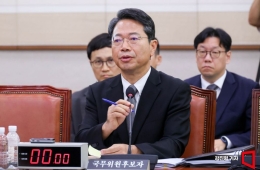
On September 17, the Ministry of Trade, Industry and Energy announced that it had held the 18th SO·BU·JANG Competitiveness Enhancement Committee meeting at the Export-Import Bank of Korea, chaired by Minister Kim Jungkwan, where the designation plan for new specialized SO·BU·JANG clusters was reviewed and approved. The newly selected sites are: Geoje (shipbuilding and offshore plants), Daejeon (defense-related electronic and optical components), Gunsan and Iksan in North Jeolla (semiconductor chemical materials), and Cheonan and Asan in South Chungcheong (semiconductor back-end processing).
The third phase of specialized clusters was selected from among 16 development plans submitted by 11 metropolitan and provincial governments in a public contest held from March 23 to April 22. The evaluation involved committees of experts and SO·BU·JANG specialists, and main evaluation criteria included the effect of clustering and strengthening competitiveness, potential for securing infrastructure, integration with regional mainstay industries, and the possibility of securing professionals.
In Geoje, South Gyeongsang, Hanwha Ocean will serve as the anchor company to build a high-added-value shipbuilding and offshore plant cluster aimed at localizing key liquefaction process equipment for floating liquefied natural gas (FLNG) marine plants. The goal is to reduce reliance on foreign suppliers for core liquefaction equipment in response to the growing natural gas market. The planned private investment by 2030 is 1.5 trillion won.

In Daejeon, a supply chain for defense-related electronic and optical components will be established. LIG D&A and Hanwha Aerospace, among others, will participate in the development of precision electronic and optical parts for military equipment such as the KF-21 and K9. The plan aims to enhance production self-sufficiency for core weapon system components in response to changes in modern warfare, such as electronic warfare, and the expanding export of the so-called K-defense industry. The private sector investment is planned at 1 trillion won.
Gunsan and Iksan in North Jeolla and Cheonan and Asan in South Chungcheong will focus on reinforcing the supply chains for semiconductor materials and back-end processing, respectively. In North Jeolla, companies such as Dongwoo Fine-Chem, Hansol Chemical, OCI, and PKC will advance and expand production capacity for ultra-high purity chemical materials used in cleaning, etching, and deposition processes. The private sector is planning an investment of 830 billion won.
In South Chungcheong, the focus will be on increasing self-sufficiency in the area of back-end processing, which is critical for competitive AI semiconductors. Hanamicron and TSE will work towards localization of high-bandwidth memory (HBM) packaging equipment and test parts, respectively. The planned private investment is 370 billion won.
The government will invest approximately 40 billion won per cluster, totaling 160 billion won over the next five years, to support research and development (R&D), infrastructure, and workforce training at the new clusters. To help ensure the planned 7.7 trillion won in private investment proceeds as scheduled, the central and local governments will also provide support in areas such as permits, regulatory reform, and policy finance.
Previously, the government designated five SO·BU·JANG specialized clusters in the first phase in 2021 and five more in the second phase in 2023. With the addition of these four new sites, there will be a total of 14 such specialized clusters nationwide. By field, semiconductors account for five clusters—the largest number—while automobiles have two; machinery, displays, secondary batteries, bio, defense, shipbuilding, and carbon materials each have one cluster.
Hot Picks Today
 "Three Days Off in a Row Is Sweet?" Four-Day Workweek Begins, but Unexpected Burnout Emerges
- Seoul's Jongno 3-ga Named World's Coolest Neighborhood... "Can't Miss Beer with Kimchi and Seafood Pancakes at Street Stalls"
- "Is It Really a Healthy Oil?"... The Surprising Risks of Frying Eggs with Coconut Oil
- "I Thought I Was Middle Class..." Surprised by High Savings and Asset Requirements That Feel Out of Reach
- "97.3% Satisfaction Rate": 600,000 Ride Han River Bus... "Intervals to Be Cut to 15 Minutes, Express Routes Planned"
In the previous first and second phases of specialized clusters, there have been 15 key technology development projects and investments totaling 11.5 trillion won underway, supported by the government. The government plans to cultivate the newly designated clusters as domestic production hubs tightly linked to regional core industries to further enhance the self-sufficiency of supply chains in Korea.
© The Asia Business Daily. All rights reserved. Unauthorized AI training and use prohibited.

![From 17-Year-Old Princess to 54-Year-Old Queen: Why Royal Women Joined the Military [World Photo]](https://cwcontent.asiae.co.kr/asiaresize/307/2026091710422132223_1789609340.png)