[Why&Next] Could Multi-Trillion Won Investment Leave South Korea a Mere Financial Shareholder?... Critical Stakes in Westinghouse Deal
'Rights' Take Precedence Over Share Ratio...
Negotiating Board Participation and Domestic Supply Chain Benefits
Linked to APR1400 Entry into U.S. and WEC Management Involvement...
Implications for Export to Third Countries
![[Why&Next] Could Multi-Trillion Won Investment Leave South Korea a Mere Financial Shareholder?... Critical Stakes in Westinghouse Deal](http://www.asiae.co.kr/news/img_view.htm?img=2023092010084982442_1695172130.png)
With the acquisition of a stake in Westinghouse Electric Company (WEC) emerging as a central negotiating card in investment talks between South Korea and the United States, there is keen interest in the investment terms and actual benefits. Even if South Korea were to acquire a stake, it could be limited to a passive financial investment if it fails to secure board participation and voting rights. As the entry of the Korean-model nuclear reactor APR1400 into the United States and the local business participation of domestic nuclear companies are linked, the key issue is what rights and business opportunities could be secured if such a stake purchase occurs.
According to government and industry sources on September 17, South Korea and the United States are in the final stages of negotiations to build eight large-scale nuclear reactors in the U.S. as part of a strategic investment in the nuclear sector. South Korea is reportedly aiming to deploy the APR1400 for at least two of these reactors and secure roughly 15% ownership of WEC. On the other hand, the U.S. side is said to have proposed building reactors mainly centered on WEC’s AP1000 model, with South Korea’s stake in WEC limited to between 5% and 10%. Differences also remain between the two sides concerning whether voting rights will be attached to the WEC stake and whether South Korea will participate in the board of directors.
South Korea’s objective is not simply to provide capital for the U.S. nuclear business, but to secure project rights commensurate with the investment. The plan is to introduce the APR1400 to the U.S. for the first time, while also enabling domestic companies to participate in supplying equipment and construction for the AP1000, and to use WEC stake investments to expand opportunities for the Korean nuclear industry in the U.S. and third-country nuclear projects in the future.
Multi-Trillion Won Investment... Voting Rights and Board Participation Are Key
In particular, the shareholding ratio in WEC and the authority linked to it are emerging as major sticking points. WEC is currently owned 51% by Brookfield and 49% by Cameco. The board of directors of the joint venture that controls WEC consists of six members, with each side nominating three, and voting rights exercised in proportion to share ownership. Current shareholder agreements stipulate that if a party’s stake falls below a certain level, board nomination rights diminish stepwise, and below 10% shareholding, the right to nominate a director is lost entirely.
The amount of capital required is also significant. Given the enterprise value of WEC discussed in the market, it is expected that acquiring around a 10% stake will require multi-trillion won. If the shareholding is raised to around 15% as reportedly sought by South Korea, the investment burden will grow further. This is why, along with the shareholding ratio, the ability to secure voting rights and board participation is a core condition in the negotiations.
The context in which the value of a WEC investment cannot be measured on shareholding ratio alone also stems from the unique relationship between Korea Electric Power Corporation (KEPCO), Korea Hydro & Nuclear Power (KHNP), and WEC. The two sides have cooperated and competed in overseas nuclear power markets. In particular, the original technology and intellectual property rights held by WEC have consistently affected the export process of the APR1400.
Upon resolution of their intellectual property dispute in January 2025, it is understood that KEPCO and KHNP agreed to provide WEC with $650 million worth of goods and services for every export of one Korean-model reactor, as well as an additional $175 million in technology royalties. In total, that amounts to $825 million per unit export—equivalent to approximately 1.1 trillion won at then-prevailing exchange rates, based on contemporaneous reports—with a contract period reportedly spanning 50 years.
If South Korea is able to participate in WEC's key decision-making, there could be room to improve such unfavorable conditions and broaden the scope for cooperation in third-country nuclear projects going forward.
Conversely, if South Korea only holds a stake and cannot participate in management, the nature of the investment changes. While there may be financial gains such as dividends or higher share value if the valuation of WEC rises, the industrial benefits—including facilitating the entry of Korea’s nuclear sector into the U.S. market or expanding overseas contracts—could be limited.
Disagreement Over Two APR1400 Reactors... The Domestic Nuclear Ecosystem’s Share
The two countries’ interests also diverge over which reactor models to apply to the eight planned units. South Korea is reportedly pushing for at least two of the U.S.-built reactors to adopt the APR1400. Should this be realized, it would be the first instance of the APR1400 being constructed in the United States. Given that the U.S. is among the world’s largest nuclear markets, establishing a track record for the Korean-model reactor could serve as a valuable reference in winning future projects in third countries.
The U.S. side places greater emphasis on building new reactors mainly centered on the WEC AP1000, which is a domestically produced model. The U.S. government and existing WEC shareholders have entered into a strategic partnership to invest at least $80 billion in WEC reactor construction in the country. The plan is to expand the U.S. nuclear supply chain centered on WEC, supported by government financing and regulatory approvals.
For South Korea, both securing the two APR1400 projects and ensuring domestic nuclear firms’ participation in the remaining AP1000 projects are important. For a large-scale investment in the U.S. to feed back into South Korea’s nuclear industry ecosystem, it is key that companies such as KEPCO, KHNP, Doosan Enerbility, and domestic construction firms can participate in equipment supply, engineering/procurement/construction (EPC), operations, and maintenance. Since Korean capital will be involved in U.S. nuclear construction, the government intends to secure the widest possible scope of local firm participation.
Hot Picks Today
 "Three Days Off in a Row Is Sweet?" Four-Day Workweek Begins, but Unexpected Burnout Emerges
- Seoul's Jongno 3-ga Named World's Coolest Neighborhood... "Can't Miss Beer with Kimchi and Seafood Pancakes at Street Stalls"
- "Is It Really a Healthy Oil?"... The Surprising Risks of Frying Eggs with Coconut Oil
- "I Thought I Was Middle Class..." Surprised by High Savings and Asset Requirements That Feel Out of Reach
- "97.3% Satisfaction Rate": 600,000 Ride Han River Bus... "Intervals to Be Cut to 15 Minutes, Express Routes Planned"
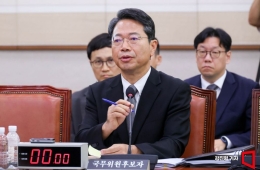
However, the government maintains that the exact scale of the stake to be acquired and the investment conditions have yet to be finalized. While it may take longer to reach a final agreement, the ultimate success of the WEC investment hinges less on the amount committed and more on the extent to which South Korea wins operating rights and management participation for its nuclear sector. A government official stated, “The acquisition of a Westinghouse stake has not yet been decided, nor have specific terms such as shareholding and voting rights been confirmed. We are currently discussing various options with the United States, and if an investment is made, it should be structured so that it provides tangible benefit to the Korean nuclear industry.”
© The Asia Business Daily. All rights reserved. Unauthorized AI training and use prohibited.



![From 17-Year-Old Princess to 54-Year-Old Queen: Why Royal Women Joined the Military [World Photo]](https://cwcontent.asiae.co.kr/asiaresize/307/2026091710422132223_1789609340.png)