EU Proposes First-Ever 'Associate Member' Status for Canada... Announces Security Council Initiative
European-Only Security Council Excludes U.S.
"Doubts Grow About the Transatlantic Alliance"

The European Union (EU) has, for the first time in its history, proposed granting Canada the status of an EU associate member state and announced the concept of a separate security consultative body among Western countries, excluding the United States, named the "European Security Council." Both sides are seen to be intensifying their economic and military ties as their friction with the administration of U.S. President Donald Trump grows.
On September 16 (local time), at the annual policy address held at the European Parliament in Strasbourg, France, European Commission President Ursula von der Leyen stated, "We want to open the door together for Canada to become the EU’s first associate member." The status of EU associate member refers to a country that, while not a full EU member, has a cooperative relationship that is close to that of member states. This proposal was previously suggested to the EU by Canadian Prime Minister Mark Carney.
Members of the European Parliament and officials from the European Commission responded to the proposal with a standing ovation, and Prime Minister Carney, who attended the European Parliament as a special guest that day, expressed his approval of the proposal in response. Prime Minister Carney was the first non-EU head of state to be invited to attend the European Parliament’s policy address. He is also scheduled to deliver a speech at the European Parliament on September 17.
Commission President von der Leyen further announced the idea of establishing the European Security Council, a new form of security cooperation body separate from the North Atlantic Treaty Organization (NATO). She emphasized, "This new body will be a gathering of countries that support each other, like Europe did when Greenland was threatened," and added, "Partner countries such as Ukraine, the United Kingdom, Norway, and Canada will also participate in discussions on summits for the security of the European continent." During his second term, President Donald Trump had previously pressured Norway to purchase Greenland by demanding its annexation.
Hot Picks Today
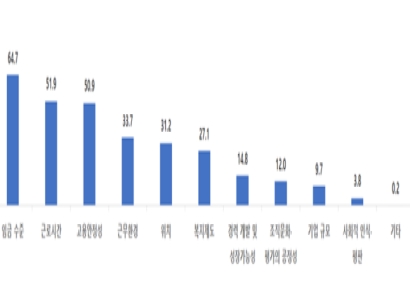 "Please Pay Me at Least 3 Million Won a Month": More Than Half of Young People Today Prioritize "Working Conditions" Over Company Size
- Selling Like Crazy Every Year... 30-Year-Old Hetbahn Takes on a New Challenge: Tastes Better Than "Mom's Home Cooking" [On-Site Report]
- Ran 18 km With 9-Year-Old Tied to Him at the Waist... "Man Banned From Competing for 3 Years"
- "Hey, Lady, Teach Your Kids to Behave!" ... 300,000 Won in Cash and a Bodily Injury Claim Demanded Over Child's Door Ding
- Beachgoer Finds 'Plastic' That Turns Out to Be Perfume Ingredient Worth More Than Twice as Much as Gold
The EU’s move to consider a separate security consultative body that excludes the United States reflects growing doubts about the future of the transatlantic alliance. Politico analyzed, "EU countries are currently facing the immediate threat of Russian military provocations, but the United States and NATO are reluctant to escalate their responses and prefer to focus on negotiations." It also stated, "In particular, President Trump’s threat to buy Greenland, remarks on redeploying U.S. troops stationed in Europe, and threats to Canadian sovereignty have raised doubts about the sincerity of the transatlantic alliance."
© The Asia Business Daily. All rights reserved. Unauthorized AI training and use prohibited.





![[Market ING] KOSPI Seeks Rebound in Superweek Packed with Corporate Earnings and FOMC](https://cwcontent.asiae.co.kr/asiaresize/307/2026102514484873155_1792907327.jpg)