"Grants Said to Increase by 7 Trillion Won, but Real Net Gain Is Only 225.9 Billion"... Nationwide Superintendents Criticize Grant Reform Plan
When Essential Expenditures Are Considered, a De Facto Fiscal Deficit Looms
Multiple Challenges Including Reduced Central Funding for Free High School Education
Warning Signs for Covering Personnel Costs for Educational Staff
Superintendents of education from metropolitan and provincial regions across Korea have raised concerns over the government's proposed revision of the Local Education Finance Grants system, describing it as a "substantial reduction in funding masked by an optical illusion." They called on the National Assembly to thoroughly scrutinize the proposal and to seek a broad societal consensus.
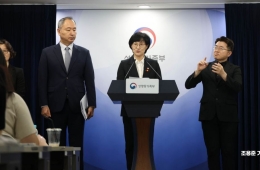
On September 16, the Council of Superintendents of Education of the Republic of Korea held a press conference at the National Assembly's Communication Center, emphasizing that the impact of the government's "Local Education Finance Grants Act Amendment" on schools and the extent of funding reduction must be rigorously reviewed by the National Assembly.

The Korea Council of Superintendents of Education held a press conference and insisted that the National Assembly must thoroughly review the "Local Education Finance Grant Act Amendment Bill". Provided by the Korea Council of Superintendents of Education
View original imagePreviously, on September 3, the government submitted to the National Assembly a reform bill that abolishes the linkage between local education grants and domestic tax revenue (20.79%), which had been in place for 55 years, and instead introduces a new formula based on economic growth rate and the student-age population. The council pointed out that the government’s fiscal projections diverge significantly from reality. While the government claims that the grants will increase by 720 billion won, the actual increase compared to this year's grants is only 240 billion won, according to their analysis.
Especially when taking into account the expiration of local education taxes and compensation funds, as well as the reduction in central government funding for free high school education, the council stated that the real net increase amounts to just 22.59 billion won—a growth rate of only 0.3%. In contrast, they estimate that essential expenditures, including the natural increase in personnel costs for educational staff and implementation of national policy projects, will rise by more than 3.14 trillion won, resulting in a situation where the education system faces a severe fiscal deficit.
The council highlighted that even if student numbers decline, fixed costs such as maintaining schools and classrooms continue, while new educational demands—such as upgrades for aging facilities, care and special education programs, support for basic academic skills, and student mental health assistance—are constantly increasing.
Accordingly, the council presented three demands to the National Assembly. First, they called for a thorough review of the decrease in educational resources compared to the current law and the impact on educational autonomy. They stated that this would require the disclosure of the standard amount calculation details and the rationale for reflecting a 35% rate of change in the student-age population, as well as the introduction of adjustment mechanisms to account for growing educational needs.
Second, they urged for joint verification involving relevant standing committees such as the Education Committee, the Planning & Finance Committee, and the Public Administration & Security Committee, in order to systematically examine the overall fiscal structure. Third, they emphasized that the proposed amendment should be excluded from designation as a supplementary law to the income budget bill and from automatic referral to ensure sufficient debate and meaningful review time.
Hot Picks Today
 "Additional 25% Mobile Bill Discount From Today" Causes Stir Online... The Truth Revealed
- [Breaking] Ministry of Education: "388 Cases Identified for Remedy Due to Rolling Admissions Malfunction... 188 Still Under Review"
- "The Clothes My Dad Used to Wear"... Ralph Lauren, Beanpole, and Hazzys See Sales Surge as MZ Generation Embraces the Trend
- "Please Take Off Your Shoes"—From Crawling onto the Bed to Changing Habits, Young Americans Lead the Shift
- "Famous Actress on KBS Is Perpetrator's Sister"... KBS Responds to 'Busan Fall Death' Family's Plea
Jung Geunsik, chairperson of the council, stated, "We are not saying the system should never be changed solely because it is longstanding. However, before altering a framework that has underpinned educational finance for 55 years, there must be a solid basis and social consensus showing children’s education will be more stably secured than before. I hope the National Assembly will use the principle of protecting the educational environment and educational autonomy for children, not just short-term fiscal logic, in making its decision."
© The Asia Business Daily. All rights reserved. Unauthorized AI training and use prohibited.