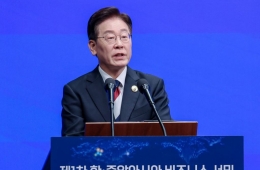
President Kim Kimoon: "K-Shaped Polarization Among SMEs Is Worsening"
Korea Federation of SMEs Visits National Assembly Speaker Cho Jeong-sik
The Korea Federation of SMEs announced on September 16 that a delegation visited National Assembly Speaker Cho Jeong-sik to extend their congratulations on his inauguration and to deliver legislative agendas for small and medium-sized enterprises (SMEs).
Hot Picks Today
 "Additional 25% Mobile Bill Discount From Today" Causes Stir Online... The Truth Revealed
- "They Really Might Take No.1"... Nongshim Narrows Gap with Japan from 9.2% to 1.9% in a Year, Closing In on Market Leader
- "The Clothes My Dad Used to Wear"... Ralph Lauren, Beanpole, and Hazzys See Sales Surge as MZ Generation Embraces the Trend
- "Please Take Off Your Shoes"—From Crawling onto the Bed to Changing Habits, Young Americans Lead the Shift
- "Famous Actress on KBS Is Perpetrator's Sister"... KBS Responds to 'Busan Fall Death' Family's Plea
Kim Kimoon, President of the Korea Federation of SMEs, accompanied by representatives of various SME sectors, said, "While the economy may appear to be booming thanks to sectors like semiconductors, SMEs are facing severe K-shaped polarization, as evidenced by surging loan delinquency rates and corporate bankruptcy filings." He called on the National Assembly "to actively provide legislative support to ensure that the fruits of economic growth are shared with SMEs through the establishment of appropriate systems."

On the 16th, Kim Kimoon, President of the Korea Federation of Micro Enterprise (third from the left), paid a courtesy call to Joo Jeong-sik, Speaker of the National Assembly (fourth from the left), and took a commemorative photo. Korea Federation of Micro Enterprise
View original imageOn this day, President Kim handed over the 'Legislative Agenda for SMEs for the Latter Half of the 22nd National Assembly' to Speaker Cho Jeong-sik. The key SME legislative issues include: ▲Amendments to strengthen the bargaining power of ‘Eul’ (disadvantaged parties to a contract); ▲Reducing payment periods for supply prices and supporting the implementation of payment-linked systems; ▲Ensuring fairness on online platforms and shortening payment periods for large retailers; ▲Improving proposals for tax reforms supporting business succession; and ▲Guaranteeing flexibility in continued employment for older workers and expanding incentives.
© The Asia Business Daily. All rights reserved. Unauthorized AI training and use prohibited.