[Public Voices]Digital Currency and Privacy: What Remains Unchanged and What Needs Improvement
Privacy Concerns Over CBDC Introduction
Two-Tier Monetary System Combined With "Tokenization"
Government Surveillance and Control Structurally Impossible

Jongryul Lee, Visiting Research Fellow at the Korea Capital Market Institute (former Deputy Governor of the Bank of Korea)
View original imageWhether you make a purchase using a credit card or transfer funds through mobile banking, any electronic financial transaction always leaves a record. As a result, every time the topic of central bank digital currencies (CBDCs) arises, concerns emerge that the government or central bank could be monitoring individuals’ transactions. Such public anxiety is intuitively understandable. However, a closer look at the actual system tells a different story.
First, it is important to clarify what instrument people are actually using for transactions. In 'Project Han-gang', which completed its first phase of real-world tests from April to June last year and is now in its second phase this year, users are ultimately utilizing deposit tokens issued by commercial banks that have been tokenized from customer deposits. The digital currency issued by the Bank of Korea is exclusively for transactions between financial institutions, and ordinary individuals cannot hold it. This structure combines tokenization technology with the existing two-tier monetary system, which consists of central bank reserves and commercial bank deposits.
Next, let’s examine how the ledger where transaction records are stored is designed. The ledger does not operate as a permissionless system open to everyone, but rather as a permissioned distributed ledger involving only the Bank of Korea and participating banks. The information recorded on the ledger is limited to the minimum data required to complete a payment—randomized electronic wallet addresses, transaction amounts, and timestamps. Information identifying the owner of each address is held only by the issuing bank and managed in accordance with relevant laws. As a result, it is structurally impossible for the government or Bank of Korea to monitor or control individuals’ deposit token holdings.
In summary, the privacy environment faced by users is identical to the current one. Even compared to transferring funds via existing bank applications, the entity responsible for storing and managing personal information does not change. Just as the public already trusts their existing financial institutions for transactions, deposit tokens can also be used with confidence based on trust in one’s bank. Project Han-gang has merely transferred the existing framework to a distributed ledger; it does not create new paths for accessing personal information.
Some argue that private stablecoins may be more advantageous for privacy protection. However, with permissionless blockchains, all transaction history is permanently public, making it possible to trace the entirety of a user’s past transactions if their identity is ever linked, even once. Moreover, the borderless nature of such networks makes legal protection or regulatory control difficult, placing the responsibility to defend privacy squarely on the individual user. In contrast, Project Han-gang has a clearly defined administrator for transaction records, and strict laws apply, providing institutional safeguards for personal information.
Certainly, areas remain that require further improvement. Distributed ledgers use technology that makes it difficult to delete records, yet privacy laws require the destruction of personal data once its retention period has expired. To address this, a method is being proposed in which banks, by separately managing information that links ledger records to individual identities, can destroy such connecting data to satisfy legal requirements. On the technological front, continued research into privacy-enhancing technologies (PETs), such as zero-knowledge proofs and homomorphic encryption, is also necessary.
But what about cash? The Bank of Korea has maintained that it will continue to issue and circulate cash regardless of digital currency developments, and is also taking steps to ensure ongoing freedom of choice to use cash. Central banks pursuing digital currency research and development (R&D) in major countries are taking the same position. In other words, cash will remain, and the newly-built digital infrastructure will simply provide an additional, secure option rather than replacing cash. Technological progress should not come at the expense of individual privacy. At the same time, we must be careful not to let concerns over privacy stall technological advancement. If we move beyond vague anxieties and closely examine the safeguards where regulation and technology intersect, we can more accurately assess the value of Korea’s future payment and settlement infrastructure.
Hot Picks Today
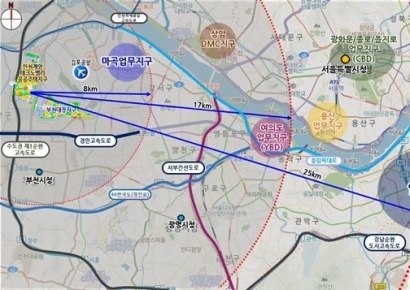 "Why Live in Seoul When You Can Pay Half Here?" 30 Minutes to Gangnam... Private Sales Begin in Gyeyang New Town
- "Living Becomes Easier Thanks to SK Hynix, But Conservative U.S. Cities Remain Torn Inside [U.S. Midterm Election D-40]②-2"
- "I Went for the Cheap Coffee, but Now I Feel Uneasy"... Major Coffee Franchises Cited for Violations One After Another
- "Once You've Been Here, It's Hard to Leave"... 9 Out of 10 Foreigners in Korea Say They Want to Stay
- "After Spending 170,000 Won on Hanwoo, This Is What I Got": Why Webtoon Artist Kim Gyusam Decided to Give Cash Instead
Jongryul Lee, Visiting Research Fellow at the Korea Capital Market Institute (former Deputy Governor of the Bank of Korea)
© The Asia Business Daily. All rights reserved. Unauthorized AI training and use prohibited.