President Lee Proposes 'New Silk Road' Vision with Five Central Asian Nations... "Expanding Cooperation on Critical Minerals and Infrastructure"
Korea-Central Asia Business Summit Held
First Multilateral Economic Event in 34 Years Since Diplomatic Ties
Attended by Leaders and Business Figures from Six Countries, Over 520 Participants
Diversifying Trade and Building Full-Cycle Supply
President Lee Jae-myung presented a vision for a "New Silk Road” centered on the establishment of a full-cycle supply chain for critical minerals, the expansion of trade and investment, and the development of future infrastructure, during discussions with leaders of the five Central Asian countries. Lee's plan is to combine Central Asia's abundant resources such as lithium and uranium with Korea's battery and semiconductor manufacturing capabilities, while expanding cooperation to include large-scale infrastructure markets such as high-speed rail, smart cities, and power grids. As a result, a total of 19 memorandums of understanding (MOUs) were signed between companies in the areas of critical minerals, smart cities, plant construction, and digital sectors, and business consultations on site led to contracts worth 3 million dollars.

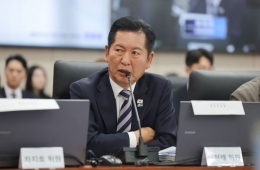
President Lee Jae-myung is delivering a speech at the 1st Korea-Central Asia Business Summit held at a hotel in Seoul on September 16, 2026. Photo by Yonhap News
View original imageDuring a keynote speech at the special session of the "1st Korea-Central Asia Business Summit" held at the Westin Josun Seoul Hotel on September 16, President Lee stated, "I would like to speak about the new Silk Road that the Republic of Korea and the five Central Asian countries will build together." He presented three directions for future cooperation: the establishment of a full-cycle supply chain for critical minerals, the expansion of trade and investment, and the development of future infrastructure.
This summit marks the first multilateral economic event since the establishment of diplomatic ties with the five Central Asian countries in 1992. Six leaders attended, including President Lee Jae-myung; Kassym-Jomart Tokayev, President of Kazakhstan; Sadyr Japarov, President of Kyrgyzstan; Emomali Rahmon, President of Tajikistan; Serdar Berdimuhamedov, President of Turkmenistan; and Shavkat Mirziyoyev, President of Uzbekistan. The number of attendees, including government officials and businesspeople from each country, reached over 520.
President Lee placed the strongest emphasis on critical minerals, aiming to move beyond the simple import of raw materials to building a full-cycle supply chain. He said, "As global supply chains are being reorganized, Central Asia is emerging as a key source of minerals essential for electric vehicle, battery, and semiconductor production. If Central Asia’s abundant mineral resources such as lithium and uranium are combined with our battery and semiconductor manufacturing capabilities, we can lead the global market together."
He clarified that the cooperation model will go beyond simple raw material imports. The plan is to build a supply chain covering the entire process from exploration, refining, and high-value material processing to finished product manufacturing. The government also plans to utilize rare metal centers being established in major local hubs to support joint research and development and professional workforce training.
This approach was reflected in inter-company cooperation as well. The Korea Institute of Industrial Technology signed an MOU with the National Metallurgical Ore Research Institute of Kazakhstan for cooperation in the rare metals industry, establishing a foundation linking local resources with Korea’s processing and manufacturing technology. SAC signed an MOU with Kazakhstan's MPI for the provision of phase two equipment for the Ekibastuz ferrosilicon production plant.
Hyundai Motor Leads Smart City Initiatives... 'Korea Desks' in All Five Central Asian Nations

President Lee Jaemyung is giving a speech at the 1st Korea-Central Asia Business Summit held at a hotel in Seoul on September 16, 2026. Photo by Yonhap News
View original imageThe trade structure will also be expanded from its current focus on automobiles, parts, energy, and raw materials to new industries such as consumer goods, bio, and digital sectors. President Lee stated, "Currently, trade is concentrated on the export of our automobiles and parts and the import of energy and raw materials from Central Asia. The range of trade must be broadened decisively into new areas such as consumer goods, bio, and digital sectors."
The government plans to set up "Korea Desks" in all five Central Asian nations to help resolve the issues faced by Korean companies entering local markets, and will reduce non-tariff barriers and customs procedures by building digital customs clearance systems. Korea-Central Asia trade volume has grown from 15 million dollars at the start of diplomatic relations in 1992 to more than 1 billion dollars last year.
In the field of smart cities, Hyundai Motor signed an MOU with Caspian Group·Caspi Group for cooperation on a physical AI-based smart city, securing a foundation for entry into Kazakhstan's Alatau Smart City project. In Uzbekistan, agreements were concluded for a smart bio cluster and for forming a joint venture in medical devices; in Kyrgyzstan, agreements were signed related to AI-based digital healthcare and public-private partnership (PPP) projects.
"High-Speed Rail & Power Grids: Korean Firms are the Optimal Partners"

On the 16th, at a hotel in Seoul, the 2026 1st Korea-Central Asia Summit is being held under the chairmanship of President Lee Jae-myung. September 16, 2026, Yonhap News Agency.
View original imageThe development of future infrastructure was also proposed as a key area for cooperation. Central Asia is a young market, with a population of 84 million and an average age of 27, posting annual growth rates around 5 percent. The government notes that demand is rapidly growing for large-scale infrastructure such as urban development, high-speed rail, plant construction, and power grids.
President Lee emphasized, "Korean companies, with their extensive construction experience and proven technology, are optimal partners for infrastructure innovation in Central Asia. We must work together to build a transportation and energy network, as well as a dense logistics network, to unlock Eurasia's potential."
Business cooperation has, in fact, expanded broadly into infrastructure and the digital sector. In Kyrgyzstan, Korea Overseas Infrastructure & Urban Development Corporation (KIND) signed an MOU on PPP project cooperation with the National Investment Agency PPP Center, and Dohwa Engineering concluded a tripartite agreement with a local investment institution. In Turkmenistan, an agreement was signed to establish a joint venture for IT product localization and technology transfer.
The "Korea-Central Asia Business Partnership" side event organized by Korea Trade-Investment Promotion Agency (KOTRA) attracted 33 major buyers and customers from Central Asia and over 90 Korean companies. During one-on-one business meetings, Artbox and Casia Imports signed a contract worth 3 million dollars.
Hot Picks Today
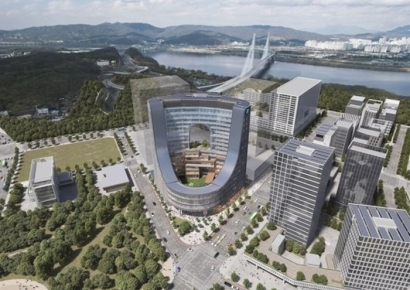 JYP Bought a 75.5 Billion Won Site, Only to Face an 18-Story Building Right in Front? ... SH's "Surprise Rezoning" Makes JYP Pull Out
- "What Becomes of the Geniuses Who Devoted Their Lives?"... 722 Papers Released in Just 3 Hours Spark 'Shock and Awe' [Reading Science]
- "It Shut Down Just From Showing My Face"... 1,500 iPhone 18 Pros Exchanged; "Cause Is Confidential"
- "'Assassin(s)' Actors: Is This Why They Won't Apologize?" Joo Jinwoo Reveals Incentive Deal
- "I Want to Look Like Glowing Koreans" ... The Trend Is Taking the World by Storm, but Experts Warn Against It
President Lee said, "If we walk this path together, what was traveled 1,500 years ago can open up as a new Silk Road. The Republic of Korea will firmly support your bold endeavors to ensure they lead to practical results as soon as possible."
© The Asia Business Daily. All rights reserved. Unauthorized AI training and use prohibited.