President Lee Proposes Full-Cycle Cooperation on Central Asian Critical Minerals... "Let's Open a New Silk Road"
President Lee’s Keynote Speech at the Business Summit
Proposal for "Full-Cycle Partnership" from Exploration to Refining, Materials, and Finished Products
Establishing "Korea Desks" in All Five Central Asian Countries
Digital Customs Infrastr
On September 16, President Lee Jae-myung proposed the establishment of a "full-cycle cooperation system" to the leaders of the five Central Asian nations, encompassing everything from the exploration and refinement of critical minerals to high-value-added material processing and finished product manufacturing. His vision is to combine Central Asia's abundant resources, including lithium and uranium, with Korea's battery and semiconductor manufacturing capabilities to jointly respond to the global supply chain restructuring.

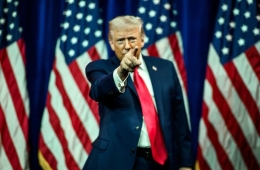
President Lee Jae-myung is delivering a speech at the 1st Korea-Central Asia Business Summit held at a hotel in Seoul on September 16, 2026. Photo by Yonhap News
View original imageHe also announced plans to expand the range of traded goods beyond automobiles and raw materials to include new industries such as consumer goods, bio, and digital sectors. Additionally, a "Korea Desk" will be set up in each of the five Central Asian countries to support the local expansion of Korean businesses. There are also plans to lower non-tariff barriers and customs costs by establishing a digital customs clearance system.
In his keynote speech during the special session of the Korea-Central Asia Business Summit held on this day, President Lee stated, "I would like to speak of a new Silk Road that the Republic of Korea and the five Central Asian countries will build together," laying out these three major economic cooperation initiatives.
The most notable initiative concerns the supply of critical minerals. President Lee said, "Amid the reorganization of global supply chains, Central Asia is emerging as a key source of essential minerals needed for the production of electric vehicles, batteries, and semiconductors." He added, "If Central Asia's abundant mineral resources such as lithium and uranium join forces with our manufacturing capacity in batteries and semiconductors, we can lead the global market together."
He clearly expressed the intention to go beyond mere mineral imports and link local industrialization in Central Asia with Korean manufacturing. President Lee stressed, "We must strengthen full-cycle cooperation in the field of critical minerals, going beyond basic trade in raw materials to include exploration, refining, high-value-added material processing, and finished product manufacturing."
To that end, the government will utilize the "rare metals centers" currently being established at major Central Asian hubs to support joint research and development (R&D) and the training of professionals. The goal is to enhance added value by processing resources mined in Central Asia locally and create a structure that links them to Korea's advanced manufacturing supply chain.
Beyond Cars and Raw Materials: Bio, Digital... 'Korea Desk' for All 5 Countries
The structure of trade and investment will also be diversified. President Lee noted that the current trade relations are weighed toward Korean exports of automobiles and auto parts and Central Asian exports of energy and raw materials, adding, "We must decisively broaden the scope of trade to include new industries such as consumer goods, bio, and digital sectors."
He also announced the government will provide support at the national level to help develop new markets. The Korean government plans to send trade delegations to Central Asia to assist local companies in entering the Korean market and to establish a digital customs system to lower non-tariff barriers and simplify clearance procedures.
The "Korea Desk," which will be set up in all five Central Asian countries, will serve as a forward base to resolve the practical challenges faced by Korean firms in the region. President Lee said, "It will be a highly effective channel to immediately address the difficulties our companies face on the ground," adding, "When local investment firms take root, it will lead to industrial development and job creation."
"High-Speed Rail, Power Grids, Urban Development... Korean Companies Are Ideal Partners"

President Lee Jae-myung is delivering a speech at the 1st Korea-Central Asia Business Summit held at a hotel in Seoul on September 16, 2026. Photo by Yonhap News Agency
View original imageAnother direction of cooperation outlined was major infrastructure projects. President Lee described Central Asia as a young market with a population of 84 million, an average age of 27, and a birth rate of 3.1, stating that with annual growth rates above 5 percent, demand for infrastructure modernization in urban development, high-speed rail, plants, and power grids is rapidly increasing.
He stated, "Korean companies, with their extensive construction experience and proven technologies, are undoubtedly the best partners for infrastructure innovation in Central Asia." He added, "We must unlock the potential of Eurasia by jointly building transportation and energy arteries that connect the vast continent, as well as dense logistics networks."
President Lee rooted the day's economic cooperation in history, referencing the "Silk Road." He cited examples such as the Goguryeo envoy depicted in the mural of the UNESCO World Heritage-listed Afrasiab Palace and the Western glassware discovered in Gyeongju's Cheonma Tomb, emphasizing that "neither towering mountain ranges nor vast grasslands could stop the flow of exchanges between our peoples."
He also highlighted the historical episode of ethnic Koreans who were forcibly relocated to Central Asia during the Japanese occupation and were received by the local population. President Lee said, "Thanks to this, 300,000 ethnic Koreans have become key figures in their respective societies, serving as a strong bridge between the Republic of Korea and Central Asia," and expressed his gratitude to the governments and people of each country.
Hot Picks Today
 "Two Spend 500,000 Won in a Flash, Yet Wait Two Hours?" ... 'Dreamland' Shunned by Kids and Foreign Tourists
- The Era of Getting 200 Million Won After 30 Years Is Over... A Japanese Bank's "Perpetual Department Head" Who Just Clocked In Cries Out
- Spain Hit by Its Worst Tragedy... Lee Kangin, Moreno and Real Madrid Join Soccer World in Mourning
- They Said, “Make It Your Home for Life” - Then Suddenly Kicked 200 Passengers Off... What Happened to the Around-the-World Cruise?
- "130 Rice Bowls Sold Out in a Day"... 'Unfiltered Face' Adds 8 Million Won to Night Market Sales: China's Bungeunwoo
President Lee concluded, "If we walk this path together, there is no doubt that the road traveled 1,500 years ago will be reopened as a new and beautiful Silk Road," adding, "The Republic of Korea will firmly support your bold initiatives so that they can bear tangible fruits as quickly as possible."
© The Asia Business Daily. All rights reserved. Unauthorized AI training and use prohibited.