NICE Investors Service: "Petrochemicals Yet to Improve; Negative Factors Prevail for Secondary Batteries"
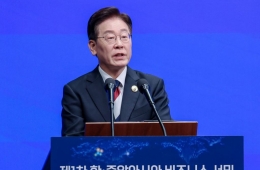
NICE Investors Service Hosts Credit Seminar 2026
Real Estate: Attention on Delayed Collection Due to "Non-Occupancy"
NICE Investors Service has assessed that, although industrial restructuring in the domestic petrochemical sector is materializing, it is still difficult to say that the credit risk factors have been sufficiently resolved. The company also judged that despite the global growth trend, the secondary battery industry faces predominant negative factors for its creditworthiness, such as investment burdens.
Kim Seoyeon, Principal Researcher at NICE Investors Service, stated at the "NICE Credit Seminar 2026" held at the Korea Exchange on the 16th, "The improvement in petrochemical performance during the first half of the year was largely driven by temporary factors such as supply disruptions in the Middle East and lagging effects. For many companies, borrowing burdens remain high, making it difficult to conclude that debt repayment capabilities have sufficiently recovered," indicating this assessment.

At the 'NICE Credit Rating Seminar 2026' held on the 16th at the Korea Exchange Conference Hall, Kwon Junsung, Senior Researcher (left), Kim Seoyeon, Principal Researcher (center), and Kwon Junsung, Senior Researcher, are answering questions. Photo by Youngwon Kim
View original imageShe explained that the favorable environment will likely change in the second half of the year, unlike in the first half. Kim said, "Some alternative procurement sources have been secured in the second half, and on the demand side, buyers are delaying purchases while maintaining low inventory levels. Although major petrochemical product spreads are showing temporary rebounds, it does not seem that the peak levels observed in the first half will be sustained." She added, "The effects of supply shocks peaked in the second quarter and are weakening, and we expect that, in the second half, the impacts of preexisting supply glut and cost competitiveness will become more significant for performance."
She also pointed out limitations that remain even as restructuring progresses. Kim noted, "Structural challenges such as global oversupply centered on China and high dependence on exports persist in the industry, making it hard to judge that there has been any fundamental improvement in business conditions."
Accordingly, Kim emphasized, "What is important is not mere restructuring itself, but 'how much actual profitability and cash-generating capacity improve after restructuring.' Only when these results are confirmed do we expect further downward credit trends to be alleviated."
Secondary Batteries: Growth Driven by LFP... Investment Burdens Rise
Regarding the secondary battery industry, Kim diagnosed that while the industry turnaround is accelerating, companies are bearing investment burdens for product diversification and the establishment of independent supply chains. Taking into account these latent burdens, she stated that despite the resumption of market growth, negative factors still exert a stronger influence on the creditworthiness of domestic secondary battery companies.
Lee Youngkyu, Senior Researcher at NICE Investors Service, described recent shifts in the secondary battery market: "Price sensitivity among consumers is rising as electric vehicles reach mass adoption, increasing the incentive to adopt mid- to low-priced chemistries for volume models. LFP (lithium iron phosphate) batteries, based on price competitiveness, are expected to drive the growth of the secondary battery market for electric vehicles."
Under these circumstances, domestic secondary battery companies are experiencing limited profit recovery. Lee explained, "The main cause is a portfolio mismatch between high-nickel ternary batteries, in which domestic companies specialize, and LFP products, which are currently leading market growth."
The strong competitive position of Chinese companies in the LFP market is also burdening performance. In the LFP sector, Chinese companies have established high market dominance and cost competitiveness owing to years of business experience and vertically integrated supply chains.
The main opportunity for Korean companies arises from the strengthening of the United States’ sanctions against China. Lee said, "With federal incentives such as the Advanced Manufacturing Production Credit (AMPC) and Investment Tax Credit (ITC) supporting batteries produced in the US, and tariffs and supply chain restrictions on Chinese batteries being reinforced, the price advantage of Chinese products is substantially eroding, creating a more favorable competitive landscape. As a result, Korean cell makers are accelerating the localization of LFP businesses in North America."
However, "such policy support is expected to be gradually reduced in the future, and the competitive edge based on these policies may be only temporary. Therefore, while using the current favorable environment to accumulate experience in LFP production, it will be necessary in the long term to secure cost competitiveness and non-Chinese supply chains in order to respond to evolving market conditions," he added.
Additionally, among material companies, the need for diversified investment in LFP-related areas is increasing, and the demand for funding is expected to rise for the time being. Lee observed, "Since the profitability of existing items is not high and the investment burden is substantial relative to cash generation, the burden of managing financial risks is intensifying."
For Construction, 'Occupancy Rate' Is as Important as Presale Rate
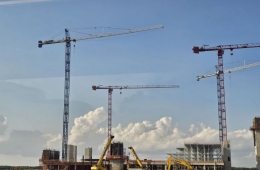
NICE Investors Service identified "working capital risk" as a key issue facing the construction industry. The company notes that delayed occupancy on top of unsold units is causing delays in payment collection for construction work, leading to structural collection delays.
In particular, it was highlighted that projects launched during the boom years in 2021 are sequentially reaching completion, but receivables are not being collected. Kwon Junseong, Senior Researcher at NICE Investors Service, explained, "Normally, when a project is completed, the working capital previously invested is recovered, improving cash flow. However, among the top 11 companies, accumulated net operating cash outflows from 2024 to the first half of this year have reached 5.4 trillion won. Even as book profits are recovering, net cash inflows are not materializing."
Incomplete funding recovery was mainly attributed to "non-occupancy." Kwon elaborated, "In housing construction, the completion of funding recovery mostly comes not at project completion, but with the final payments under the post-sale system. Thus, even at sites where all units have been pre-sold, if occupancy is delayed, a significant portion of accounts receivable may remain outstanding after completion."
The reasons for occupancy delays include market mismatches and differences in controllability between pre-sales and occupancy stages. Kwon stated, "During pre-sale, marketing activities by project operators and financial support from contractors can improve sales rates to some degree. However, at the occupancy stage, it depends entirely on the ability of buyers to secure funds and overall macroeconomic conditions. Recently, a combination of the government's strengthened real estate regulations, declining transaction volumes, and tightened lending practices has weakened post-sale funding capacity, while falling home prices in regional markets have led some buyers to refuse occupancy, compounding the risks."
Hot Picks Today
 "They Really Might Take No.1"... Nongshim Narrows Gap with Japan from 9.2% to 1.9% in a Year, Closing In on Market Leader
- Jensen Huang Reacts to Douzhi; HYROX Female Champion Faces Ordeal Mid-Race: Was a 'Chinese Drink' to Blame?
- Japanese "Short Sleeper" Who Claimed to Be Fine on 30 Minutes of Sleep a Day Caught Napping During Live Broadcast
- "Please Take Off Your Shoes"—From Crawling onto the Bed to Changing Habits, Young Americans Lead the Shift
- "The Clothes My Dad Used to Wear"... Ralph Lauren, Beanpole, and Hazzys See Sales Surge as MZ Generation Embraces the Trend
Accordingly, NICE Investors Service indicated that it will closely examine cash flow-related risks arising from the accumulation of receivables as a core factor in future credit assessments. It also stated that, besides the sales rate at each project, it will monitor occupancy rates, the pace at which unsold units are absorbed after completion, and evaluate the likelihood of receivables collection in detail based on regional project factors.
© The Asia Business Daily. All rights reserved. Unauthorized AI training and use prohibited.