[Exclusive] One Person Placed 5.7 Billion Won Bet?... 18 Polymarket Users Referred to Prosecutors
Betting on Political, Economic, and Social Event Predictions
Police Trace Blockchain Transaction Records
Legal Fate Hinges on 'Order Book-Based Probability Contracts'
The cumulative betting amount by users of the overseas prediction market platform "Polymarket" has reached approximately 17.6 billion won. However, a fierce legal battle is expected in the future over whether Polymarket should be regarded as illegal gambling or as an investment in derivatives.

According to materials submitted to Assemblyman Yun Kyeon-Young's office of the Democratic Party of Korea by the National Police Agency on September 17, the Cyber Investigation Unit of the Gangwon Provincial Police Agency had, as of the 15th of this month, booked 26 individuals and referred 18 of them to the prosecution. The cumulative betting amount by the suspects, converted to Korean won, was about 17.6 billion won; the highest individual betting amount recorded was approximately 5.7 billion won.
Polymarket is a virtual asset-based prediction platform where users can predict the occurrence of specific events related to political, social, or economic issues worldwide by answering "yes" or "no," and receive either 1 USDC or 1 pUSD per share depending on the outcome, or lose their stake. It operates with a non-custodial P2P and automatic settlement structure, meaning the platform does not manage a list of users' real names. However, police have been able to identify and track individual users by analyzing public blockchain transaction records through open source intelligence (OSINT) techniques.
![[Exclusive] One Person Placed 5.7 Billion Won Bet?... 18 Polymarket Users Referred to Prosecutors](http://www.asiae.co.kr/news/img_view.htm?img=2026091615120830931_1789539128.jpg)
The police maintain the position that transactions on Polymarket constitute clear illegal gambling. They argue that the nature of the transaction and the determination of gains or losses should take precedence over labels such as "investment." A key precedent is the Supreme Court's ruling that gambling charges can be established if chance factors are involved and financial assets are wagered for gains or losses, even if an individual's skills affect the outcome. Accordingly, transactions on Polymarket—where virtual assets are staked and gains or losses are determined by outcomes that cannot be certainly predicted—are deemed to meet the requirements for a gambling offense as defined in Article 246 of the Criminal Act. The existence of features resembling derivative investment or the absence of specific guidelines does not preclude the application of gambling charges.
On the other hand, the individuals who have been booked claim that Polymarket should be seen not as simple gambling, but as a virtual asset-based derivatives investment market. Therefore, an assessment of the structural differences will likely become a central issue in future judicial decisions.
![[Exclusive] One Person Placed 5.7 Billion Won Bet?... 18 Polymarket Users Referred to Prosecutors](http://www.asiae.co.kr/news/img_view.htm?img=2026091710082232012_1789607302.jpg)
Previously, on August 18, the Korea Communications Standards Commission (KCSC) voted to block access to Polymarket. The Commission noted that the winner-takes-all profit and loss structure, which involves betting assets on uncontrollable events, encourages speculative behavior. It cited that the platform operator manages the rules and profits from transaction fees, and concluded that the service constitutes aiding and abetting gambling, operating a gambling site, and a violation of the National Sports Promotion Act under the Criminal Act.
At the time, Polymarket argued that it could not be regarded as the operator of a gambling establishment, as it does not provide Korean-language services, does not allow transactions in Korean won, and is non-custodial, meaning it does not directly manage user funds. However, the KCSC stated, "Technical characteristics or service structure do not constitute grounds for evading the applicability of domestic law," and explained, "Since the platform offers a winner-takes-all profit structure based on chance for domestically relevant issues, and effectively provides an environment for illegal gambling to domestic users, blocking access is unavoidable."
![[Exclusive] One Person Placed 5.7 Billion Won Bet?... 18 Polymarket Users Referred to Prosecutors](http://www.asiae.co.kr/news/img_view.htm?img=2026091709403031874_1789605631.gif)
Tae-Lim Kim, Managing Attorney at AXIS Law, stated, "There is a possibility that Polymarket could be found to formally meet the requirements of property investment and chance under the Criminal Act, since users bet virtual assets and outcomes are determined by uncertain events, making it difficult to avoid the application of domestic criminal law under the principle of nationality." However, he added, "The core legal issue will be how courts evaluate the structural differences, as the platform is order book-based, supports trading of probabilistic contracts, and allows liquidation before maturity—features not found in traditional gambling."
Hot Picks Today
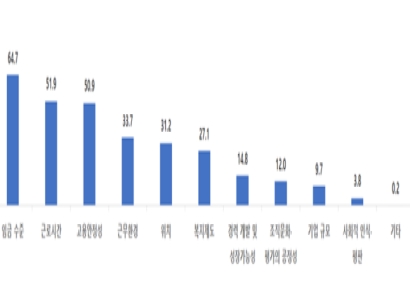 "Please Pay Me at Least 3 Million Won a Month": More Than Half of Young People Today Prioritize "Working Conditions" Over Company Size
- Selling Like Crazy Every Year... 30-Year-Old Hetbahn Takes on a New Challenge: Tastes Better Than "Mom's Home Cooking" [On-Site Report]
- Ran 18 km With 9-Year-Old Tied to Him at the Waist... "Man Banned From Competing for 3 Years"
- "Hey, Lady, Teach Your Kids to Behave!" ... 300,000 Won in Cash and a Bodily Injury Claim Demanded Over Child's Door Ding
- Beachgoer Finds 'Plastic' That Turns Out to Be Perfume Ingredient Worth More Than Twice as Much as Gold
Attorney Kim went on to say, "Prediction derivatives, as users claim, do not fall within the framework of the Capital Markets Act and so cannot serve as a direct defense in criminal proceedings, but do have value as a subject of legislative debate." He also commented, "The KCSC's rejection of the platform's argument that it is not an operator because it is non-custodial could become a key issue in determining whether the offense of opening a gambling establishment applies in future cases."
© The Asia Business Daily. All rights reserved. Unauthorized AI training and use prohibited.





![[Market ING] KOSPI Seeks Rebound in Superweek Packed with Corporate Earnings and FOMC](https://cwcontent.asiae.co.kr/asiaresize/307/2026102514484873155_1792907327.jpg)