Gimcheon City Wins Minister of the Interior and Safety Award for 'Smart City' Project
Connecting the Self-Owned Network Cuts Costs by 1.07 Billion Won
Expanding Applications to Administration, IoT, and Public Wi-Fi
Gimcheon City, located in North Gyeongsang Province, has been recognized as one of the nation’s best local government cases for information and communications, thanks to its achievements in building a smart city through the establishment of a self-owned communication network.

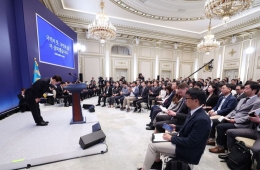
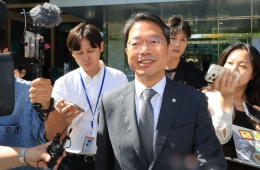
Commemorative photo for winning the Minister of the Interior and Safety Award at the '31st Local Government Information and Communication Best Practice Presentation Contest 2026'
Photo by Gimcheon City
The city announced that it received the Minister of the Interior and Safety Award at the '31st Local Government Information and Communication Best Practices Presentation Contest in 2026,' which was held at the Swiss Grand Hotel in Seoul on September 10.
A total of 33 local governments from across the country participated in the contest, which was hosted by the Ministry of the Interior and Safety.
After an expert review, eight local governments advanced to the final round to present their best practice cases.
Gimcheon City was selected as the final awardee, receiving high marks from both the public evaluation and on-site inspection.
The case presented by Gimcheon City was titled ‘Gimcheon City Smart City Go! Go!’.
The core achievement was connecting the self-owned communication network built in Gimcheon Innovation City in North Gyeongsang to Gimcheon City Hall, which is located in the old downtown area.
In particular, by utilizing the newly constructed Himang-daero and signing a joint construction agreement with telecom companies, the city was able to drastically reduce the originally anticipated project costs.
As a result, the final construction cost was limited to 130 million won, reducing the initial construction costs by 1.07 billion won. In addition, the city now saves 66 million won annually in existing line rental fees.
The project not only focused on budget savings but also expanded the scope of the self-owned network’s applications.
By applying technologies to improve data transmission efficiency to what was previously a network centered on CCTV monitoring, Gimcheon City expanded its use to include administrative services, the Internet of Things (IoT), and public Wi-Fi, among other areas.
According to Gimcheon City, this initiative has strengthened the foundation of communication services that citizens can experience in their daily lives, while also securing the infrastructure necessary to further expand smart city services in the future.
Hot Picks Today
 "KOSPI Surpassed 9,000, but May Fall Below 5,200 Next Year"...Expert Explains the Forecast
- In the Same Neighborhood, One Apartment Costs 2 Billion Won, Another 450 Million... What's Happening in Gangnam?
- "New Infections Sixteen Times Higher Than in 2019"... National Emergency Declared Over Spread of This Virus
- "I Thought I Lacked Willpower, But It Turns Out 'This Hormone' Is to Blame? [Experiment Note]"
- With Two Extra Days Added to Chuseok Holiday: "Pack Up, Let's Go Anywhere"... Domestic Travel Demand Surges
Nakho Bae, Mayor of Gimcheon City, stated, "The establishment of the self-owned network is a project that ensures both budget savings and administrative efficiency. It is a scalable model that can be benchmarked by local governments nationwide. We will continue to expand its applications and provide high-quality communication services centered on our citizens."
Gimcheon City’s ‘practical smart city’ approach—expanding communication infrastructure at low cost and reducing annual expenditures—stands out as a noteworthy example.
© The Asia Business Daily. All rights reserved. Unauthorized AI training and use prohibited.