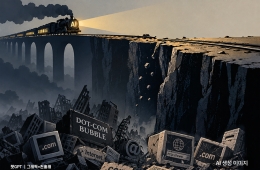
$38 Billion Spent on Iran War by U.S.: "At Least 5 Years Needed to Replenish Missile Stocks"
CBO Report Reveals U.S. War Expenses
$21.7 Billion Spent Solely on Ammunition Replenishment
At Least $2 Billion in Additional Costs Every Month
Interceptor Missiles Heavily Depleted in Iran Conflict
Estimated Half to Two-Thirds of
The U.S. Congress has estimated that the United States has spent approximately 38 billion dollars (51.82 trillion won) to date on the war with Iran. Congress also warned that, in particular, the large-scale use of interceptor missiles during the war could lead to inventory shortages that persist over the coming years, and that this could cause serious security concerns if future conflicts arise with rival nations such as China or Russia.
According to a report released on the 15th (local time) by the Congressional Budget Office (CBO), a bipartisan budget analysis agency of the U.S. Congress, the Department of Defense's (War Department's) expenditures as of the 1st of last month, resulting from armed conflict with Iran, amounted to approximately 38 billion dollars. This cost includes replacement of expended munitions and equipment, increased flight hours, other operational expenses, and fuel costs. The largest portion was spent on replenishing expended munitions, totaling 21.7 billion dollars (29.5922 trillion won). The cost due to increased flight hours was 10.4 billion dollars (14.1824 trillion won), added fuel expenses due to rising oil and fuel prices were 2.7 billion dollars (3.6819 trillion won), the cost of replacing equipment lost in combat was 1.9 billion dollars (2.5910 trillion won), and other operational expenses were estimated at 1.5 billion dollars (2.0455 trillion won), respectively.

On June 30th (local time), U.S. Navy warships and aircraft moved in formation in the Arabian Sea. U.S. Central Command.
View original imageHowever, the costs of repairing and rebuilding U.S. military bases and facilities in the Middle East that were damaged by Iranian attacks were not included. The CBO explained that, since the Department of Defense did not provide the relevant data, it is difficult to estimate the scale of the damage or the cost of restoration.
The CBO also projected that if the war continues, monthly costs could increase by several trillion won. According to the report, if combat operations continue at the low intensity observed during May and June, an additional 2 billion dollars (2.7274 trillion won) will be spent each month; if the intensity remains at July levels, costs could rise by 3 billion dollars (4.0911 trillion won) per month. Should the conflict further intensify, costs are expected to rise even more.
The CBO specifically projected that, because the U.S. military's missile defense and interceptor systems have been consumed in large quantities during the war against Iran, weapons inventories will remain insufficient for several years to come. The U.S. military relied heavily on Patriot, Terminal High Altitude Area Defense (THAAD), SM-3, and SM-6 interceptor missiles. Although the Department of Defense has not disclosed the size of its munitions stockpiles, the CBO compared publicly available usage data with cumulative purchases by the Department of Defense, estimating that since June of last year the United States has depleted between half and two-thirds of its interceptor missile inventory. It is expected to take at least five years to replenish this stockpile.

On June 10 (local time), an F/A-18E Super Hornet fighter jet is taking off from the nuclear-powered aircraft carrier USS Abraham Lincoln deployed in the operational area of the U.S. Navy's 5th Fleet. U.S. Central Command.
View original imageThis depletion of inventory could limit the U.S. military's ability to respond to potential future military conflicts with China. The CBO noted that "China possesses far more ballistic and cruise missiles than Iran, and its production rate is also much higher," adding, "An armed conflict with China would place an even greater strain on U.S. missile defense capabilities."
Hot Picks Today
 "Please Pay Me at Least 3 Million Won a Month": More Than Half of Young People Today Prioritize "Working Conditions" Over Company Size
- Selling Like Crazy Every Year... 30-Year-Old Hetbahn Takes on a New Challenge: Tastes Better Than "Mom's Home Cooking" [On-Site Report]
- He Left It in the Car and Forgot... "I Nearly Collapsed with Joy": Man Wins $1.48 Million Lottery
- Ran 18 km With 9-Year-Old Tied to Him at the Waist... "Man Banned From Competing for 3 Years"
- Beachgoer Finds 'Plastic' That Turns Out to Be Perfume Ingredient Worth More Than Twice as Much as Gold
The report also warned that the prolonged war is increasingly having a negative effect on the U.S. economy. The CBO projected that, due to the impact of the conflict with Iran, the U.S. personal consumption expenditures (PCE) inflation rate in the first quarter of next year will rise by 0.5 percentage points over the forecast made in February of this year. The core PCE inflation rate, which excludes food and energy, is also expected to be 0.3 percentage points higher than previously projected.

© The Asia Business Daily. All rights reserved. Unauthorized AI training and use prohibited.