Seoul City Buses Halt as 7,000 Vehicles Stop for Strike; 1,500 Shuttle Buses Deployed (Comprehensive)
Final Breakdown in Labor-Management Talks: Bus Operations to Halt on September 16
Strike Repeats After 8 Months, Raising Concerns Over Morning Commutes
"Over 8 out of 10 Seoul Citizens Hold Negative View on the Strike"
The Seoul city bus labor union will launch a strike on September 16, suspending all operations from the first bus of the day. This strike is expected to bring about severe congestion during the morning commute, as approximately 7,000 city buses operating 390 routes under 64 companies will come to a halt across Seoul.

On January 14, 2026, the second day of the Seoul city bus strike, the bus stop at Seoul Station showed a sparse scene. Photo by Dongjoo Yoon
View original imageThe Seoul City Bus Workers’ Union, part of the Korea Automobile & Transport Workers’ Federation, and the management, represented by the Seoul Metropolitan Bus Transportation Business Association, attended a second mediation meeting for the labor dispute at the Seoul Regional Labor Relations Commission at 2:00 p.m. on September 15.
Park Jeom-Gon, the head of the Seoul City Bus Union, and Kim Jeong-Hwan, chairman of the Seoul Metropolitan Bus Transportation Business Association, represented labor and management respectively in last-minute negotiations. However, after eight hours, no agreement was reached, and the union declared the talks had failed around 10:00 p.m.
Subsequently, both sides attempted to find common ground until midnight, but were unable to narrow the gap. As the mediation deadline passed at midnight without a compromise, final negotiations collapsed. As a result, the union confirmed that, as previously announced, it would carry out a general strike from the first bus at 4:00 a.m. on September 16.
The negotiations centered on the issue of ordinary wages. The union demanded that, following the result of the Dong-A Transportation lawsuit on ordinary wages, the base calculation time for ordinary wages be set at 176 hours per month, along with an additional 7.85% increase in the hourly wage.
The management and the Seoul Metropolitan Government argued that, considering the contractually agreed working hours between labor and management, the ordinary wage calculation should be based on 230 hours.
However, management proposed 209 hours as an alternative, citing case studies from other municipalities and reflecting the intent of court rulings related to ordinary wages. They projected a wage increase rate of 6–7%, and proposed an increase plan totaling about 10.32% when including additional raises.
The management and the Seoul Metropolitan Government expressed reservations, stating that if the union’s demands were accepted, the current annual city bus deficit of about 500 billion won could soar to about 1 trillion won.

On January 14, 2026, the second day of the Seoul city bus strike, the Seoul Station subway platform was crowded with passengers. Photo by Dongju Yoon
View original imageWith this strike occurring just eight months after the one in January, commuters are bracing for more disruptions during their morning journeys.
In response, the city announced a significant expansion of free shuttle bus (chartered bus) operations as part of its emergency transportation measures. While 700 shuttle buses were deployed during the January strike, this time the capacity will be increased to up to 1,500 buses. In addition to district-level deployments, the Seoul Metropolitan Government itself will directly send shuttle buses to key arterial roads to enhance transport capacity during rush hours.
The number of additional subway trains and the extension of last train times will also be doubled compared to previous measures. Previously, frequency and last train extensions were applied for one hour each during morning and evening rush hours; in this strike, each will be extended to two hours to improve overall transport capacity. Village (community) buses will be temporarily allocated to main lines, and the city’s bike-sharing service, Ddareungi, will be made available for free to help disperse travel demand.
To accommodate an expected increase in passenger cars, the city will suspend roadside bus-only lane operations during the strike, allowing regular vehicles to use those lanes. However, median bus-only lanes will remain reserved exclusively for buses as usual.
Additionally, the city has requested schools at elementary, middle, and high levels to adjust class start times and has asked private companies to implement remote work or flexible working arrangements. Seoul Metropolitan Government and its affiliated agencies have also made preparations to actively apply flexible work systems to minimize commuting disruptions among public sector employees.
Meanwhile, a recent survey showed that more than eight out of ten Seoul citizens hold a negative view of the strike. The Seoul Institute released the results of an online survey conducted from September 14 to 15 among 1,000 men and women aged 19 or older residing in Seoul.
Hot Picks Today
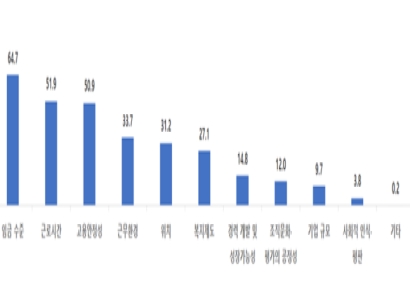 "Please Pay Me at Least 3 Million Won a Month": More Than Half of Young People Today Prioritize "Working Conditions" Over Company Size
- Selling Like Crazy Every Year... 30-Year-Old Hetbahn Takes on a New Challenge: Tastes Better Than "Mom's Home Cooking" [On-Site Report]
- "Americans Would Be Amazed If They Came": Wide-Eyed at a Sight They've Never Seen Before... Foreigners Also Fall for K-Baseball [K-Holic]
- President Lee Narrows Candidates for Next Justice Minister to Former Prosecutors Yang Bunam and Park Gyuntaek
- Beachgoer Finds 'Plastic' That Turns Out to Be Perfume Ingredient Worth More Than Twice as Much as Gold
According to the poll, 81.3% of respondents opposed a total city bus strike. Of those, 43.0% said they were “strongly opposed,” while 38.3% were “somewhat opposed.” Fewer than 10% supported the strike, with 8.3% “somewhat in favor,” and 1.6% “strongly in favor,” representing a total of 9.9% in support.
© The Asia Business Daily. All rights reserved. Unauthorized AI training and use prohibited.