[New York Stock Exchange] 10-Year Yield Hits Highest Since 2007... All Indexes Decline
International Oil Prices Surge Across the Board
Possibility of Fed Tightening Rises
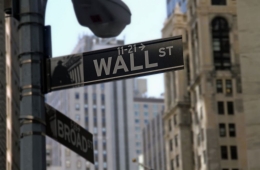
As both U.S. Treasury yields and international oil prices rose, all three major indexes on the New York Stock Exchange (NYSE) declined on September 15 (local time). However, a rebound in artificial intelligence (AI)-related stocks, which had plummeted the previous day, helped limit the losses for the S&P 500 Index and the Nasdaq Index.
As of 10:13 a.m. on the NYSE, the Dow Jones Industrial Average was trading at 51,989.33, down 431.87 points (0.82%) from the previous session. The large-cap S&P 500 Index lost 27.95 points (0.37%) to 7,592.03, while the tech-focused Nasdaq Index fell 129.82 points (0.50%) to 26,056.58.

The simultaneous rise in U.S. Treasury yields and international oil prices weighed on the market. The benchmark U.S. 10-year Treasury yield climbed as high as 5.041% during trading, marking its highest level since 2007. Although it later gave up part of the gains, it remained near 5.00%, still more than 4 basis points (1bp = 0.01 percentage points) above the previous session.
Worries have mounted that a war between the U.S. and Iran could fuel inflation and prompt central banks around the world to pursue tighter policy stances, which is accelerating the sell-off in Treasury bonds. Rising Treasury yields increase borrowing costs for companies and households, while also reducing the attractiveness of stocks as risk assets.
International oil prices also continued their upward trend. Concerns over supply instability grew as Saudi Arabia halted operations on a key pipeline that bypasses the Strait of Hormuz. On ICE Futures, November Brent crude rose 1.67% from the previous day to trade at $107.45 per barrel. On the New York Mercantile Exchange, October West Texas Intermediate (WTI) crude gained 2.07% to $103.46 per barrel.
The market’s focus is on the Federal Reserve's interest rate decision, scheduled for release on September 16. The interest rate futures market reflects about a 90% probability that the Fed will raise the target range for the federal funds rate, currently at 3.50–3.75% per year, by 0.25 percentage points.
Christopher Hodge, Chief U.S. Economist at Natixis, said, "It is expected that, for the first time since Chairman Kevin Warsh took office, the Fed will raise the upper end of the policy rate to 4.0%," adding, "However, it is important to emphasize that this decision does not indicate further actions at upcoming meetings, as the Fed seeks to preserve as much policy flexibility as possible."
Strategists at Barclays noted that a 5% yield on the U.S. 10-year Treasury could mark a significant inflection point for equity markets. They stated, "Until now, corporate earnings have offset some of the pressure from rising rates, but historically, once the 10-year yield surpassed 5%, it became a more persistent headwind for the stock market. Should yields rise significantly above these levels, the risk of a sharp equity market correction will increase."
Hot Picks Today
 "It Shut Down Just From Showing My Face"... 1,500 iPhone 18 Pros Exchanged; "Cause Is Confidential"
- Condoms Out of Stock... "Please Stop Having Kids": Country to Deliver Contraceptive Pills Door to Door
- "Your Job Could Disappear Too"... A Chilling Shift as Robot Motion-Training Gigs Surge [Tech Talk]
- JYP Bought a 75.5 Billion Won Site, Only to Face an 18-Story Building Right in Front? ... SH's "Surprise Rezoning" Makes JYP Pull Out
- "I Want to Look Like Glowing Koreans" ... The Trend Is Taking the World by Storm, but Experts Warn Against It
Meanwhile, AI-related stocks that had plunged the previous day rebounded. Nvidia and Micron Technology each gained about 1%, while AMD and Intel rose more than 2%. The rebound in AI stocks is helping to prevent further declines in both the S&P 500 and Nasdaq indexes.
© The Asia Business Daily. All rights reserved. Unauthorized AI training and use prohibited.