Lee Hyungil: "Now Is the Time for Expansionary Fiscal Policy"... Draws Line on Fiscal Rule Adoption and Expanding Net Bond Redemption (Comprehensive)
Confirmation Hearing at the National Assembly
Apology for Confusion Over Real Estate Tax Reform and the Gwacheon Apartment Controversy
Lee Hyungil, nominee for Deputy Prime Minister and Minister of Finance and Economy, stated on the 15th that the decision to allocate additional tax revenue generated by the semiconductor boom as a priority toward repaying the national debt was made in consideration of fiscal flexibility and managing liquidity in the government bond market. Regarding the adoption of fiscal rules during his term, he drew a clear line, saying, "Now is a time when an expansionary fiscal policy is needed."
At the confirmation hearing held by the National Assembly's Planning and Finance Committee on this day, Lee made these comments in response to criticism that the net government bond redemption amount of 12.5 trillion won was too small.
During the hearing, the opposition party focused its scrutiny on whether it was reasonable for the government to accumulate 104 trillion won of surplus funding in the Future Response Fund while issuing a similar amount in new debt.
In response, Lee explained, "It is difficult to flexibly reallocate all of the excess tax revenue to expenditures, and at the same time, utilizing it entirely for government bond redemption is challenging because the bond market needs to maintain a certain degree of liquidity and size."
When further asked what level of debt repayment would be possible without affecting market liquidity, Lee avoided a direct answer, stating, "That is a matter of policy judgment."

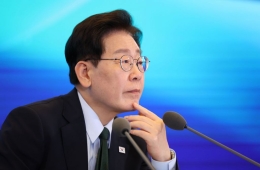
Lee Hyungil, Deputy Prime Minister and Minister of Finance and Economy nominee, is responding to lawmakers' questions at the confirmation hearing held at the National Assembly on the 15th. 2026.09.15 Photo by Dongju Yoon
View original imageRegarding the perception that the Future Response Fund, established at a scale of 162 trillion won, is essentially a government slush fund, Lee refuted, "It is my understanding that when the fund's operational plan is submitted to the National Assembly, it undergoes preliminary review. This is not the government's discretionary fund."
The hearing also included criticism that there are no legal provisions specifying the upper limit, duration, or management standards of the Future Response Fund, nor are there criteria for target yield, investment scope, or standards for responsibility and compensation in case of losses when managing surplus funds. Additionally, there was concern that both the responsibility for managing and operating the fund and the chairmanship of the Fund Management Deliberation Committee are concentrated in a single individual, the Minister of the Ministry of Budget and Planning, and therefore a separate oversight mechanism is necessary.
On the topic of introducing fiscal rules during his term, Lee expressed a negative view, saying, "I think an expansionary fiscal policy is needed at present." He added, "I believe there should be institutional mechanisms for fiscal soundness, but as I see it now, there are many factors to consider."
He emphasized, "I think a virtuous fiscal cycle led by economic growth is more meaningful."
Lee also stated that he would closely monitor the recent surge in global government bond yields. Regarding concerns that demand for government bonds could be insufficient at the end of the year, he said, "If necessary, we will maintain stability through market safety measures to prevent excessive volatility." Although Lee believes that the current supply of government bonds can be digested by the market in a stable manner, he acknowledged concerns about demand and pledged to do his best to manage the market in cooperation with related agencies.
Regarding the corporate bond market, Lee observed, "The spread has widened somewhat, but there are also factors related to interest rates that have already been reflected in advance." He added, "Although the impact on corporate fundraising remains limited so far, we will continue to keep a close watch."

On the 15th, the confirmation hearing for Lee Hyungil, nominee for Deputy Prime Minister and Minister of Finance and Economy, is being held at the National Assembly. 2026.09.15 Photo by Dongju Yoon
View original imageQuestions were also raised about the direction of economic policy management. When asked about the possibility of including electric vehicles among those eligible for domestic production tax credits, Lee stated, "We will thoroughly gather a wide range of feedback from field operators and the industry."
Currently, there are six sectors included in the list of domestic production tax credit targets prepared by the government: solar power, wind power, secondary batteries, semiconductors, core materials, and artificial intelligence (AI) robot parts. Electric vehicles are currently excluded. The electric vehicle industry has previously requested tax support equivalent to about 4 million won per electric vehicle produced and sold in Korea.
Lee apologized for the confusion caused by real estate tax reforms and, regarding controversy over his non-residency in an apartment in Gwacheon, bowed his head and said, "Regardless of the reason, I sincerely regret that certain expectations of the public have not been met."
The government announced a major revision of the real estate tax reform plan, which had originally included such measures as reducing the basic deduction for non-resident single-home owners under the comprehensive real estate tax and increasing the upper limit of tax burden to 200%. The revision, announced just 29 days after the original policy release on August 3, has drawn criticism over policy consistency and market predictability.
In his opening statement at the hearing, Lee emphasized three key tasks for the government: stabilizing citizens' livelihoods, solidifying the economic recovery, and pursuing external policies. He said, "While upholding the principles of a market economy, the government should play an active role in protecting the socially vulnerable and stabilizing people's livelihoods."
Hot Picks Today
![Claims That "Daiso Is Being Shut Down to Save AliExpress and Temu" Spread Widely... A Fact-Check [Why&Next]](https://cwcontent.asiae.co.kr/asiaresize/93/2023121315590987574_1702450749.jpg) Claims That "Daiso Is Being Shut Down to Save AliExpress and Temu" Spread Widely... A Fact-Check [Why&Next]
Claims That "Daiso Is Being Shut Down to Save AliExpress and Temu" Spread Widely... A Fact-Check [Why&Next]
- "Three-Star Rooms at 980,000 Won a Night, Five-Star at 2 Million"... Busan Fireworks Festival Seats Cost 100,000 Won, but Hotel Views Bring Another Price-Gouging Row
- "I Thought It Was a Fish": 40-Second Miracle... Fisherman Saves Drowning Puppy With CPR
- "All He Did Was Reheat and Eat Fried Rice Made the Day Before"... Man in His 20s Nearly Needed a Liver Transplant
- "Looks Like They're Having an Affair": What If You Opened a KakaoTalk Chat, Filmed It, and Shared the Video With Coworkers?
Lee also stated his ambition: "If I am appointed Deputy Prime Minister for Economy, I will confront the current situation of our economy head-on and serve with utmost determination." He added, "Based on the know-how and crisis management experience I have accumulated over more than 30 years, I will do my utmost to lay the foundation for an 'irreplaceable Korea.' I will unite the capabilities of all ministries into one economic team, lead as a team, and, rising above inter-ministerial interests, take responsibility and put into action the policy decisions that the people need."
© The Asia Business Daily. All rights reserved. Unauthorized AI training and use prohibited.