Coreline Soft: Expanding the Role of AI in Lung Cancer Screening to Drive Screening Program Operations
Coreline Soft Symposium at World Lung Cancer Conference on the 11th
Professor Jinmo Koo: "As Lung Cancer Screening Expands, AI is Key to Improving Interpretation Efficiency"
Coreline Soft announced on the 15th that it held a symposium at the World Lung Cancer Conference (WCLC 2026) on the 11th, where participants discussed strategies to expand the role of AI in lung cancer screening.
At the symposium, Professor Jinmo Koo of Seoul National University Hospital's Department of Radiology emphasized the need for an efficient interpretation system to handle the growing volume of computed tomography (CT) scans, especially as Korea expands its national lung cancer screening program. He explained that since the national lung cancer screening program began in 2019, discussions about expanding screening eligibility could further increase demand for radiological interpretation.

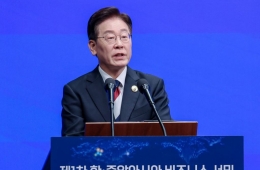
Professor Jinmo Goo of Seoul National University Hospital's Department of Radiology is answering reporters' questions at the CorelineSoft Symposium held on the 11th at the World Conference on Lung Cancer (WCLC 2026). CorelineSoft
View original imageProfessor Koo stated, "As the number of screening subjects increases, it will become increasingly important for AI to not only improve the accuracy in detecting lung nodules, but also to optimize the interpretation workflow by identifying normal and low-risk cases, thereby allowing medical staff to focus on cases that require clinical judgement."
The symposium also introduced Germany's approach to lung cancer screening. This year, Germany began full implementation of low-dose chest CT (LDCT) lung cancer screening within its statutory health insurance system, establishing a structure that connects primary interpretation centers with secondary specialized interpretation centers. Professor Koo noted, "Accordingly, AI is now expected to go beyond merely detecting abnormalities—its importance is rising in supporting the overall screening process, such as linking imaging and interpretation results between institutions and comparing with previous scans."
Hot Picks Today
 "Additional 25% Mobile Bill Discount From Today" Causes Stir Online... The Truth Revealed
- "The Clothes My Dad Used to Wear"... Ralph Lauren, Beanpole, and Hazzys See Sales Surge as MZ Generation Embraces the Trend
- "So Many Inconsiderate People": Kicking and Tugging as Physical Altercation Erupts on Subway Line 2
- "Please Take Off Your Shoes"—From Crawling onto the Bed to Changing Habits, Young Americans Lead the Shift
- "Famous Actress on KBS Is Perpetrator's Sister"... KBS Responds to 'Busan Fall Death' Family's Plea
Coreline Soft is participating not only in Korea's national lung cancer screening program, but also in European lung cancer screening initiatives in countries including Germany, France, and Italy. A Coreline Soft representative commented, "Based on multi-country references in Europe, we will expand the role of AI from assisting in single interpretations to an infrastructure supporting large-scale lung cancer screening programs."
© The Asia Business Daily. All rights reserved. Unauthorized AI training and use prohibited.