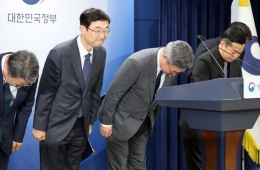
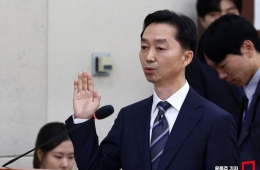
"Preemptive Response to Robust Growth and Inflation Through Next Year... Reasons Behind Consecutive Rate Hikes"
MPC Minutes for August Released
Hwang Gunil the Sole Voice for a Rate Freeze:
"We Need Further Assessment of Underlying Inflationary Pressures"
The Monetary Policy Committee (MPC) of the Bank of Korea raised the base interest rate in August following an increase in July. This move was largely a preemptive response to concerns about inflationary pressures that are expected to remain elevated for a considerable period, amid prospects for robust economic growth through the next year. The prevailing view among members was that while further rate hikes should remain an option, the timing and magnitude of such hikes should be determined by carefully monitoring core inflation trends, economic improvement, and financial stability risks. There was also an opinion that it is important to assess the effects of rate hikes on different sectors of the economy before deciding when to implement additional increases.

Shin Hyeon Song, Governor of the Bank of Korea, is striking the gavel at the Monetary Policy Committee meeting held at the Bank of Korea in Jung-gu, Seoul, on the morning of August 27, 2026. Photo by Joint Press Corps
View original imageAccording to the minutes released by the Bank of Korea on September 15, 2026, from the 16th Monetary Policy Committee meeting of 2026 (held on August 27), six out of seven committee members supported the base rate hike, citing stronger-than-expected growth driven by the semiconductor boom, rising core inflationary pressures, increasing housing prices in the Seoul metropolitan area, and surging household debt. In August, the MPC raised the base interest rate from 2.75% to 3.00% per annum. Only Hwang Gunil, one of the committee members, clearly opposed the measure, expressing a minority view in favor of leaving the rate unchanged.
One member who supported the rate hike stated, "Our economy is expected to maintain stronger-than-anticipated growth, led by unprecedented momentum in the IT sector, centering around exports and facility investment. As a result, growth rates for both this year and next are projected to significantly exceed the forecasts from May and surpass the potential growth rate." The committee member further explained, "Meanwhile, despite downward pressure from the currency's appreciation, inflation—including both headline and core inflation—is expected to considerably exceed the 2% target through next year, owing to demand pressures from the economic recovery and remaining effects of previous supply shocks." The member also noted, "A significant increase in nominal growth could further heighten overall demand-side pressures, potentially prolonging the high-inflation environment."
The committee members who favored a consecutive rate increase for the second month emphasized the importance of preemptively responding to rising inflationary pressures. One member stated, "It is desirable to raise the base interest rate as a preemptive measure to curb broadening price increases and to prevent inflation expectations from becoming entrenched." Another member commented, "Implementing price stabilization policies preemptively—at a time when financial conditions are relatively strong and economic growth is solid—can ultimately mitigate the negative impact on growth."
However, there were also shared concerns about the potential burden that consecutive rate hikes might impose on vulnerable borrowers. One supporting member stated, "Given the current inflationary pressures and risks of financial imbalances, a proactive base rate increase best serves to minimize potential future policy costs and aligns with the goals of monetary policy. However, while the consecutive hikes appear to remain within the tolerable range for most economic agents, we must pay careful attention to increased burdens on vulnerable groups and the associated latent risks."
There was also an opinion that the timing and scale of any further rate increases should be determined by comprehensively evaluating their effects on inflation, the pace of economic improvement, as well as the overall impact of past rate hikes. One member pointed out, "While keeping the possibility of further rate hikes on the table, we should assess how the increases affect each sector of the economy and avoid imposing an unsustainable burden, especially on those who have yet to feel the benefits of the economic recovery, when deciding on the timing of additional increases."
Hwang Gunil, the only committee member advocating for a rate freeze, argued, "While inflation is likely to remain elevated for the time being, it is expected to gradually slow from the fourth quarter onward. Moreover, the pressure to conduct restrictive monetary policy to address a strong won has eased."
Hwang also commented on monetary policies in major economies, noting, "There are clear signs of a shift, such as indicating the potential for policy rate hikes due to heightened concerns over inflation; however, most central banks are still taking a relatively cautious stance. Overall, I believe it is appropriate to leave the base rate unchanged for now."
Hot Picks Today
 "Even New York Taxi Drivers Are Talking About the KOSPI; South Korean Market to Top 9,000 Again Within a Year"... 'Wall Street's Stock-Picking Ace' Names His Picks
- “Made 2 Billion Won in One Year in Prison,” PPP Lawmaker Retorts: “If You’re Jealous, Go There Yourself”
- "There's No Profit in Selling It"... Gimbap Disappearing from Menus
- “Washing Dishes and Folding Clothes 200 Times a Day”... China’s “Robot Trainers” Earn Up to 1.2 Million Won a Month
- "Shall We Grab a Drink?" KRW 30,000 a Round... Young Adults: "Prices Make My Hands Shake; I Can't Drink Out"
He particularly emphasized, "When adjusting the base interest rate, it is important to consider potential changes in expectations for future monetary policy paths, the risk of intensifying polarization, and the impact on vulnerable sectors. Above all, given the recent stabilization of the exchange rate, we need to further assess whether the recent inflationary trend is fundamentally driven by demand-side pressures."
© The Asia Business Daily. All rights reserved. Unauthorized AI training and use prohibited.