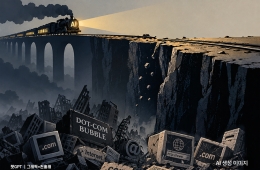
AI Data Center Construction Halt? In Reality, They're "Relocating in Search of Electricity" [Click e-Industry]
Data Center Construction Spending in the U.S. Surges 58.5% in July
Groundbreaking Remains Strong Despite Delays in New Projects
Shift Toward Emerging Regions Capable of Expanding Transmission, Distribution, and On-Site Power
![AI Data Center Construction Halt? In Reality, They're "Relocating in Search of Electricity" [Click e-Industry]](http://www.asiae.co.kr/news/img_view.htm?img=2026090217010312978_1788336063.gif)
The atmosphere surrounding artificial intelligence (AI) data centers has become increasingly tense. Opposition from local residents is intensifying, power shortages are worsening, and in some areas, permits have been blocked entirely. There are even concerns that "it may become impossible to build data centers at all." Despite this, the flow of investment money is moving in the opposite direction. In fact, there is even a so-called "shortage of available sites," as companies compete to secure locations with the most efficient electricity supply.
According to Kyobo Securities on September 16, construction spending on U.S. data centers in July reached $6.6 billion (KRW 897.53 billion), up 58.5% from the same month last year. On an annualized basis, the total was $75.2 billion, marking a year-over-year growth rate of 57.2%. Assuming a 12% increase in construction costs per megawatt, capacity growth was calculated at an annualized, seasonally adjusted rate (SAAR) of 40.4%. This pace aligns with major institutions' forecasts for annual data center installation increases of 30–50% this year.
Big Tech companies, too, have not yet closed their wallets. The capital expenditure guidance for this year from the M7 group (comprising Microsoft, Apple, Nvidia, Alphabet, Amazon, Meta, and Tesla) and Oracle shows a 101% increase over the previous year. Actual capital expenditures executed through the second quarter also rose 89% year-on-year. These figures are far from indicating any "contraction in data center investment."
So why are there so many reports of cancellations and delays? It's not that data centers are not being built, but rather that they cannot be built just anywhere. According to Data Center Watch, more than 75 data center projects were blocked or delayed in the first quarter of this year alone, totaling $130 billion in value. Analysis by Kyobo Securities of 150 cases where U.S. local governments voiced opposition identified the most prevalent issues as water and water supply (51%), power and grid capacity (36%), and process and transparency (28%). Notably, among projects where power problems arose, the cancellation or suspension rate reached 91%, and only 7% of projects proceeded to groundbreaking.
Kwangsik Kim, Senior Researcher at Kyobo Securities, commented, "Electricity rate burdens can be managed through contracts and collateral, but shortages in power generation, transmission, and substation infrastructure directly lead to delays in construction schedules." He added, "As the conversion rate from the unapproved project pipeline to actual construction has been declining, this is emerging as a source of risk." Kyobo Securities, however, believes that such regulatory actions are unlikely to halt data center construction across the United States as a whole. The firm assesses that the practical impact of tighter regulations will be closer to lengthier approval periods and higher development costs, rather than to outright investment cancellations.
![AI Data Center Construction Halt? In Reality, They're "Relocating in Search of Electricity" [Click e-Industry]](http://www.asiae.co.kr/news/img_view.htm?img=2026091516331529410_1789457595.png)
Instead, the map of data centers is being redrawn. Currently, 46% of investment in data centers under construction is concentrated in so-called "primary" regions, which feature substantial fiber-optic infrastructure, robust initial power grids, and a high concentration of enterprise customers. In contrast, the proportion for less developed "frontier" regions stands at just 18%. However, among data centers at the planning stage, the share for primary regions drops to 35%, while the share for frontier regions increases to an equal 35%. Planned investment for frontier regions has ballooned from $91 billion to $631 billion, a 6.9-fold increase.
Hot Picks Today
![Selling Like Crazy Every Year... 30-Year-Old Hetbahn Takes on a New Challenge: Tastes Better Than "Mom's Home Cooking" [On-Site Report]](https://cwcontent.asiae.co.kr/asiaresize/93/2026102216175071025_1792653470.jpg) Selling Like Crazy Every Year... 30-Year-Old Hetbahn Takes on a New Challenge: Tastes Better Than "Mom's Home Cooking" [On-Site Report]
Selling Like Crazy Every Year... 30-Year-Old Hetbahn Takes on a New Challenge: Tastes Better Than "Mom's Home Cooking" [On-Site Report]
- A 12-Year-Old Girl Went to the Hospital After Her Blood Pressure Hit 225 and Was Stunned: "What Is This Coral Reef-Like Thing in Her Aorta?"
- "Hey, Lady, Teach Your Kids to Behave!" ... 300,000 Won in Cash and a Bodily Injury Claim Demanded Over Child's Door Ding
- "It's a shame only Koreans get to enjoy something this good" Foreigners fall for K-baseball [K-Holic]
- I Thought Only 'Old Guys' Ate It... Young People Are Hooked on This 'Unusual Food' at Risk of Disappearing? [Delicious Stories]
Senior Researcher Kim noted, "As power demand per site increases, it has become necessary to simultaneously expand dedicated substations and transmission networks and implement on-site power generation." He continued, "The demand for data center construction hasn't disappeared; rather, it is shifting to new locations where securing electricity is feasible. As a result, investments in power transmission, distribution, and self-generation infrastructure are expected to precede new data center construction going forward."
© The Asia Business Daily. All rights reserved. Unauthorized AI training and use prohibited.