[Exclusive] SCOR Participates in KDB Life Insurance Underwriting... Pre-Approval System Enhanced
SCOR Participates in Underwriting Rule Development and Pre-Assessment Design
Refined Underwriting Standards Enhance Review Efficiency
Accumulated Data Utilized for Risk Rate and Product Development
It has been confirmed that the global reinsurer SCOR participated in the advancement of KDB Life Insurance’s underwriting system. KDB Life Insurance refined its underwriting rules and pre-approval processes in collaboration with SCOR, integrating the existing pre-approval model and automated underwriting infrastructure to broaden the scope of automated underwriting for insurance applications.

According to the insurance industry on September 16, the automated underwriting rate of KDB Life Insurance’s newly launched next-generation sales support system, “Smart K-Link,” stands at around 95%. The automated underwriting system compares applicant-provided information with the company’s underwriting criteria, allowing the system to determine standard approval, conditional approval, or rejection. Only applications requiring further review are sent to human underwriters for manual review. By reducing the number of cases requiring human intervention, the system improves review processing speed as well as overall workflow efficiency.
SCOR participated in the development of the underwriting rules and the design of the pre-underwriting process for this system. Through collaboration with SCOR, KDB Life Insurance was able to sophisticate its underwriting standards to allow for more granular risk assessment of applicants.
SCOR has also worked on advancing underwriting processes with other major domestic life insurers. Samsung Life Insurance introduced virtual underwriting through a joint project with SCOR in 2023. Kyobo Life Insurance too has collaborated with SCOR to apply virtual underwriting models to products such as simplified underwriting insurance for those with pre-existing medical conditions.
Virtual underwriting refers to a process where data from insurance contracts and claims are used to analyze loss levels associated with certain illnesses or risk groups, thereby refining the insurer’s underwriting criteria. By combining the risk assessment expertise of the reinsurer with the insurer’s proprietary data, the method allows for a more detailed analysis of risk groups that are otherwise difficult to assess using conventional standards.
This overhaul is an upgrade of the automated pre-assessment process introduced by KDB Life Insurance in 2022. Previously, the main focus was on comprehensively assessing a customer’s disclosed medical history and benefit payment records during the planning stage to determine, in real time, eligibility for insurance enrollment. Using this system, insurance planners could suggest alternative products to customers who were difficult to insure due to specific medical histories, set exclusions, or advise on additional documentation requirements before final application. With “Smart K-Link,” the pre-assessment model and automated underwriting infrastructure have now been integrated, enabling the entire process—from plan design to application submission—to be handled within a single system.
Artificial Intelligence (AI)-driven Optical Character Recognition (OCR) technology has been adopted for claims review. This technology reads claim documents, automatically classifies the data, and links hospitalization duration and detailed treatment histories. Additionally, a marketing platform powered by AI has been implemented in exclusive sales channels to provide planners with customer-specific information and support their sales activities.
The clinical and payout data accumulated throughout the enrollment and claims assessment processes is stored in a dedicated statistical system. KDB Life Insurance plans to utilize this data for developing risk rates and establishing product and service strategies tailored to customer demand. The company aims to create a system in which data collected through automated underwriting can be recycled in updating underwriting standards and product development.
Hot Picks Today
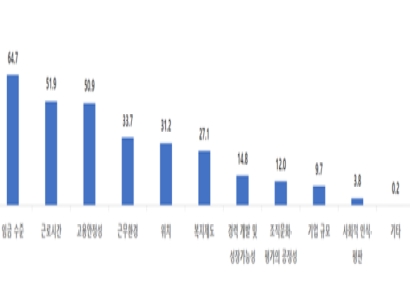 "Please Pay Me at Least 3 Million Won a Month": More Than Half of Young People Today Prioritize "Working Conditions" Over Company Size
- Selling Like Crazy Every Year... 30-Year-Old Hetbahn Takes on a New Challenge: Tastes Better Than "Mom's Home Cooking" [On-Site Report]
- I Thought Only 'Old Guys' Ate It... Young People Are Hooked on This 'Unusual Food' at Risk of Disappearing? [Delicious Stories]
- "Hey, Lady, Teach Your Kids to Behave!" ... 300,000 Won in Cash and a Bodily Injury Claim Demanded Over Child's Door Ding
- Beachgoer Finds 'Plastic' That Turns Out to Be Perfume Ingredient Worth More Than Twice as Much as Gold
A KDB Life Insurance representative stated, “By expanding automated underwriting, we have further improved review efficiency. It is significant that we have advanced the review framework beyond what the previous system offered.”
© The Asia Business Daily. All rights reserved. Unauthorized AI training and use prohibited.