Assemblyman Seo Samsuk Takes Action to Address 25-Year "Insurance Blind Spot" for Island Auto Coverage
Ministry of Land, Interior, FSS, FTC, and Insurance Industry Gather in One Place
Seo Samsuk: "We Aim to Implement Institutional Reforms by 2027"
Institutional reforms are now underway to eliminate the 25-year "insurance blind spot" where residents of islands across the nation, including the southwestern region of Jeonnam-Gwangju Metropolitan City, have been unable to access emergency automobile roadside services, despite paying for automobile insurance premiums.

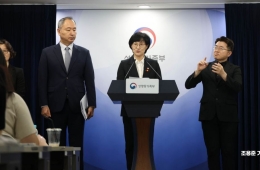
On the 15th, Seo Samsuk, Chair of the Agriculture, Forestry, and Fisheries Committee, held a forum to address the blind spots in automobile insurance services in island regions. Provided by the Office of Assemblyman Seo Samsuk
View original imageMembers of the National Assembly, the government, financial authorities, and the insurance industry gathered together to discuss solutions for establishing emergency roadside services in island regions, and the nation's five largest auto insurers have begun preparing related products.
Seo Samsuk, a member of the National Assembly representing Yeongam, Muan, and Shinan and Chair of the Agriculture, Food, Forestry and Fisheries Committee, held a forum at the National Assembly on September 15, 2026, to address blind spots in automobile insurance services in island regions. The forum sought institutional improvements so that both island residents and tourists may access automobile emergency roadside services on an equal footing with the mainland.
The event was attended by officials from relevant government bodies such as the Ministry of Land, Infrastructure and Transport, the Ministry of the Interior and Safety, the Ministry of Oceans and Fisheries, the Financial Supervisory Service, the Fair Trade Commission, and the General Insurance Association of Korea, as well as representatives of the insurance industry.
This discussion began in earnest after Assemblyman Seo highlighted the exclusion of island regions from automobile insurance emergency services during last year's parliamentary audit.
Although special clauses for automobile emergency roadside services were first introduced in 2001, many insurance policies have continued to designate island regions as excluded service areas. As a result, even though island residents properly paid their insurance premiums, they were unable to use emergency services such as roadside repair, battery jump-starts, or tire changes. This left them to handle vehicle repairs and transportation to the mainland at their own expense.
It has been consistently pointed out that for islands without bridges to the mainland, even minor vehicle breakdowns could represent a significant financial burden for residents.
According to data from the Ministry of the Interior and Safety and other sources, there are about 810,000 island residents nationwide, and more than 13 million tourists visit islands each year. Each year, it is estimated that some 2.5 million vehicles and over 7 million people travel to and from islands using car ferries.
Slightly more than 86,000 residents live on islands not connected by bridges, yet Assemblyman Seo's office explained that they have been effectively excluded from the benefit of emergency car insurance services.
At the forum, the General Insurance Association of Korea and Speedmate, an emergency roadside service provider, presented plans to expand services in island regions.
The association proposed, based on local research and relevant data, expanding emergency roadside services to 229 islands nationwide where car ferries can operate. In the current stage, discussions centered around providing services limited to items that can be immediately repaired.
Speedmate also explained operational plans, including collaboration with local repair shops on the islands and connecting with emergency roadside providers from the mainland, and raised issues to consider in light of island-specific characteristics, such as response times and travel expenses.
The insurance industry is also signaling changes.
The nation's five largest auto insurers—Samsung Fire & Marine Insurance, DB Insurance, Hyundai Marine & Fire Insurance, KB Insurance, and Hanwha General Insurance—are reportedly preparing products to provide emergency roadside services for island regions.
However, the issue of cost has emerged as a new challenge.
Each insurer sets the scope of service, deductible amounts, and the number of calls independently. If they were to provide emergency roadside services at the same level as on the mainland, the insurance premium per vehicle could reach up to 1.6 million won. There are concerns that if this burden is passed directly onto residents, the core objective of the proposed reform would be undermined.
The key discussion point was that, to ensure the effectiveness of emergency roadside services for island regions, it is not enough to merely create products. Instead, insurance companies, the government, and consumers must jointly design the cost-sharing structure, set appropriate deductibles, and clearly define the service scope.
Assemblyman Seo emphasized, "Island residents have continued to be excluded from emergency roadside services despite paying the same insurance premiums. A system in which people are denied equal insurance services simply because they live on an island must be rectified."
He added, "If deductibles for emergency roadside assistance in island regions become excessively high, this may cause an additional burden on residents. Therefore, it is necessary to establish both a reasonable cost-sharing plan and the scope of the service."
Assemblyman Seo stated that, based on these discussions, he intends to pursue follow-up consultations so that the government, financial authorities, and insurance industry may jointly work to revise policy terms and build service infrastructure.
In particular, a comprehensive analysis will be conducted on factors such as whether car ferries operate, the presence of repair shops on each island, and emergency response times. Services are expected to be expanded in phases, starting with islands where provision is realistically possible, with the aim of broadening coverage gradually in the future.
Assemblyman Seo concluded, "This is a problem that has accumulated for 25 years, so although there are still challenges to resolve, we cannot afford any further delays. Based on today's discussions, we will work closely with the government, financial authorities, and the insurance industry to revise policy clauses and build infrastructure to bring about practical institutional reform."
Hot Picks Today
 "Additional 25% Mobile Bill Discount From Today" Causes Stir Online... The Truth Revealed
- "The Clothes My Dad Used to Wear"... Ralph Lauren, Beanpole, and Hazzys See Sales Surge as MZ Generation Embraces the Trend
- "So Many Inconsiderate People": Kicking and Struggling After Clothes Are Grabbed... Subway Line 2 Altercation Sparks Uproar
- "Please Take Off Your Shoes"—From Crawling onto the Bed to Changing Habits, Young Americans Lead the Shift
- "Famous Actress on KBS Is Perpetrator's Sister"... KBS Responds to 'Busan Fall Death' Family's Plea
He further stressed, "We will promptly finalize the plan so that, by 2027, not only island residents but all citizens visiting islands can enjoy the benefits of emergency automobile roadside services."
© The Asia Business Daily. All rights reserved. Unauthorized AI training and use prohibited.