"Can You Get a Refund Just Because It Was Expensive?... Refund Law Explained Through the 140,000 Won Table Tennis Racket Controversy"
It Is Difficult to Require Refunds for Simple Change of Mind at Offline Stores
Minor Purchases and Lack of Price Tags Are Separate Issues
Controversy has arisen after it was revealed that a first-year middle school student bought two table tennis rackets without price tags at a stationery store for 140,000 won in order to prepare for a school physical education class. The parents requested a refund, but the store owner refused. In response, Yonhap News, on September 15, explored the reasons why refunds at offline stores can be difficult, as well as regulations related to purchases by minors and price labeling requirements.

The parents of the middle school student who bought the table tennis rackets reportedly requested a refund just 17 minutes after the transaction, but the store owner refused, citing the phrase "no exchanges or returns on sporting goods" written on the receipt. Is it really difficult to get a refund even with a receipt? To answer directly, unlike online shopping, it is generally not easy to receive a refund by law for a simple change of mind after an offline purchase.
For online shopping, under the Electronic Commerce Act, consumers are generally entitled to withdraw their purchase within 7 days of receiving the product. This system was established to account for the fact that consumers cannot inspect items in advance when shopping online. Even if a seller marks an online product as "non-refundable," such stipulations, if unfavorable to consumers, may have limited legal validity.
In contrast, offline purchases are not subject to such unilateral cancellation rights. This is because the consumer is deemed to have checked the product, price, and condition directly in the store before purchasing. As a result, when department stores or large supermarkets allow refunds with a receipt within a certain period, it is generally a voluntary service provided by the business, rather than a legal obligation.
The "Consumer Dispute Resolution Standards" issued by the Korea Consumer Agency also provide criteria for exchanges and refunds. However, these standards serve as recommended guidelines in the event of a dispute and do not carry legal force. Nonetheless, the situation may differ if the product is defective or if there was a significant error in information provided during the sales process. Civil law allows a declaration of intent, such as a contract, to be canceled under certain conditions if there was a mistake regarding a crucial part of the agreement.
If There Was No Price Tag or False Information, the Situation May Be Different
In this case, the fact that the purchaser is a minor is also a point of contention. Under Korean civil law, a minor generally needs the consent of a legal representative to conduct legal acts. Contracts entered into without parental consent may be subject to cancellation by either the minor or their legal guardian. However, this does not mean that all purchases by minors can be automatically canceled.

This is because the type and price of the purchased product, the source of the funds used, and the usual spending limits allowed by the parents must all be taken into consideration. In other words, it is not appropriate to judge small purchases of stationery items and high-value goods in the same way. As in this case, whether buying table tennis rackets worth 140,000 won without parental consent constitutes a contract that can be canceled requires further review of the specific circumstances.
The payment process using a card was also a point of controversy. There were claims that when the student presented a credit card, the store owner signed for them, leading to suggestions that the card issuer could be asked to cancel or suspend the transaction. However, unless the card was misused due to loss or theft, a card issuer will not immediately cancel a payment simply because a child used their parent’s card, or because the merchant signed on behalf of the cardholder. From the card issuer's perspective, since the product purchase contract exists between the consumer and the seller, the transaction can only be canceled by the issuer if the contract between both parties is first canceled.
Fines May Be Imposed for Violating Price Tagging Requirements
However, not displaying the price when selling products may pose a separate issue. According to the Ministry of Trade, Industry and Energy's Enforcement Rules for Price Labeling System, retail stores above a certain size—including those selling stationery, sports, and game goods—must display product sales prices. If a store fails to display prices, it may be subject to correction orders from the local government, and repeated violations may result in fines.

However, the fact that the products were sold without displaying prices could be a separate issue. According to the Ministry of Trade, Industry and Energy's Price Display System Implementation Guidelines, retail stores above a certain scale, including stationary, sports, and game equipment retailers, must display the selling price on products. The photo is not related to any specific content of the article. Pixabay
View original imageIf price tags are repeatedly not displayed, fines may start at 300,000 won and increase according to the number of violations. However, it is difficult to penalize a store merely for selling items at higher prices than other stores. In general, product prices can be autonomously set by the business operator.
Hot Picks Today
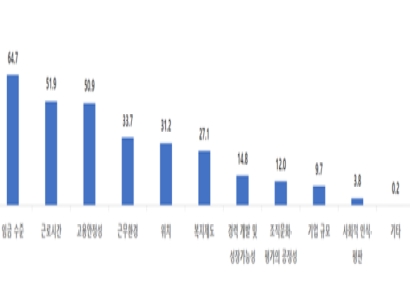 "Please Pay Me at Least 3 Million Won a Month": More Than Half of Young People Today Prioritize "Working Conditions" Over Company Size
- Selling Like Crazy Every Year... 30-Year-Old Hetbahn Takes on a New Challenge: Tastes Better Than "Mom's Home Cooking" [On-Site Report]
- "Americans Would Be Amazed If They Came": Wide-Eyed at a Sight They've Never Seen Before... Foreigners Also Fall for K-Baseball [K-Holic]
- "Hey, Lady, Teach Your Kids to Behave!" ... 300,000 Won in Cash and a Bodily Injury Claim Demanded Over Child's Door Ding
- Beachgoer Finds 'Plastic' That Turns Out to Be Perfume Ingredient Worth More Than Twice as Much as Gold
Ultimately, in this case, it would be difficult to legally require a refund solely because the products were more expensive than at other stores. However, the facts that the purchaser was a minor, whether parental consent was obtained, and whether the retailer complied with the price tagging requirement, are all issues that should be considered separately. It has also been reported that the city of Hwaseong plans to check price labeling compliance at the involved store as well as neighboring outlets.
© The Asia Business Daily. All rights reserved. Unauthorized AI training and use prohibited.