"52-Hour Workweek Exemption" Publicly Debated: "Semiconductors Are a Race Against Time" vs. "Retreat of Labor Rights"
The government's proposal on September 15 for social dialogue regarding labor exemptions in the "Mega Special Zone Special Act" is based on the belief that "speed" will determine the success or failure of the three major mega special zones. Securing a golden window in the artificial intelligence (AI) and semiconductor power race requires the rapid and flexible deployment of core R&D talent. However, there remains uncertainty as to whether labor organizations, which have consistently opposed the measure and rejected the government's request to participate in the Economic, Social and Labor Council, will actually join this single-issue social dialogue or whether it will lead to a real compromise.

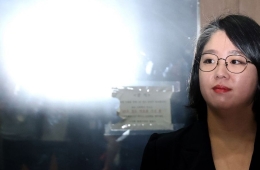
Younghoon Kim, Minister of Employment and Labor, is holding a briefing on 'Proposal for Social Dialogue Related to the Mega-Special Zone Special Act' at the Government Complex Seoul in Jongno-gu, Seoul, on the 15th. 2026.9.15 Photo by Yongjun Cho
View original imageThe most contentious labor exemption is, without doubt, the so-called "white-collar exemption", which excludes high-income R&D personnel from the 52-hour weekly work limit. The government and ruling party are strongly considering including this exemption in the Mega Special Zone Act, which will be introduced this month. It is reported that the exemption was included in the draft bill. The business sector has welcomed the move, arguing that labor flexibility is necessary to maintain an edge in the rapidly evolving AI and semiconductor technology race. The Korea Employers Federation, which represents the business community, has proposed that the Mega Special Zone Act should include: ▲ The extension of the unit for managing overtime, currently one week, to monthly, quarterly, semi-annual, and annual units; ▲ Excluding core R&D, professional, and startup personnel from working hour regulations (white-collar exemption); ▲ Expanding the period for flexible and selective working hour systems; ▲ Extending the maximum term for temporary workers, currently at two years; and ▲ Expanding the scope of permitted work for dispatched labor.
Lee Donggeun, Executive Vice Chairman of the Korea Employers Federation, stated, "In an era of major transformation in AI and semiconductors, technological hegemony will ultimately be determined by how quickly and flexibly we can deploy talent. For the mega special zones to serve as the starting point for developing national strategic industries, labor flexibility is essential." Kim Jonghun, Executive Director of the Korea Industrial Technology Association, also emphasized, "To avoid missing the golden time for key industries such as semiconductors, securing flexible working hours in the R&D sector is crucial."

Kim Younghoon, Minister of Employment and Labor, is holding a briefing on the "Proposal for Social Dialogue Regarding the Mega Special Zone Special Act" at the Government Seoul Building in Jongno-gu, Seoul on September 15, 2026. Photo by Jo Yongjun
View original imageThe two major labor confederations have made their opposition clear. The Korean Confederation of Trade Unions (KCTU) stated, "This is a makeshift attempt to circumvent the withdrawal of previously proposed labor deregulation faced with public opposition. Extended working hours can reduce productivity and creativity," adding, "The competitiveness of high-tech industries is not built by sacrificing labor rights, but through stable employment and the guarantee of labor rights." Previously, the Ministry of Employment and Labor expressed sympathy for the KCTU’s call for social dialogue and requested the organization participate in the Economic, Social and Labor Council. However, in a statement issued that day, the KCTU declared, "The government's stipulation that participation in the Economic, Social and Labor Council is a prerequisite is at odds with the concerns and direction we have consistently raised." The group added, "This does not align with our proposal to pursue social dialogue appropriate for the new era," clarifying, "What the KCTU has proposed is a new kind of social dialogue based on consensus-building and sectoral participation as principles." Since withdrawing from the predecessor of this council, the Tripartite Commission, in 1999, the KCTU has not participated in the Economic, Social and Labor Council even once.
Hot Picks Today
 "Bought Raw Materials at 1,500 Won, Selling at 1,300 Won"—Exchange Rate Plunge Casts a Shadow as Export Giants Face Third-Quarter Alarm
- "An Insult to All Women": Female Athletes Outraged Over Ad with 37 Million Views in Four Days
- Former North Korean Vice Minister Linked to Nuclear and Missile Development Dies; Kim Jong Un Sends Wreath in Condolence
- "This Is a Must-See"...Tourism Industry in Japan Hits 4-Trillion-Won Jackpot
- "Weight Dropped Rapidly... Anyone Can Get It Easily": Why a Woman in Her 20s Quit Mountzaro After Losing 6kg in a Month
With strong disagreements within the ruling party, it also appears difficult for the social dialogue to end in consensus. When the inclusion of the white-collar exemption in the semiconductor special act was previously debated during the president’s tenure as party chairman, opposition within the party resulted in the exemption ultimately being left out. Still, there are voices saying a different approach is needed for the Mega Special Zone Act. Jang Cheolmin, a member of the Democratic Party’s Special Committee Supporting the Three Major Mega Projects, stated, “With the current approach, it will be difficult to move up the completion date of the Yongin Cluster, and we must drive changes in the nation and in the way we work.”
© The Asia Business Daily. All rights reserved. Unauthorized AI training and use prohibited.