[Editorial] Calls to Slow AI, Korea's Answer Is "Safe Acceleration"
While there are increasing calls to slow down the pace of artificial intelligence (AI) development, stepping on the brakes is not the path Korea should choose. As the United States and China race for technological supremacy, falling behind would only widen the gap. What is necessary is not just boosting competitiveness, but also putting in place safeguards to control risks.
The US-China AI rivalry has entered a new phase. The unveiling of OpenAI’s latest model “Astra,” controversies over human-level artificial general intelligence (AGI), and issues of information leakage by Chinese companies have further escalated tensions. Some big tech companies are calling to adjust the speed of AI development. However, neither US President Donald Trump nor Chinese President Xi Jinping show any sign of backing down from the competition. Even though they see the risks, the current AI power race is one where no one can afford to stop before their rival does.
Especially in times like these, Korea should not be swayed by short-term market reactions. The emergence of arguments for slowing AI development does not mean that technological competition itself has started to recede. Both the United States and China continue to invest heavily. While the mode of competition may change, investments in AI development and infrastructure are highly likely to continue.
This is why the government’s three mega-projects—semiconductors, AI data centers (AIDC), and physical AI—are so important. Semiconductors determine computing power, data centers provide the operational foundation, and physical AI governs competitiveness in the real world. Rather than nurturing these sectors in isolation, Korea must closely connect technology, talent, data, and pilot projects to enhance overall competitiveness.
Along with speed, safety must also be ensured. Model safety, cybersecurity, protection against data leakage, and AI control technologies are now prerequisites for industrial growth. The government-led “Global AI Hub” must be clear in its role. While the three mega-projects serve to strengthen the industrial base, the hub can become a venue for discussions on safety verification, international standards, and data usage regulations. Korea must proactively participate in shaping the international AI order through dialogue with the US and China.
Hot Picks Today
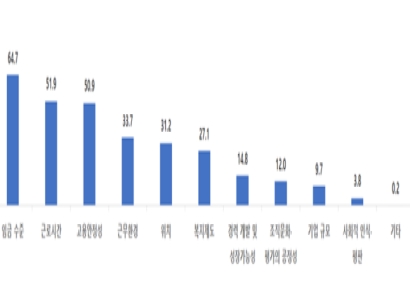 "Please Pay Me at Least 3 Million Won a Month": More Than Half of Young People Today Prioritize "Working Conditions" Over Company Size
- Selling Like Crazy Every Year... 30-Year-Old Hetbahn Takes on a New Challenge: Tastes Better Than "Mom's Home Cooking" [On-Site Report]
- "It's so popular you can't get it": 'Legendary liquor' returns after 11 years, causing a stir... 'Newtro' craze takes over convenience stores [How We Shop Today]
- "Hey, Lady, Teach Your Kids to Behave!" ... 300,000 Won in Cash and a Bodily Injury Claim Demanded Over Child's Door Ding
- Beachgoer Finds 'Plastic' That Turns Out to Be Perfume Ingredient Worth More Than Twice as Much as Gold
Depending on the outcomes of US-China summits and AI-specific talks, the chessboard may be reset, new opportunities for cooperation may arise, or technological blockades may intensify. Either way, the best preparation is to broaden our technological base and expand Korea’s available choices. The US-China clash presents both risks and opportunities for Korea. Rather than simply following the speed and rules set by others, Korea must also take part in establishing the rules for this new AI order.
© The Asia Business Daily. All rights reserved. Unauthorized AI training and use prohibited.




![[Market ING] KOSPI Seeks Rebound in Superweek Packed with Corporate Earnings and FOMC](https://cwcontent.asiae.co.kr/asiaresize/307/2026102514484873155_1792907327.jpg)