Annual Income of 3 Million Won Per Household... Government to Cut Transmission Towers by 40% and Establish 'Solar Income Villages'
Towers Reduced from 4,723 to 2,509: Integration of Existing and New Lines Cuts 2,214 Towers
Underground Transmission Lines Considered for Densely Populated Areas Including Daejeon, Jangseong, Sejong, and Cheongju
"Grid Solar Income Villages" Nea

As a series of "megaprojects" such as semiconductor clusters and data centers, which are expected to generate massive electricity demand, are being promoted one after another, the government has announced that it will reduce the number of new transmission towers constructed for its national backbone power grid by up to 40% and expand the underground installation of transmission lines in densely populated residential areas. In addition, "grid solar income villages" will be established in villages close to the transmission network, returning profits from solar power generation to local residents. The government’s plan is to expand the transmission grid in response to the rising electricity demand from advanced industries such as semiconductors and data centers, while minimizing damage to residents and increasing substantive compensation and participation to ease regional conflicts.
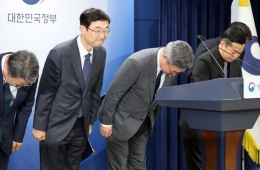
Kim Sung-hwan, Minister of Climate, Energy and Environment, reported these measures for "Enhancing Acceptance of Transmission System Construction" during a Cabinet meeting on the morning of the 15th.
Recently, with power demand growing rapidly—particularly in advanced industries like semiconductors and data centers—and with the increased adoption of renewable energy, timely expansion of the power grid has become a key policy priority. Because power generation facilities are concentrated outside the capital region while large-scale power demand is centered in the capital area, there has been a continual need to extend long-distance transmission networks, leading to considerable resistance from residents during the construction process.
The government plans to shift, in the long term, from a one-way power grid that sends electricity produced in local regions to the capital region to a "local generation, local consumption" model. Over 14GW of new electricity demand, including roughly 6GW from the Honam semiconductor industrial complex, 2.4GW from Donghae data centers, and 1GW from Ulsan data centers, will be regionally distributed outside the capital area. However, the government acknowledges that in the short term, some expansion of the transmission grid is unavoidable to meet the increasing electricity demand in the capital region.

Transmission Towers: 4,723 to 2,509... Integration and Underground Cables by Region
First, the number of transmission towers will be reduced by integrating existing and new transmission lines as much as possible. This involves combining two existing circuits and two new circuits into a single four-circuit transmission tower, or consolidating two separate planned new double circuit lines into one four-circuit tower.
If this approach is fully applied to current national backbone grid projects, the originally planned 4,723 towers will be reduced to 2,509 towers—a decrease of 2,214 towers, or over 40%. The government plans to require, through regulatory updates, that any new transmission lines be reviewed for possible integration with existing lines during planning stages.
Integration plans for specific regions have also been detailed. For the Shingwangju–Shinimsil section, about 28km out of a total 58km will be merged with existing lines, eliminating 62 towers. In July, the optimal route was decided with input from residents of Damyang and Imsil. For the Shinjangseong–Shinjeongeup section (total 61km), the plan under review involves utilizing 20km of existing 154kV lines in Gochang and Jeongeup to combine 70 towers.
For the Shinhaenam–Shinjangseong section (total 113km), 35km overlapping with the Shinhaenam–Shingangjin project through Haenam and Gangjin will be integrated, reducing 92 towers. For four lines—Gwangyang–Shinjangsu, Shinjangsu–Mujuyoungdong, Mujuyoungdong–Shinseowon, and Shinseowon–Shinjincheon, linking Gwangyang and Shinjincheon—about 78% of all sections will be integrated with existing lines.
In densely populated areas, the undergrounding of lines will be expanded. For Shinhaenam–Shinjangseong, options include utilizing 2.7km of existing embankment roads in Naju by coordinating with current road expansion projects. In the Shinjangseong–Shinjeongeup area, the government is considering shared underground power tunnels for the exit section from Shinjangseong substation and areas of Jangseong County with high population density, in coordination with other businesses.
For the Shingyeryong–Shincheon-an section, undergrounding approximately 10km in densely populated areas of Daejeon is under review. The Saemangeum #2–Shinchungyang section includes open areas of Iksan, urban areas of Gunsan and Chungyang, while the Shinseowon–Shinjincheon section includes densely populated areas of Sejong and Cheongju. Around 2km of feeder sections from new 345kV substations are to be undergrounded in principle. The substations involved are Shinjeongeup, Saemangeum #2, Shincheon-an, Shinchungyang, Shingyeryong, and Shinseowon.
Alternative routes bypassing existing paths are also being pursued. For the Shinjeongeup–Shingyeryong section, in August, an alternative bypassing 8km of existing line that passes through the national merit village and social welfare facilities in Seo-gu, Daejeon, was designated as the optimal route by the site selection committee. For Shinjeongeup–Saemangeum #2, a plan is being considered to either bypass or underground a 3.7km section near cultural heritage sites in the Jeongeup region.

'Solar Income Villages' Near Transmission Networks... Expanded Compensation and Site Selection Rights for Residents
The government is also advancing measures to directly return benefits from transmission system construction to local residents. Under the "Special Act on the Expansion of the National Backbone Power Grid," support funds of 2 billion won per kilometer paid to local governments along the route will be used to install 300kW to 1MW of solar facilities in villages near the power grid, creating "grid solar income villages."
Before the end of the year, the enforcement decree of the Special Power Grid Act is to be amended so that about two-thirds of local government support funds are distributed to nearby areas and prioritized for use in village solar power projects. According to government cases, where a 73km power line passes through five local governments and 83 villages, 107.4 billion won out of 161 billion won in support funds could go to surrounding areas. If about 860kW of solar facilities are installed in each village, with an average of 38 households per village, the annual income per household is expected to be 3.4 million won.
In another case, where a 58km power line passes through four local governments and 52 villages, 77.3 billion won out of a total support fund of 116 billion won would be distributed to neighboring areas. With 1MW solar power facilities installed per village and an average of 39 households per village, each household could expect annual income of 3.85 million won. Actual support amounts can vary depending on the extent of undergrounding and route changes.
Direct support for residents adjacent to the transmission grid is also being expanded. For national backbone grid projects, direct support will increase from the current 50% to 100%, while the shared portion of 50% will be maintained. For residents within 300 meters of the transmission network, the support amount will be multiplied by 0.5; in areas with two transmission lines, by 1; and in areas with three or more lines, by two.
The site selection process will see increased resident participation. From the earliest stages, project briefings for residents will become mandatory, and the number of explanatory sessions during the selection committee’s process will increase from two to three. Residents will also, in principle, be allowed to attend selection committee meetings, a policy shift from current restrictions. Meeting materials (excluding personal or confidential information) will be released to residents after meetings as well.
At least two candidate corridors will be prepared to broaden residents’ choices. As needed, regional resident consultative bodies involving not only the site selection committee but also village residents will be formed, allowing locals to directly review proposed corridors and submit them to the committee. The government plans to hold around ten meetings between residents and local governments in Jeolla (North and South), Chungcheong (North and South), and Gyeonggi regions.
Hot Picks Today
 "Even New York Taxi Drivers Are Talking About the KOSPI; South Korean Market to Top 9,000 Again Within a Year"... 'Wall Street's Stock-Picking Ace' Names His Picks
- “Made 2 Billion Won in One Year in Prison,” PPP Lawmaker Retorts: “If You’re Jealous, Go There Yourself”
- "There's No Profit in Selling It"... Gimbap Disappearing from Menus
- “Washing Dishes and Folding Clothes 200 Times a Day”... China’s “Robot Trainers” Earn Up to 1.2 Million Won a Month
- "Shall We Grab a Drink?" KRW 30,000 a Round... Young Adults: "Prices Make My Hands Shake; I Can't Drink Out"
Minister Kim stated, "The power grid is an essential national infrastructure supporting the energy transition and growth of advanced industries. We must communicate sufficiently with residents, share meaningful benefits, reduce social conflict, and expand the power grid in a timely manner. We will strengthen cooperation with local residents so that the expansion of the grid leads to regional development."
© The Asia Business Daily. All rights reserved. Unauthorized AI training and use prohibited.