'PLUS Korea HBM Semiconductor' and 'PLUS AI Semiconductor Materials·Parts·Equipment Active' Newly Listed
Responding to the AI Supercycle
PLUS ETF Delivers Comprehensive Semiconductor Investment Solutions
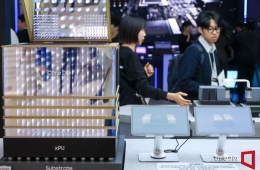
Hanwha Asset Management announced on September 15 that it will launch two new exchange-traded funds (ETFs): ‘PLUS Korea HBM Semiconductor’ and ‘PLUS AI Semiconductor Materials·Parts·Equipment Active’ ETFs.
The PLUS Korea HBM Semiconductor ETF invests approximately 50% of its assets in Samsung Electronics and SK hynix—the two leading Korean memory companies that together hold a combined 80% share in the global HBM (High Bandwidth Memory) market. The remaining 50% is allocated across eight core semiconductor materials, parts, and equipment companies. These companies include PSK, VM, TES, Wonik IPS, Simmtech, Jusung Engineering, Isu Petasys, and Daeduck Electronics.

HBM has become an essential and irreplaceable technology for AI (artificial intelligence) training and inference. According to Bloomberg, the global HBM market is projected to expand from USD 35 billion in 2025 to USD 68 billion in 2026, and to over USD 100 billion in 2027.
The rising demand for AI and HBM is leading to increased facility investments for expanding memory production capacity. This, in turn, is triggering new equipment orders for key manufacturing processes such as etching, cleaning, and deposition, as well as investments in packaging and testing, and greater demand for components and substrates. The PLUS Korea HBM Semiconductor ETF is expected to benefit from the competitiveness of Korea’s leading global memory companies and the spread of capital investments in core materials, parts, and equipment.
The PLUS AI Semiconductor Materials·Parts·Equipment Active ETF is an actively managed ETF in which the portfolio manager selects core component companies and dynamically adjusts their weighting. The manager focuses on analyzing customer CAPEX, equipment orders, mass production schedules, and the adoption of new technologies. Investment targets are selected among undervalued semiconductor materials, parts, and equipment companies based on changes in order backlogs, sales, and operating profit estimates, as well as their valuation relative to growth rates.
Key investment companies include Isu Petasys, Intekplus, Doosan, ISC, SFA Semiconductor, TES, DI, PSK Holding TM, Simmtech, and Hansol Chemical.
The facility investment cycle is considered a key indicator of demand for materials, parts, and equipment. Samsung Electronics announced plans to invest over KRW 110 trillion in facilities and R&D by 2026, while SK hynix plans to invest approximately KRW 54.3 trillion including the Yongin Y2 and Cheongju M17 sites. The Semiconductor Equipment Materials International (SEMI) forecasts that the global semiconductor equipment market will grow by 38% in front-end processes and 76% in back-end processes between 2024 and 2026.
Jung-Seop Geum, Head of ETF Business Division at Hanwha Asset Management, explained, “The benefits of the memory upcycle are reflected first in the major stocks, and as facility investments proceed, the impact will gradually spread to component companies. We have prepared these two products so that investors can capture the core of the cycle through the PLUS Korea HBM Semiconductor ETF and the facility investment expansion phase through the PLUS AI Semiconductor Materials·Parts·Equipment Active ETF.”
Hot Picks Today
!["Let's Hit It Big in Korea"... Foreigners Flock to 'This Place' [Weekend Money]](https://cwcontent.asiae.co.kr/asiaresize/93/2026101613053663640_1792123535.jpg) "Let's Hit It Big in Korea"... Foreigners Flock to 'This Place' [Weekend Money]
"Let's Hit It Big in Korea"... Foreigners Flock to 'This Place' [Weekend Money]
- “What Now for Samsung and SK hynix?” ... Could News from China Rattle the KOSPI? Shareholders Anxious
- "I Had Just Lain Down to Sleep..." Woman in Her 30s Sets Fire to Songpa Villa Parking Lot, Destroying 3 Cars
- Gyeonggi Provincial Office of Education Holds "Character-Building Meal with Families" કાર્યક્રમ
- 'Little BoA,' They Said... Apology Over Unpaid Wages Fails to Quell Fury: "Do They Have Money to Debut Their Daughter?"
He added, “The semiconductor materials, parts, and equipment sector is particularly challenging to approach using individual stocks, given the large number of companies per process and the complex structure of technologies, clients, and orders. Since regular rebalancing of passive ETF indices can be slow to react, we have chosen an active strategy, allowing our managers’ research to be reflected immediately in the portfolio.”
© The Asia Business Daily. All rights reserved. Unauthorized AI training and use prohibited.


!["Please, Just Take Them Off" - They Made It All the Way to Bed... Then Fecal Bacteria Struck [Deep Scroll]](https://cwcontent.asiae.co.kr/asiaresize/307/2026101610053063338_1792112730.png)