[Mineral Industry War]⑤ "No Resources but High Technology—Korea Must Become an Irreplaceable Supply Chain Partner"
Interview with Yujung Kim, Principal Researcher at the Korea Institute of Geoscience and Mineral Resources
Direct acquisition of all minerals has its limits... Nurturing midstream supply chains is essential
Long-term partnerships with re
The global race for critical minerals is intensifying. Minerals essential for future industries—including electric vehicles, semiconductors, robotics, wind power, and the defense industry—are no longer seen as mere raw materials but as strategic assets that determine industrial competitiveness and national security. Nations worldwide are repositioning their supply chains to center around their own interests, encompassing everything from mine acquisition to refining, material production, and recycling. This has, in effect, sparked a ‘mineral war’. The United States, Europe, and Japan, in particular, are accelerating efforts to establish supply chains based outside China and through partner nations, as China controls supply of key minerals such as rare-earth permanent magnets, lithium, nickel, and graphite. Korean companies, too, are expanding their businesses beyond overseas resource acquisition to include refining, material production, and recycling, joining the scramble for survival. The Asia Business Daily, in a five-part series, examines major countries’ competition over critical mineral supply chains, responses by domestic companies, and the survival strategies of Korea—a nation with scarce resources.
In response to China's dominance over critical mineral supply chains and the ‘de-China’ strategies of major nations, Korean companies are now seeking overseas resources, processing and refining technologies, and recycling. The current challenge is to integrate the actions of individual companies into a comprehensive national supply chain strategy.
Given that Korea imports most of its resources, it is unrealistic to expect the country to secure every mineral on its own. Instead, Korea should leverage its accumulated refining and processing technologies in steel, zinc, lead, and copper, as well as its robust manufacturing base in industries such as semiconductors, automobiles, batteries, shipbuilding, and defense. The key is to diversify sources of supply while building interdependent supply chains in which other countries also rely on Korea’s technology and demand.
Yujeong Kim, Principal Researcher at the Resource Economics Research Division, Korea Institute of Geoscience and Mineral Resources, stated in a recent interview with The Asia Business Daily that Korea’s critical mineral strategy should emphasize ‘choice’ rather than ‘self-sufficiency’. Instead of seeking to directly produce every mineral, the goal should be to diversify supply routes and establish a position where other countries also need Korea.
Principal Researcher Kim explained, “What Korea should aim for is not a self-sufficient supply chain, but one with multiple supply routes that can be chosen as needed, while simultaneously occupying a mutually interdependent position in which other countries also need Korea.”

No Resources—But Demand and Technology: Supply Chain Restructuring as Opportunity
The global supply chain for minerals is structured so that exploration is concentrated in countries such as Canada, Australia, and the United States; mining takes place in resource-rich countries; and refining and processing are centered in China.
Korea lacks upstream infrastructure but possesses advanced refining and processing technology for certain metals, substantial manufacturing demand, and strengths in quality, delivery, and contract fulfillment. Based on these capabilities, the country can combine long-term purchasing, joint investment, local industrial development, and technology cooperation with resource-rich countries. This structure enables Korea to provide stable demand to resource nations, while expanding its own supply chain options.
Principal Researcher Kim remarked, “Rather than simply looking at which country we rely on, we also need to view what the counterpart needs from Korea. Our manufacturing capabilities and reliability should be leveraged as assets in long-term partnerships.”

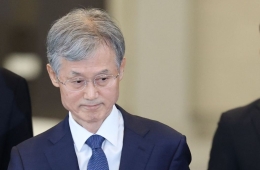
Yujeong Kim, Principal Researcher at the Resource Economics Research Division, Korea Institute of Geoscience and Mineral Resources
View original imageThe Core Issue in Chinese Supply Disruptions is 'Time'—Alternative Sources Are Not Immediately Interchangeable
The biggest risk lies in the concentration of refining and processing networks in China. Unlike a blanket export ban, recent Chinese export controls have primarily managed the timing and uncertainty of supply through permits, inspections, and end-user checks.
Principal Researcher Kim noted, “What was actually disrupted was not so much volume as time. It’s not about how much is secured, but how quickly we can switch to alternative routes when disruptions occur.”
Simply securing an alternative supplier is not enough. For rare metals, even if the mineral is the same, specifications regarding purity, physical form, impurities, and particle size can vary. When the supply source changes, it is difficult to immediately feed raw materials into existing production lines, and it also takes time to achieve certification and mass production.
She emphasized, “Even for minerals with the same name, changing the source does not mean they can be used as-is. We also need to accumulate data regarding the lead time for alternative procurement and export permit processing.”
“There’s No Need for Korea to Become a Midstream Hub for Every Mineral”
She advised that Korea should selectively develop its 'midstream' sector—the supply chain’s middle stages of refining and processing. This is because stable raw material supply, demand, price competitiveness, and even energy and environmental costs all need to be considered.
Principal Researcher Kim stated, “It is neither realistic nor necessary for Korea to become the midstream hub for all critical minerals.”
Instead, the focus should be on areas connected with Korea’s existing refining and materials industries, or where domestic demand is certain. One prime example is recovering rare metals such as gallium and germanium as by-products in existing refining processes. Companies like Korea Zinc and LS MnM are noted for their established raw material procurement networks and refining/recovery technologies. She explained, “The investment scale and raw material risks are entirely different when adding a recovery stage to an existing process, compared to building a new value chain from scratch.”
“Continuity Over Speed”—Risk Should Be Shared Between Government and Companies
The realistic barrier to non-China supply chains is cost. Especially in overseas resource development, it takes a long time to reach production, and both price and country risks are high.
Principal Researcher Kim said, “If a gap emerges between the economic decisions of companies and the supply chains required at the national level, it is up to the government to consider how to bridge it.” In other words, risks that companies cannot bear alone need to be shared through financial support, guarantees, insurance, resource diplomacy, licensing, and other government measures.
In the long term, Korea needs to transition raw materials to materials and components that can be connected to manufacturing, and become an industrial partner that can stably purchase and invest. If Korea lags in its response, it may also lose its place in shaping global rules regarding refining/processing capabilities, origin tracking, standards, and more.
Hot Picks Today
 "Why Live in Seoul When You Can Pay Half Here?" 30 Minutes to Gangnam... Private Sales Begin in Gyeyang New Town
- "Living Becomes Easier Thanks to SK Hynix, But Conservative U.S. Cities Remain Torn Inside [U.S. Midterm Election D-40]②-2"
- "I Went for the Cheap Coffee, but Now I Feel Uneasy"... Major Coffee Franchises Cited for Violations One After Another
- "Had All My Tickets Booked for Chuseok"... Measles Outbreak and Typhoon Cause Chaos, but Japan Remains Top Choice
- "After Spending 170,000 Won on Hanwoo, This Is What I Got": Why Webtoon Artist Kim Gyusam Decided to Give Cash Instead
Using the shipbuilding industry as an example, she stressed, “Resource security is not about winning a short-term race, but about steadily accumulating capabilities over the long term. Continuity is more important than speed. We need to establish a system where the current interest can persist, even during the next cycle of price declines.”
© The Asia Business Daily. All rights reserved. Unauthorized AI training and use prohibited.