Gangnam Tops September Property Tax in Seoul... Seongdong Up 15.6% Year-on-Year
September Property Tax Set at 4.8236 Trillion Won
Reflects Rise in Official Land Value... Up 8.9% from Last Year
Property Tax on Housing Increases by 256.1 Billion Won Year-on-Year
The Seoul Metropolitan Government announced on September 15 that it has finalized the September property tax assessment for land and housing owners at a total of 4.8236 trillion won, and has sent out 4.43 million tax bills via mail, email, and other means. The payment deadline for property tax is September 30. If the deadline is missed, a 3% penalty may be added.

Property Tax Imposition Status by Autonomous District in Seoul for September 2026. Provided by Seoul Metropolitan Government
View original imageAccording to the Seoul Metropolitan Government, the total property tax assessed for September 2026 is 4.8236 trillion won, an increase of 395.1 billion won (8.9%) compared to the previous year. By type of taxable property, the portion for land amounts to 2.885 trillion won, and the remaining portion for housing—which was partially billed in July—is 1.9386 trillion won.
The property tax on land increased by 139 billion won (5.1%) from the previous year, as the individually announced land price rose by 4.90%. Housing property tax increased by 256.1 billion won (15.2%) year-on-year, due to an 18.67% rise in public prices for apartment buildings and a 4.34% increase for single-family homes.
By autonomous district, Gangnam-gu had the highest September property tax assessment with 1.0777 trillion won, accounting for 22.3% of the total. This was followed by Seocho-gu with 593.4 billion won (12.3%), Songpa-gu with 430.7 billion won (8.9%), Jung-gu with 271.2 billion won (5.6%), Yongsan-gu with 232.1 billion won (4.8%), and Yeongdeungpo-gu with 226.1 billion won (4.7%).
The highest year-on-year increase in tax amount was observed in Seongdong-gu, with a rise of 15.6%. This was followed by Songpa-gu at 12.5%, Yongsan-gu at 11.5%, Seocho-gu at 10.9%, and Dongdaemun-gu at 10.9%. In Seongdong-gu, the figure rose from 140.7 billion won to 162.7 billion won, an increase of 21.9 billion won, while Songpa-gu increased from 382.9 billion won to 430.7 billion won, an increase of 47.8 billion won.
The Seoul Metropolitan Government offers a range of convenient payment options to enable taxpayers to pay property taxes easily within the deadline. By opting for electronic delivery instead of paper bills, taxpayers can conveniently receive their bills via email or easy payment applications.
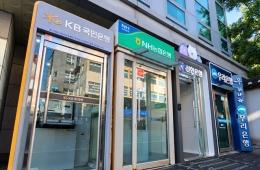
Payments can be made through the internet tax payment system ETAX, the mobile app STAX, easy payment apps such as KakaoPay, NaverPay, and TossPay, dedicated accounts, bank ATMs, and unmanned payment kiosks.
If you opt for electronic delivery, you can receive an 800-won tax credit per bill. If you enroll in automatic payment, you are also eligible for an 800-won credit per bill. If both electronic delivery and automatic payment are used together, you can receive a total tax credit of 1,600 won per bill. Applications for electronic delivery and automatic payment can be made on Seoul's ETAX or STAX platforms, and the benefits take effect the month after application.
The Seoul Metropolitan Government also provides a voice-convertible QR code on tax bills so that the visually impaired and those with diminished eyesight can access property tax information. By installing the 'VoiceEye' app and scanning the QR code with a smartphone, individuals can receive audio guidance on their property tax information.
Hot Picks Today
 "Why Is the Amount in My Account So Low?"... Why Pension Savings Subscribers Were Surprised
- "Even Lee Jae-yong may not be this big a fan"... Stunned to See Galaxy Phones in a Taxi
- Tourist Dragged Flamingo to Hotel for a Photo... Faces Trial on Animal Cruelty Charges
- "After Sleeping Well with Strangers"... Who Is the 24-Year-Old Woman Who Won 19 Million Won?
- "I wanted her to feel my passionate love"... Wife collapses after husband's overly tight hug, diagnosed with broken ribs
For foreign taxpayers who are not proficient in Korean, translation guides are available in six languages: English, Chinese, Japanese, German, French, and Mongolian. As of the September 2026 property tax cycle, there were a total of 25,400 foreign taxpayers and 28,153 assessed cases.
© The Asia Business Daily. All rights reserved. Unauthorized AI training and use prohibited.




![[Editorial] Semiconductor Labor Exceptions: Don't Hide Behind Social Dialogue](https://cwcontent.asiae.co.kr/asiaresize/307/2026091511203728817_1789438836.jpg)
![[Editorial] Reviving the Special Inspector Is Only the Beginning... Authority and Scope Must Be Expanded](https://cwcontent.asiae.co.kr/asiaresize/307/2026091810333133998_1789695212.jpg)