U.S. Air Force Colonel Rescued from Iranian Desert: "The Nation Keeps Its Promise"
Shot Down During April Mission, Crashed Near Enemy Lines
Endured a Day in Desert Conditions Without Water or Food
In April, the dramatic survival story of a U.S. Air Force colonel whose fighter jet was shot down and crashed into enemy territory during a U.S. airstrike on Iran was released to the public.
On the 13th (local time), CBS’s news program “60 Minutes” featured the colonel, who survived in southern Isfahan, Iran, providing a detailed account of the tense situation at the time. The colonel’s identity has been disclosed only under the codename “Bravo.”
On April 2, Bravo took off for Iran aboard a two-seater F-15E fighter jet. His mission was to strike a facility near Iran’s nuclear material stockpile. However, as the aircraft approached the target, it was hit by an Iranian military portable missile.
When the fire broke out in the aircraft, Bravo and the pilot in the front seat, codenamed “Alpha,” attempted an emergency ejection. The problem was that Bravo’s parachute had been damaged by missile shrapnel. As a result, the parachute failed to deploy properly, and Bravo plummeted to the ground at a speed of 110 to 160 kilometers per hour, sustaining injuries to his spine, arm, and shoulder upon impact.

Although he was fortunate to survive, Bravo, despite his injuries, climbed to high ground atop a cliff about 2,100 meters above sea level to avoid being captured by Iranian forces. Iran, not sitting back, pursued Bravo to within several hundred meters of his hiding place.
The U.S. military rescue team managed to locate and extract Alpha after six hours of operation, but was forced to withdraw without finding Bravo due to being caught in a firefight with Iranian forces. Bravo endured 24 hours alone in the highlands without water or food.
Meanwhile, the Central Intelligence Agency (CIA) used advanced technology to precisely track Bravo’s location and launched a deception operation to distract the Iranian military. In addition, U.S. forces struck nearby Iranian positions with missiles and drones to secure the rescue route, then dispatched special operations forces to extract Bravo.
Upon seeing the U.S. rescue team, Bravo reportedly said his first words were, “Let’s go.” Reflecting on the situation, he called it “the best moment of my life.”
The evacuation did not go smoothly. The helicopter that the rescue team arrived in became stuck in desert sand, preventing it from taking off. Consequently, to prevent leaks of sensitive technology, the U.S. military destroyed the helicopter and aircraft on site and sent in an additional support team to successfully extract everyone.
Hot Picks Today
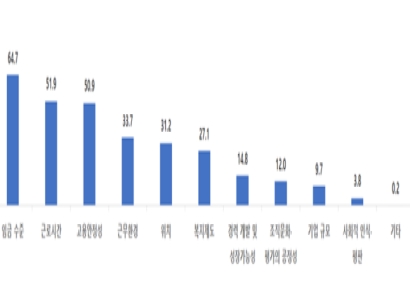 "Please Pay Me at Least 3 Million Won a Month": More Than Half of Young People Today Prioritize "Working Conditions" Over Company Size
- Selling Like Crazy Every Year... 30-Year-Old Hetbahn Takes on a New Challenge: Tastes Better Than "Mom's Home Cooking" [On-Site Report]
- He Left It in the Car and Forgot... "I Nearly Collapsed with Joy": Man Wins $1.48 Million Lottery
- Ran 18 km With 9-Year-Old Tied to Him at the Waist... "Man Banned From Competing for 3 Years"
- Beachgoer Finds 'Plastic' That Turns Out to Be Perfume Ingredient Worth More Than Twice as Much as Gold
About 50 hours after being shot down, on Easter morning (April 5), Bravo called his wife in the United States to inform her that he was alive. He stressed, “This rescue mission is not just about me coming home alive. It demonstrates how far the U.S. military and nation are willing to go to keep the promise of leaving no soldier behind in enemy territory.”
© The Asia Business Daily. All rights reserved. Unauthorized AI training and use prohibited.