You Can Receive Monthly Payments Like a Pension Without Selling Your Home... The Local Mutual Growth Housing Pension That Provides 1.69 Million Won Each Month
Expectations for Expanding Rental Housing Supply in the Metropolitan Area
and Revitalizing Local Consumption
Challenges Remain, Including Increased Risk for Public Guarantee Institutions and Low Participation Incentives
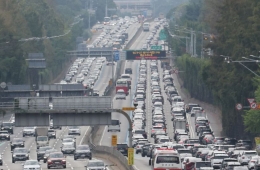
A heated debate took place over the introduction of a “Regional Win-Win Housing Pension,” a scheme designed to encourage the baby boomer generation who own homes in the Seoul metropolitan area to move to rural regions, earning a pension and rental income without selling their homes. This model is emerging as an alternative that could address both the severe housing shortage in the capital region and the problem of rural depopulation. However, significant institutional challenges remain, including the risk burden on public guarantors and the lack of incentives for people to join the program.
On the afternoon of September 14, at the National Assembly Members' Office Building, a discussion forum was held under the theme “Plans to Introduce Housing Pension for Immediate Rental Housing Supply in the Metropolitan Area and Revitalization of Local Consumption,” where such a housing pension model was presented.
330,000 New Homes in the Capital Region and KRW 49 Trillion Increase in Regional GRDP Expected
Ma Kangrae, Professor of Urban Planning and Real Estate at Chung-Ang University and the keynote presenter, emphasized that a housing pension model encouraging the baby boomer generation to relocate to rural areas would be a key to resolving the imbalance between metropolitan and non-metropolitan regions. Professor Ma stated, “House prices are rising, supply capacity is shrinking, and the generations who need housing are being pushed out. As an increasing number of people in their 50s and 60s express interest in returning to farming or rural life, and as prospective movers are more concerned about how to utilize their homes, the housing pension will serve as a mechanism to translate these intentions to relocate into actual moves.”

On the afternoon of the 14th, Professor Ma Kangrae is presenting at the discussion forum titled 'Plan to Introduce Housing Pension for Immediate Supply of Rental Housing in the Metropolitan Area and Revitalization of Local Consumption,' held at the National Assembly Members' Office Building. Photo by Seongah Shim
View original imageAccording to Professor Ma’s simulation, if just 10% of potential baby boomer households who own homes in the capital region moved to rural areas, 330,000 housing units could be made available in the capital area, and the gross regional domestic product (GRDP) of non-capital regions would be expected to increase by KRW 49 trillion over the next 10 years.
Professor Ma also noted, “However, there are long-term challenges to resolve, such as providing tax incentives, ensuring the security of rental deposits, cultivating rental management institutions, and facilitating seamless settlement after relocation.”
The second keynote speaker, Kang Myungki, an accountant at Hanil Accounting Corporation and an advisor to the Ministry of Land, Infrastructure and Transport on real estate investment trusts, proposed a “public-private collaboration” model in which private rental platforms would manage the rental homes based on public guarantees.
Accountant Kang said, “By securitizing 50% of the home's value through a 20-year reverse mortgage, the program can provide a monthly pension. The remaining 50% can serve as the basis for calculating security deposits and rent, enabling the supply of housing at rents below market prices.”
According to Kang’s simulation, a retiree in possession of a home in the metropolitan area valued at KRW 750 million who enrolls in this program could secure a retirement income of KRW 1.69 million per month — comprised of KRW 910,000 in pension payments and KRW 780,000 in rental revenue.
However, Accountant Kang stressed that for the system to take root, several institutional measures must be prioritized: an exemption to the requirement that participants reside in their homes; a legal basis for reverse mortgage guarantees; expansion of rental deposit guarantee coverage via the Korea Housing & Urban Guarantee Corporation (HUG); and the design of special guarantees to allow refinancing of existing home mortgage loans.
Experts: “Public Guarantors Bear the Risk of Falling House Prices—Detailed Review Needed”
At the second session’s panel discussion, experts agreed with the intent of the program but raised practical concerns.

On the afternoon of the 14th, a forum titled 'Plans to Introduce Housing Pension for Immediate Rental Housing Supply in the Metropolitan Area and Revitalization of Local Consumption' was held at the National Assembly Members' Office Building. Photo by Seongah Shim
View original imageKim Yoonsoo, Director of the Housing Pension Division at the Korea Housing Finance Corporation (HF), said, “According to the 2024 survey of housing pension demand, as many as 75% of respondents intend to pass their homes on to their children, indicating that cultural barriers remain very high. The income advantage may be less attractive compared to conventional housing pensions (KRW 1.89 million per month under the lifetime plan for those aged 65 and older). Previous similar projects by the Seoul Metropolitan Government and Seoul Housing & Communities Corporation (SH) also showed low participation because owners preferred to rent properties themselves.”
Choi Byunggil, Director of the Housing Fund Division at the Ministry of Land, Infrastructure and Transport, also pointed out the issue of risk distribution. Choi noted, “Increasing the utilization of home value to generate extra income ultimately means that public guarantors bear the full risk in the event of falling house prices. Should a scenario like the 2008 financial crisis occur, the financial risk to public guarantors would escalate significantly. Therefore, a thorough and sophisticated risk analysis must be conducted in advance.”
Kim Deokrae, Director of the Housing Research Department at the Housing Industry Research Institute, commented, “It is critical to determine whether there is genuine demand for relocation even without retirement villages in rural areas, or if the program needs to be linked to such communities. Thorough investigation into demand and a rigorous economic feasibility assessment are needed to decide how this program should be positioned relative to current HF and private housing pension offerings.”
Hot Picks Today
![Claims That "Daiso Is Being Shut Down to Save AliExpress and Temu" Spread Widely... A Fact-Check [Why&Next]](https://cwcontent.asiae.co.kr/asiaresize/93/2023121315590987574_1702450749.jpg) Claims That "Daiso Is Being Shut Down to Save AliExpress and Temu" Spread Widely... A Fact-Check [Why&Next]
Claims That "Daiso Is Being Shut Down to Save AliExpress and Temu" Spread Widely... A Fact-Check [Why&Next]
- "What Marketing at a Time Like This?" After Laying Low... Starbucks Overtakes A Twosome Place to Reclaim No. 1
- "What’s the point of blocking gap investment?" Outlying home prices jumped 400 million won, topping 2 billion won... "Caught in a regulatory trap" [One Year of Land Transaction Permit Rules Across Seoul]
- "'I Buy as Many as I Can, First Thing After Arriving in Korea'... The Souvenir Foreign Visitors Pack Their Suitcases With [K-Holic]"
- "He jumped into the enclosure of his own accord to play with the tiger"... British man dies
In response, Accountant Kang clarified, “The 20-year maturity is one example; various options, such as lifetime pensions, are under consideration. Because actuarial models are not allowed to be disclosed, the simulations were conducted under the assumption that home prices would remain unchanged. Beyond simply providing a pension, the design aims to integrate pensions, rentals, and relocation to rural areas, with plans to nurture private-sector innovative management firms.”
© The Asia Business Daily. All rights reserved. Unauthorized AI training and use prohibited.